
Gerry Adams case shows both criminal and civil law failing victims of terrorism, say campaigners


The surprise end of a civil case brought by victims of IRA bombs against Gerry Adams shows both criminal and civil law is inadequate for victims of terrorism, a Northern Irish group has said.
Victims campaigners SEFF had lent its support to the claimants in the case, its director Kenny Donaldson at one point visiting London’s Royal Courts of Justice to unfurl a banner with the message “victims deserve a fair trial too”.
Last Friday the case was withdrawn by the claimants over concerns they could be forced to pay Mr Adams’ legal fees, which the three men said they’d be unable to afford.
The former Sinn Fein president denied ever being a member of the IRA, and in a witness statement to the court said he had no prior knowledge of any of the bombings at the centre of legal proceedings.
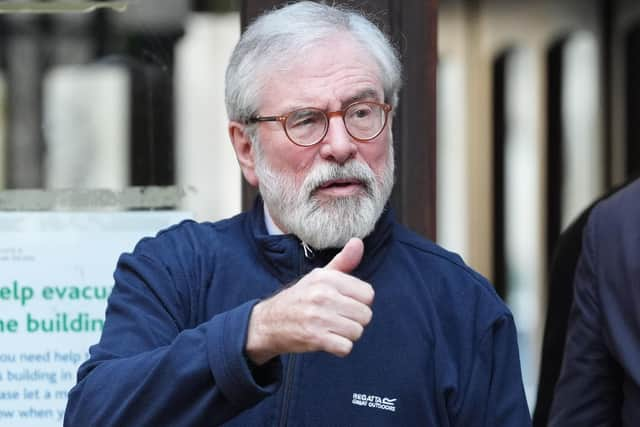
SEFF now argues the end of case shows the law, whether criminal or civil, is “deeply imperfect for innocent survivors of terrorism” – and maintains Gerry Adams still has questions to answer.
Said Mr Donaldson: “Mr Adams is understandably spinning this case as vindication of his denials stretching across five decades and more."
The victims campaigner said the way the case ended “casts a shadow” over the proceedings, stating: “Many innocent victims of terrorism are asking themselves, does the requirement for a fair trial only extend to the accused?
"This development once again illustrates that the judicial system, whether criminal or civil, is deeply imperfect for innocent victims and survivors of terrorism.
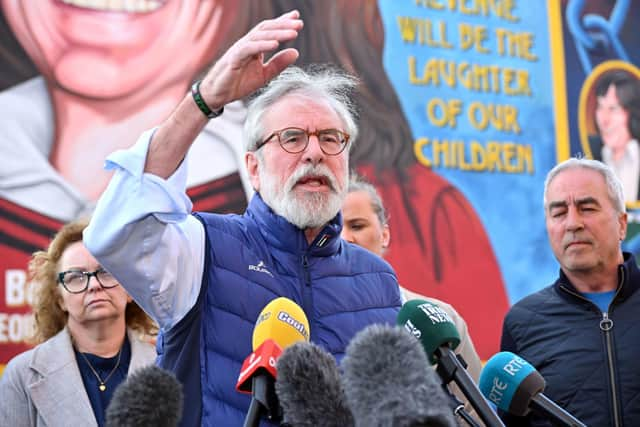
"The claimants are all decent people and innocents who have suffered. The realisation that they could face substantial personal liability for legal costs was the tipping balance which meant that they felt without a choice but to accept Mr Adams’ offer to settle the case.”
In the case, victim of the 1973 Old bailey bombing John Clark, 1996 London Docklands bomb victim Jonathan Ganesh and 1996 Manchester Arndale shopping centre bombing victim Barry Laycock all alleged Mr Adams was a leading member of the Provisional IRA on those dates and sought £1 in damages.
On Friday, the last day of the trial, lawyers for the victims said the claim against the former Sinn Fein president had been “discontinued” with “no order as to costs”.
Law firm McCue Jury and Partners, which represented the three men, said in a statement that its clients “had no realistic option but to accept” an offer to settle the claim without the payment of damages, after what it described as an “extraordinary and, in our clients’ view, unnecessary late intervention by the court”.
Before the trial, said the firm, the three victims were guaranteed they wouldn’t have to pay Mr Adams’ costs if they lost. During the trial, the firm claimed, the defence “wrongly and repeatedly implied the claimants were treating the court as a vehicle for a form of public inquiry”.
In the final stages of the trial, said the firm, the court “unexpectedly directed that it wished to consider whether the proceedings might amount to an abuse of process” – and if the judge found that was the case, the claimants’ cost protections would have been void.
Mr Adams welcomed the "emphatic end” of a case he said “should never have been brought”.