


Action outside London’s Royal Courts of Justice have been almost as notable as proceedings inside, as protesters dressed in military uniforms have fixed posters bearing images of a Troubles-era Adams to security barriers and a demonstration in the name of victims was staged on Wednesday.
Adams’ own appearances have drawn enormous attention, as have those of high-profile nationalists including Richard McAuley and Sinn Fein MP John Finucane.
Tuesday saw DUP leader Gavin Robinson put in an appearance, declaring it would be “seismic” if the court found Adams was in the IRA, while the case has already heard testimony from both British military veterans and a former republican paramilitary alleging the former Sinn Fein president would have been in the banned organisation.
Three men are suing for a nominal sum of £1 in damages, their case alleging Adams was a high-ranking member of the Provisional IRA during the Troubles, including being on its army council.
The three are John Clark, a victim of the 1973 Old Bailey bombing in London; Jonathan Ganesh, a 1996 London Docklands bombing victim; and Barry Laycock, a victim of the 1996 Arndale shopping centre bombing in Manchester.
Adams is fighting the case, his lawyer Edward Craven KC telling the court he “emphatically, unequivocally and categorically denies that he was ever a member of the IRA”, denies being involved in the bombings and “played an instrumental role in the peace process which culminated in the signing of the Good Friday Agreement in April 1998, which brought an end to the decades-long conflict”.
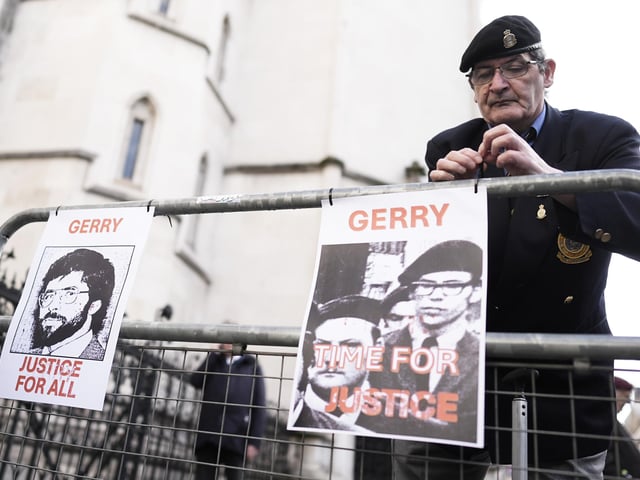
1. Protests outside court
A protester in military uniform fixed posters featuring images of a Troubles-era Gerry Adams to security barriers at the Royal Courts of Justice on Wednesday. Photo: Aaron Chown/PA Wire Photo: Aaron Chown
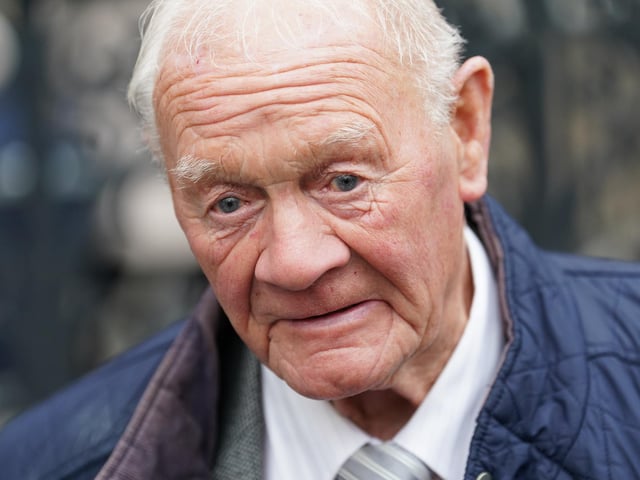
2. Bomb victim Barry Laycock
Barry Laycock, a victim of the IRA's 1996 Arndale Shopping Centre bombing in Manchester, is one of three men suing Gerry Adams for damages. He's pictured leaving the Royal Courts of Justice on Tuesday. Photo: Gareth Fuller/PA Wire Photo: Gareth Fuller
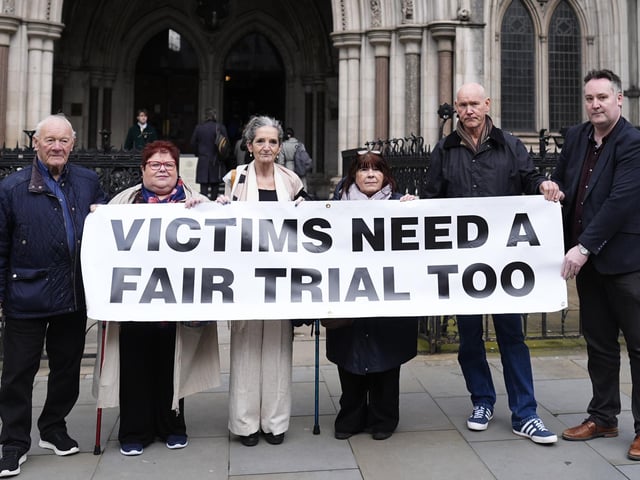
3. Demonstration in the name of victims
Barry Laycock, Sarah Jane Young, Kat Hughes, Judith Young, Simon Utley and Kenny Donaldson stage a protest in the name of victims outside the Royal Courts of Justice on Wednesday. Photo: Aaron Chown/PA Wire Photo: Aaron Chown
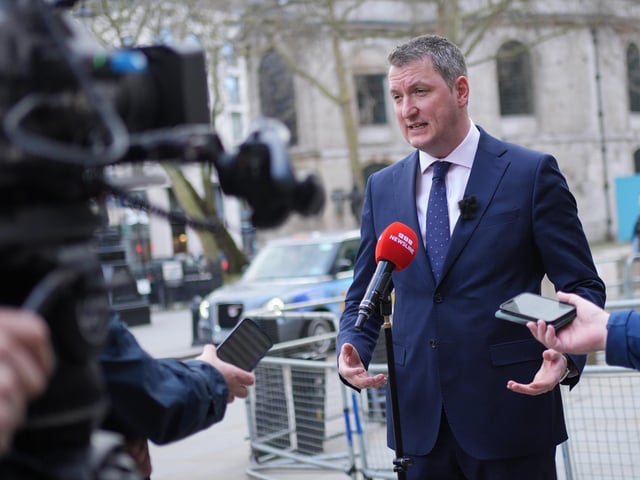
4. Sinn Fein MP John Finucane
Sinn Fein MP John Finucane speaks to the press outside London's Royal Courts of Justice on Wednesday. Photo: Yui Mok/PA Wire Photo: Yui Mok/PA Wire