
IRA victim's family in legal challenge to government over 'Stakeknife' investigation claims
The UK Government has unlawfully failed to order a public inquiry to establish the full extent in which a murderous IRA interrogation gang was penetrated by state agents, it was claimed in the High Court today.
Counsel for the family of a Belfast woman abducted and killed more than 30 years ago argued a major report has established that infiltration of the Internal Security Unit (ISU) went well beyond the top Army spy codenamed Stakeknife.
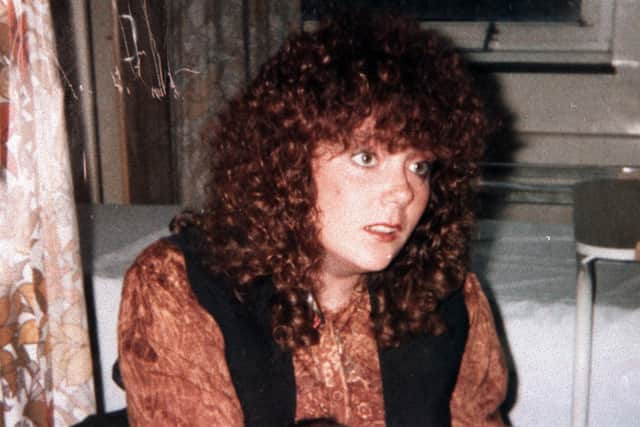

Caroline Moreland, a 34-year-old Catholic mother of three, was shot dead by the IRA in July 1994 on suspicion of being a British informer.
Her murder formed part of the £40m Operation Kenova investigation centred on the criminal activities of Stakeknife, widely believed to be west Belfast man Freddie Scappaticci. Scappaticci, an IRA executioner and undercover agent, died in 2023.
In an interim report published last March, the Operation Kenova investigation team then led by current PSNI Chief Constable Jon Boutcher found that Stakeknife probably cost more lives than he saved while operating at the heart of the republican movement.
At the time the Government acknowledged the seriousness of the allegations but declined to comment on the substance until the conclusion of all related litigation.
Ms Moreland’s family have now launched a legal challenge, alleging the Secretary of State has declined to hold a public inquiry into the ISU - the IRA’s so-called ‘nutting squad’.
In court today Hugh Southey KC, representing her son Marc Moreland, claimed the refusal to set up a statutory tribunal at this stage breached Article 2 of the European Convention on Human Rights.
He contended that the interim Operation Kenova report highlighted a failure to regulate agents and raised questions about the potential failure to take action to “dismantle” the ISU.
“The issues are potentially wider than just Stakeknife,” Mr Southey insisted. “There is an ongoing breach of Article 2 which arises because of the failure to hold a thematic investigation with the family’s involvement.”
Counsel for the Secretary of State responded that the challenge was unsustainable because no decision has been taken at this stage.
Tony McGleenan KC told the court it was “entirely appropriate in terms of precedent and principle” to wait for Operation Kenova to complete its work.
“It’s not the time to consider (whether to) establish a public inquiry,” he submitted.
“The final report may well deliver everything the applicant asks for, but at the very least it will contribute significantly to the overall assessment of the state’s compliance with any Article 2 obligations.”
Judgment was reserved in the application for leave to seek a judicial review.
Pledging to give a decision as soon as possible, Mr Justice Humphreys said: “This raises important issues about the way legacy investigations are ongoing in this jurisdiction.
“It’s not the first of these cases and I suspect it certainly will not be the last.”
Outside court the Moreland family’s solicitor, Kevin Winters, maintained that they should not have to wait for the final report to see if an inquiry will be announced.
“The work of Operation Kenova revealed that state penetration of the ISU extended way beyond the alleged agent Stakeknife, Freddie Scappaticci,” he said.
Mr Winters added: “We hope to see the outcome of the outstanding matters cited in court
today in addressing this wider sensitive thematic issue.
“We are hopeful that whatever the outcome of today’s application, either way we will get clarity on the State’s attitude to an inquiry.”