
Laws that enabled Gerry Adams to sue BBC for €100k to be rewritten under plans currently before Irish parliament
The libel system that enabled Gerry Adams to win €100,000 from the BBC is to be heavily reworked to make similar lawsuits more difficult.
Plans currently making their way through the Irish parliament would scrap the kind of jury hearing that found in the veteran republican’s favour, as well as boost protection for “responsible journalism” and push parties towards mediation instead of the courtroom.


Originally, the overhaul was to tackle libel tourism as well, in which articles published in different countries can be sued in the Republic – but those plans were dropped when legislation arrived to be debated by the Dail Eireann.
Juries in defamation cases, officials argued, can result in inconsistent findings; under the revamp, libel cases would be decided by a judge, as is standard in the UK.

When the overhaul was put forward a couple of years ago, then-Justice Minster and now Tanaiste Simon Harris said that axing juries would “reduce the likelihood of disproportionate and unpredictable awards, and high legal costs” – but the idea’s proved controversial in the Dail, with Sinn Fein coming out strongly in favour of keeping juries during a debate a few weeks ago.
The revamp substantially increases protections for the press, such as mandating that lawyers advise their clients to go to the Republic’s equivalent of the Press Complaints Commission first, instead of heading to the courts.
It also involves what the Irish government describes as “innovative measures to tackle Strategic Lawsuits Against Public Participation (SLAPPs)”, which “seek to silence responsible journalism”.
SLAPPs are lawsuits that use the legal system to censor or silence a powerful figure’s critics; legislation designed to throw them out of court at an early stage is common in much of the US and the EU, but doesn’t yet exist in the Republic.

Said Mr Harris: “[The overhaul] introduces provisions for preventing SLAPPs from exercising a chilling effect on freedom of expression, and particularly, on investigative journalism or public debate on issues of public interest.
“Furthermore, the legislation will develop the use of alternative dispute resolution processes and solutions to streamline and reduce costs, and avoid defamation being perceived as a rich man’s law.”
The revamp was originally designed to also tackle ‘libel tourism’, in which articles published outside the Republic are sued in Dublin; that’s been left out of the final version of the revamp being considered by the Dail.
In broad terms, Irish law has it that any articles residents of the Republic can view are held to have to been published there, even if they originate in a different country – something that many argue means the law hasn’t kept pace with the internet, as the vast majority of information published online around the world is accessible in Ireland.
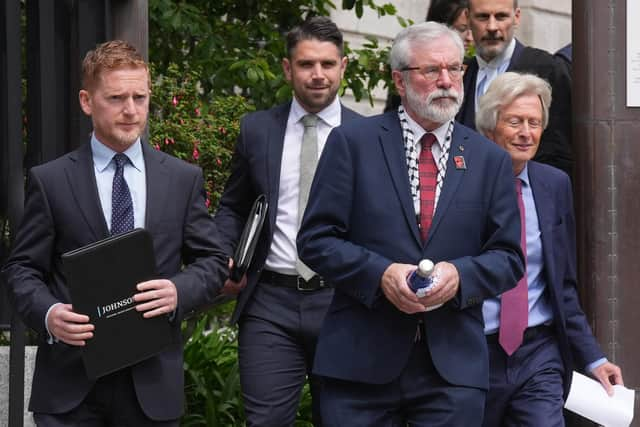
In the Adams case, the offending Spotlight investigative documentary was a BBC Northern Ireland broadcast, but was held to have been published over the border as it was seen by 16,000 viewers there, while an accompanying website article was read by 700 people.
Many legal experts wanted that publishing clause changed, with a seven-year review concluding that a case should only go ahead if the Republic is “clearly the most appropriate place for action to be brought”. That idea doesn’t feature in the reworked laws currently being debated, meaning libel tourism can continue.