
Man ‘elated’ as explosives convictions quashed after 50 years
A Co Antrim man who says he was tortured into making disputed admissions about possessing explosives more than 50 years ago is to have his convictions quashed, the Court of Appeal ruled yesterday.
Senior judges held that a failure to disclose medical evidence of injuries sustained by Laurence O’Neill undermined the reliability of confession evidence.
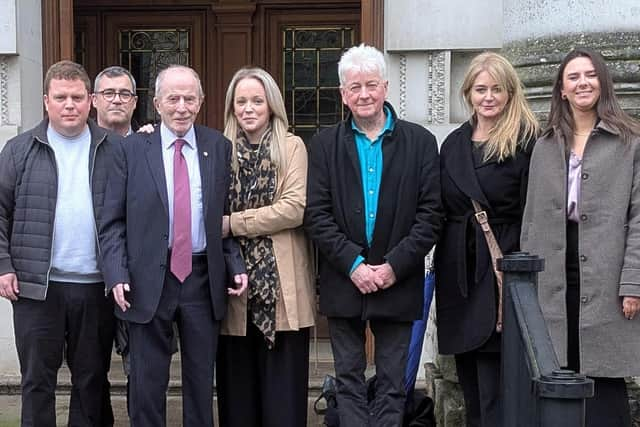

Describing the trial proceedings as “unconscionable”, Lady Chief Justice Dame Siobhan Keegan confirmed: “We could not properly conclude that the convictions are safe.”
Mr O’Neill, 82, declared himself fully vindicated in the battle to finally clear his name. “I have waited 54 years for this day, and I feel elated,” he said outside the court.
“Torture wouldn’t describe what happened to me, I was interrogated for four and a half days around the clock with no food, no sleep and no toilet.”
In 1972 Mr O’Neill was convicted of possessing ammunition with intent and possessing explosives with intent to endanger life. He received a 15-year prison sentence and served eight years behind bars.
Charges had been brought against him over an incident in November 1971.
Two members of the Scots Guards approached him while he sat in a car outside an address in Belfast. At the time Mr O’Neill said he was waiting for someone in the property, but they denied knowing him.
Searches of the vehicle were said to have uncovered 700 rounds of ammunition in a concealed compartment on the driver’s side. The following day a quantity of arms was found at his family’s farm.
Mr O’Neill was transferred to Palace Barracks in Holywood, Co Down to be interrogated on six occasions by Special Branch officers without the presence of a solicitor.
He was later medically examined and several injuries noted, according to a body which probes potential miscarriages of justice.
At his trial a police detective claimed Mr O’Neill had admitted responsibility for the ammunition but declined to make a written statement.
However, in 2016 documents in a civil action related to the case were discovered at the Public Records Office in Kew, London by human rights group the Pat Finucane Centre.
Following that development, Mr O’Neill’s legal team applied to the Criminal Cases Review Commission to examine the safety of his convictions.
The CCRC referred the case back to the Court of Appeal due to the potential use of torture or inhuman and degrading treatment during the interrogation process.
Citing “executive misconduct”, the inadmissibility of confession evidence and insufficient other evidence, the body believed there was a real possibility Mr O’Neill’s convictions would not be upheld.
In court yesterday it was argued that the findings of an Army doctor who examined him during his detention at Palace Barracks had been concealed from the criminal trial.
The pensioner’s barrister, Brian Fee KC, said the medical report referred to significant injuries consistent with the type of abuse he was allegedly subjected to.
Ciaran Murphy KC, for the Public Prosecution Service, did not resist the appeal.
Dame Siobhan, sitting with Lord Justices Treacy and Colton, agreed with his assessment of the trial being rendered unconscionable.
“These convictions should be quashed on the basis of the safety issues raised in the prosecution case,” the Lady Chief Justice ruled.
Outside court, Mr O’Neill recalled how his own father failed to recognise him at the police station due to the level of injuries allegedly inflicted during interrogation.