
Council changed guidance for lifeguards a few weeks after pool death, court is told
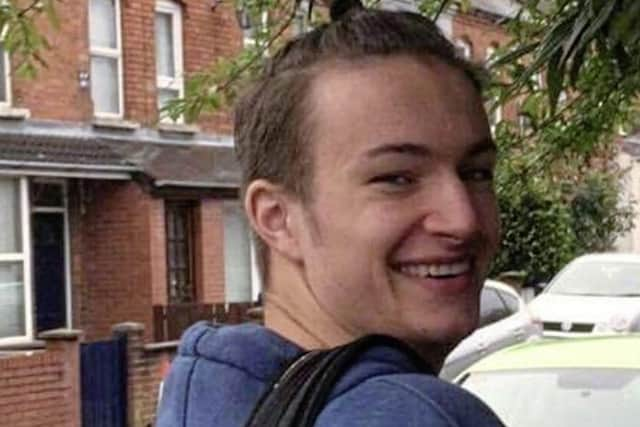
An athletic young man who tragically died after he suffered a hypoxic blackout at the bottom of a leisure centre pool in Armagh was himself a qualified lifeguard, a jury heard today.
The Newry Crown Court jury of four men and eight woman also heard that just a few weeks after Christopher Rodgers tragically died, Armagh City, Banbridge and Craigavon council changed the guidance given the lifeguards about underwater swimming and people holding their breath underwater.

On trial each facing a single count that being employee, they were in breach their duty to others on 7 April 2017 are: Cathal Forrest-McVeigh (35), from Dunamony Road in Dungannon; William Holden (26), from Unshinagh Lane in Portadown and
James Monaghan (26), from Folly Lane in Armagh.
When the trial was formally opened last Thursday, the jury heard how 20-year-old Mr Rodgers had swam two and a half lengths of the Orchard Leisure Centre pool underwater when he broke the surface and then “sank to the bottom of the pool” where he remained for five minutes and 14 seconds.
Prosecuting KC Liam McCollum outlined that during that time Holden had been in the high chair at one side of the pool while McVeigh and Monaghan had been “engaged in conversation” for two minutes and twenty seconds as the guard duty rotated.
The jury have also heard that a short time before he was rescued from the pool, Mr Rodgers had given a fellow swimmer a “thumbs up sign” and that the lifeguards were aware of what the deceased was doing.
In court today the jury heard evidence from Paul Murphy who told them that at the time, his job at the centre was a full time swimming instructor as well as training and assessing the lifeguards.
He told prosecuting KC Geraldine McCullough the lifeguards had to undergo weekly to monthly training sessions, depending whether they were full time or part time and that their training was based on guidance from the Royal Life Saving Society book.
Outlining that the RLSS syllabus is revised and amended every 18-24 months, Mr Murphy said at the time there was reference on underwater swimming but none to “shallow water blackout.”
Asked whether he knew Mr Rodgers the witness confirmed he did and further that he was aware of and had seen “once or twice” the type of training he was doing where either swam lengths underwater or “remained stationary holding his breath under the water.”
“I think one or two of the lifeguards spoke to him about it,” he told the jury.
Under cross examination from Gavan Duffy, defence KC for McVeigh, Mr Murphy agreed that in 2017 “lifeguards were not receiving training in shallow water blackout.”
He also agreed that after Mr Rodgers’ tragic death, there was a policy change for pools across the council area in that swimmers were not allowed to swim for more than 15 metres underwater.
The jury also heard evidence from Doris Sherry who at the time was the duty officer at Orchard Leisure Centre and she told them she was in charge of staff induction.
Part of those this referred to lifeguards identifying potential hazards in the pool and during Mr Duffy’s cross examination, she agreed “there is no mention of shallow water blackout.”
She further agreed that at the time, the RLSS book which was the basis for pool lifeguard training “does not mention shallow water blackout or hypoxic blackout or anything like that.”
Confirming that she knew the “athletic” and “prolific swimmer” Mr Rodgers as he regularly used the pool and from seeing him cycling in the area, Ms Murphy also confirmed that “he was a lifeguard…and would have received the same standard training” as the defendants in assessing potential dangers and hazards.
Introducing council documents dated May 2017, Gary McHugh suggested there was a “completely new policy from the council” which advised lifeguards to be aware of pool users engaged in underwater swimming and “prolonged periods of breath holding at any depth.”
The senior barrister outlined how the guidance told lifeguards “they should intervene and request that pool users refrain from these activities and advise the swimmer of the dangers.”
He also told the court that “in bold and underlined to doubly emphasise the point,” the revised guidance as of May 2017 told lifeguards that when a pool user was already under the water “they should effect a rescue immediately.”
“These are all new policies that were put in force as a direct result of Mr Rodger’s tragedy, does that seem fair,” Mr McHugh asked her and Ms Murphy agreed “yes.”
The trial continues.