
Criteria for selecting which Troubles killings get public inquiries is questioned: 'If we hold ones for everything it will take until year 3000'
The criteria for selecting which Troubles murders should get a public inquiry has been questioned by the relatives of two people killed in separate IRA atrocities.
They were reacting to news that the UK government may appeal against a court ruling which said it was wrong not to hold an inquiry into the murder of Catholic civilian Sean Brown by loyalists in 1997.
On Wednesday, Northern Ireland Secretary Hilary Benn sought leave for a Supreme Court appeal in the Sean Brown case.
Mr Benn has not confirmed he ultimately intends to take the case to the Supreme Court, but applied for "protective leave" to do so.
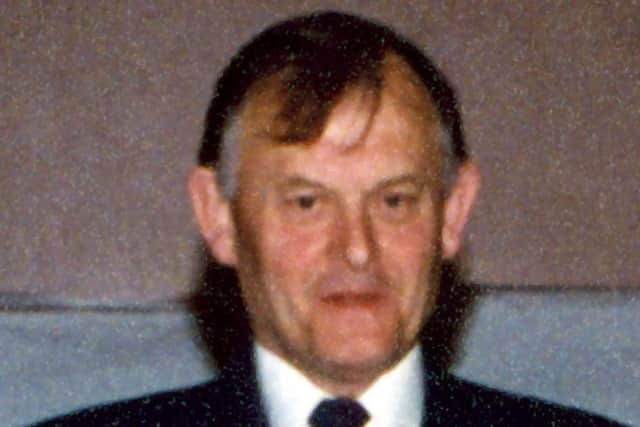

Northern Ireland's First Minister Michelle O'Neill branded the move "cruel and inhumane" while Ireland's deputy premier said the Brown family had already been waiting "far too long" for answers.
Mr Brown, 61, the chairman of Bellaghy Wolfe Tones GAA club in Co Londonderry, was kidnapped and murdered as he locked the gates of the club. No-one has ever been convicted.
Preliminary inquest proceedings last year heard that in excess of 25 people had been linked by intelligence to the murder, including several state agents.
Last month, three judges at the Court of Appeal in Belfast said the Government's failure to order a public inquiry into the murder "cannot stand" and gave Mr Benn four weeks to "reflect upon the judgment".
Lesley Magee, whose grandmother Nan Davies was one of the six people killed in the IRA's 1973 Coleraine bombing, said it seems to her that public inquiries are awarded to “he who shouts loudest”.
"I think it's very sad an innocent person has been murdered – it doesn't matter which side of the fence they sit on,” she said.
"But I don't really see the benefit of it except it's going to be money spent to have it done. At the end of the day what's it going to achieve?
"It's not going to bring them back. What does it get to the bottom of, years later?
"Certainly there have been wrongdoings on both sides. But if we're now in a society where they're talking about people wanting to move on and leave the past in the past, well then that's where it should be left – because all you're doing is regurgitating and opening wounds and everything else.
"Where does it stop? If we start going down that line of public inquiries for everything, we're going to be here in 3000-and-whatever.
"I just think it's a total waste of money and I think there should be a clampdown and the government should be saying 'enough's enough'."
Meanwhile Aileen Quinton, whose mother Alberta was one of the 11 people killed by the IRA in the Enniskillen bomb of 1987, said: "I don't know about this case. I don't know what would make it more merit a public inquiry than all the other things. But I'd raise the question: why?
"Enniskillen definitely is not on the list of things that matter… We can be politically ignored with no consequences for those who shouldn't be ignoring us but do.”
She added that authorities had “protected” senior republicans involved in this attack and others, taking the view that “we're not going to touch them because of the peace process”.
It is this she wants an inquiry into, rather than any particular event.
“Picking off individual atrocities for a public inquiry to me isn't the way to go,” she told the News Letter.
"It's what is the wider issue around that we need to frame a public inquiry around.
"What is the criteria? It's not something that should be cobbled together each time.
"It has the potential to pit innocent victims of different tragedies against each other. I don't want to deny any innocent victim justice or information. But the rules need to be clear and applied consistently."