
Police Federation for Northern Ireland welcomes news that more PSNI officers will carry tasers
The Police Federation has welcomed moves by the PSNI to increase the number of officers carrying tasers.
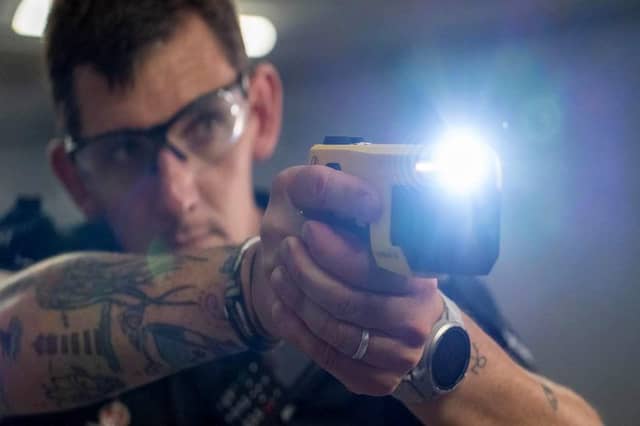

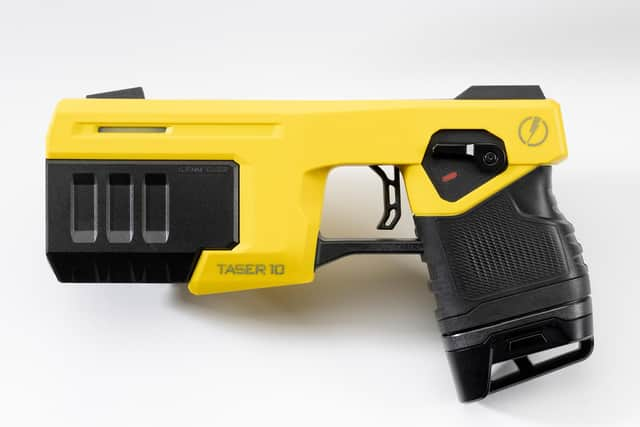
The PSNI are currently transitioning to a new form of taser known as the Taser T10 device. Officers will undergo specialist training with the aim of the devices being rolled out towards the end of 2026.
The new taser has double the range of previous devices. It can also fire up to 10 single-shot cartridges without reloading and operates at a range of up to 45ft (13.7m).
The Chair of the Police Federation Liam Kelly said that 850 assaults on officers in the past twelve months is "the tip of the iceberg" and the real figure could be much higher.
Mr Kelly said: “It is heartening and welcome to see the Service moving to increase the number of specialist teams trained to carry Conducted Energy Devices (CEDs).
“Given the extent of assaults, I would urge the Service to move at pace to complete this overdue and necessary work.
“Our men and women show great courage and restraint when confronted by assailants. These attackers are out to do harm and inflict injury on officers who work to protect society. They do not deserve to be kicked, punched, spat at and bitten by thugs."
He said the figure of 850 assaults on police in the past 12 months provided by police to the Nolan Show is provisional with the real figure likely to be higher.
“In serious street disorder, a brick smashing into a helmeted officer, but which may subsequently cause concussion, can simply be recorded as ‘struck by object’ and so not reflect the seriousness of the attack. We also know that for more minor assaults, officers are so badly stretched that they neither have the time nor motivation to log or report incidents.”
Tasers not only offer additional protection for officers but they serve as a deterrent and are most likely to make would-be attackers think twice about lashing out, he said.
“We’ve had officers hospitalised for injuries including broken bones, bites and lacerations. Physical injuries heal but there’s often lasting psychological damage caused by being at the receiving end of a drug or drink-fuelled assailant.
He urged the courts to “stand up for officers and to impose custodial sentences” for assaults on officers, adding that there is “a worrying trend” of “a slap on the wrists or a suspended sentence”.
Speaking about the 850 assaults on officers in the past year, Deputy Chief Constable Bobby Singleton said police data does not support the case for tasers to be carried by all officers – but said more officers are being trained.
“We do, however, keep the requirement and availability for use of these devices under regular review and are taking steps to increase the size of the specialist teams that currently carry CEDs [Conducted Energy Devices].”
However Amnesty International said the new tasers were more powerful that previous versions, and raised "fundamental safety concerns".
Patrick Corrigan, Head of Nations and Regions, said: “With more and longer barbed spikes fired at a higher velocity designed to penetrate heavy clothing, the risk of devastating, unintended injuries – especially to the face or eyes – is deeply worrying. Children are particularly vulnerable to such injuries.”