
PSNI denies policy of excluding suspects' race when issuing witness appeals
The PSNI have denied having a policy of excluding racial information about suspects from its public witness appeals.
The force said that "on occasions" it may release such details, but when asked repeatedly to give an example of it happening, did not do so.
The News Letter decided to look into the matter after the new national advice on ethnicity was issued to police forces.
Former PSNI head of discipline Jon Burrows has said that "clearly ethnicity, skin colour, or accent are all highly relevant details that must be included".
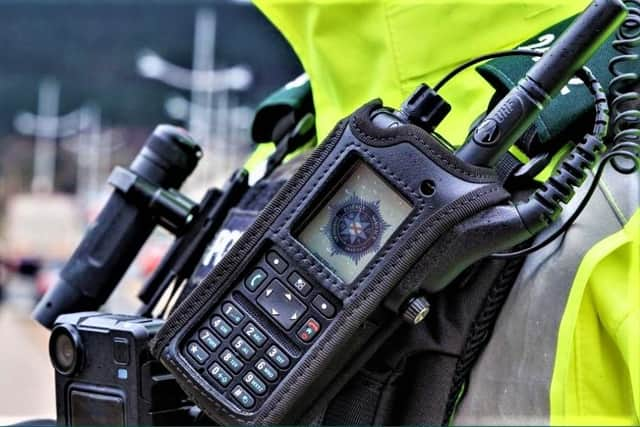

The PSNI releases hundreds of witness appeals every year to the country's newsdesks via e-mail.
This is the main source of the media's information about crimes.
These press releases frequently describe the crime and give a description of the suspect or suspects, including their height, build, hair, and clothing.
The News Letter can neither find nor recall any witness appeals that involve a description of a suspect's race or national origin.
Occasionally, police will state that a suspect had a regional accent like a Belfast accent or a Fermanagh one, and on very rare occasions they will state that a non-Northern Irish accent was involved.
In the last five years, the News Letter has found five such examples – one involving an English accent, one a Polish one, and three cases involving southern Irish accents.
All this comes a fortnight after new advice was issued to UK police forces by the College of Policing and the National Police Chiefs’ Council (NPCC).
This "advises that forces should confirm the nationality and/or ethnicity of the suspect or defendant (where known or recorded)" whenever charges are brought "in high profile, or sensitive investigations or operations where there is: a policing purpose in doing so; a related risk or impact on public safety such as rising community tension; misinformation or disinformation leading to community tension; a significant level of media or social media interest".
This is different to the police issuing witness appeal to catch suspects, who may later then be charged.
Asked why it does not include ethnicity of suspects in its witness appeals, the PSNI said: "On occasions, the Police Service of Northern Ireland may release the ethnicity of a suspect if there is a policing purpose to do so."
It added: "There is no PSNI policy to generally omit information about ethnicity/national origin when issuing a description of suspects."
The force was asked a number of times if it could provide an example of when it had provided a description of suspects' ethnic / national origin, but did not provide any.
When contacted, Mr Burrows, now a North Antrim MLA for the UUP, said: "If police are investigating a crime and they are making an appeal for witnesses, it is vital that an accurate description is circulated.
"Clearly ethnicity, skin colour, or accent are all highly relevant details that must be included.
"The fear of creating community tension should never outweigh the statutory duty to investigate crime thoroughly, and to do so without fear or favour.
"Community tensions can be managed but you do not do that by ever concealing important facts relevant to an investigation.
"I've no evidence the PSNI does so. It has been reported anecdotally that police in England and Wales have at times omitted for example skin colour, but that'd be entirely wrong and actually stokes tension by creating the perception of a two tier justice system.
"The lessons from the reviews into the Pakistani grooming gangs are prescient – the authorities placed preventing racial tension over the protection of young girls.
"This was morally wrong and unjustified.
"I trust the PSNI will provide clarity that where race, ethnicity, or accent details are known that they'd be included in a witness appeal, and never witheld for any reason such as avoiding community tensions or race relations."
When Mr Burrows' criticism was put to it, the PSNI said: "On occasions the Police Service of Northern Ireland may release the ethnicity of a suspect if there is a policing purpose to do so.
"The Police Service of Northern Ireland has received the joint interim guidance from the College of Policing/National Police Chiefs’ Council relating to publicising the ethnicity/nationality of suspects or defendants at the point of charge for high harm offences or where there is a related risk or impact to public safety and we will now take time to consider this guidance."