
Shock and disgust at IRA murder of Catholic businessman Seamus McAvoy recalled 40 years on - killing was said to have been start of renewed campaign against security force contractors
The wave of "disgust" generated by the IRA murder of a Catholic businessman has been remembered, 40 years after the crime was committed.
The murder of Seamus McAvoy on August 20, 1985, heralded a surge in violence against anyone who did business with the police or military, leading to the slaughter of eight workmen in the Teebane massacre of 1992.
Mr McAvoy, aged 46 and a married father of six, sold portable buildings to the RUC.
Ulster University's Conflict Archive on the Internet stated that his killing "marked the beginning of a campaign against what the IRA termed 'legitimate targets'".
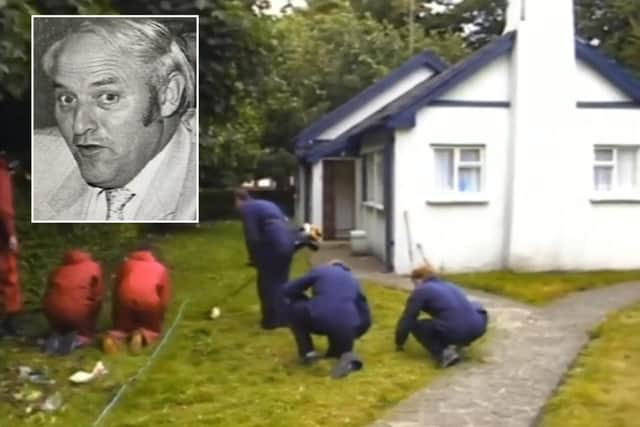

Kenny Donaldson, director at the South East Fermanagh Foundation said the murder "marked a strategic change" for the IRA.
Meanwhile SDLP stalwart Patsy McGlone recalled the revulsion which followed the shooting.
Mr Donaldson said: "His crime was seeking to provide for his family and to provide employment at a time of economic hardship.
“There then followed a raft of murders committed in Northern Ireland over the following years where contractors and also those who worked for them were butchered: Terence McKeever, Henry Brothers, William Hassard, Fred Love, those murdered at Teebane, etc.
“It is important that Seamus is remembered for who he was, and not what the Provisional Republican Movement and others sought to portray him as.
"He was an honourable man. Those who murdered him and denied a wife her husband and children their father are not heroes and martyrs – they are ideologically-motivated terrorists and assassins."
Mid Ulster MLA Mr McGlone, who was general secretary of the SDLP in the mid-80s, told the News Letter: "I remember at the time many people in the community were shocked and disgusted at the murder of a family man, a person who was providing a lot of employment in the area.
"He was needlessly singled out and murdered in a brutal way by the Provos.
"Like so many other of these things it generated a lot of fear, it generated a lot of disgust among people who lived locally and would've known the man.
"It's just another one of those awful atrocities visited on people right throughout the north and further afield: needless murder and loss of life."
Of the campaign against contractors which followed, Mr McGlone said: "Anyone who says there was no alternative to that needs their head examined."
Mr McAvoy lived in Roughan Castle just outside Coalisland, but was shot dead in a second home in Dublin.
According to the book Lost Lives, there had been signs of a struggle, and he had bullet wounds in his back and chest.
The IRA said it had warned him not to supply the security forces "by telephone, by letter, and by IRA attacks on his premises".
The book adds: "A week before Seamus McAvoy was killed, building contractors who worked for the security forces were threatened in an IRA statement published in the Republican News…
"One worker at his Coalisland plant said Seamus McAvoy had consistently refused to pay protection money to the IRA."
A draft letter from the NI secretary to the defence secretary in December 1985, since declassified, stated: "The Provisional IRA have long sought to intimidate building contractors (as well as their workforces) who carry out work for the security forces.
"They have recently sharply stepped up their campaign, and a number of major building contractors have now withdrawn from security contracts."
The years that followed saw the proxy bombing campaign, targeting people who worked on security force bases.
Even a Belfast greengrocer, Wallace McVeigh, was murdered in 1991 for supplying fruit and veg.