
Three lifeguards cleared of breaching their duty of care after swimmer drowned
A jury has unanimously acquitted three lifeguards of breaching their duty of care to an accomplished swimmer who tragically suffered a hypoxic blackout and drowned.
Having heard three weeks of evidence the Newry Crown Court jury of three men and eight women deliberated for an hour and 40 minutes before returning with their unanimous not guilty verdicts today.

Standing side by side in the dock the three defendants showed little emotion as their names were exonerated, but as Judge Paul Ramsey KC thanked the jury for their service, one of them, William Holden, was seen to wipe away tears of undoubted relief.
The three men Cathal McVeigh, 35, from Dunamony Road in Dungannon; William Holden, 26, from Unshinagh Lane in Portadown and James Monaghan, also 26, from Folly Lane in Armagh, had each faced a charge that being an employee, they were in breach of their duty to others on April 7 2017 in that they “failed to take reasonable care for the health and safety of other persons who may be affected by your acts or omissions at work”.
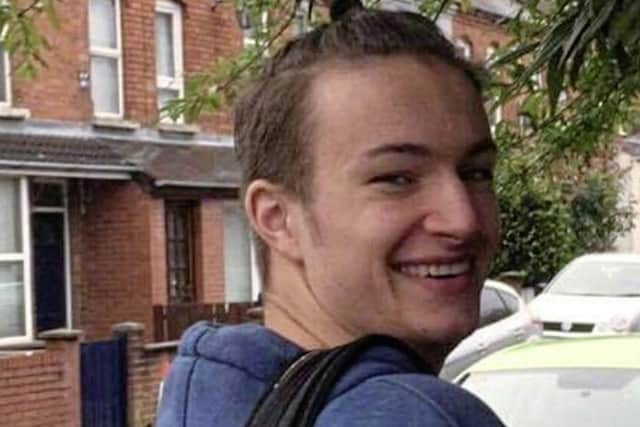
As Judge Ramsey highlighted during his summing up of the case earlier “the person at the very heart of this case” was Christopher Rogers, a 20-year-old whose sad passing had been a “shattering experience for everyone involved” and especially for his family.
Over the course of the last three weeks the jury heard how Mr Rogers, a strong and accomplished swimmer, had completed two lengths of the pool at Orchard Leisure Centre fully submerged and was halfway through a third length when he broke the surface and then sank to the bottom of the pool where he remained for just over five minutes until he was pulled, unconscious from the water.
Unbeknownst to the defendants who were on duty at the time, the 20-year-old had tragically suffered a hypoxic black-out and while they were “focusing intently” on him, they all believed he was following his normal training regime.
The jury heard it was a regular occurrence for Mr Rogers to swim under water and to hold his breath for a prolonged period while submerged.
Each of the defendants told the police and all three gave evidence to the jury that they had “no concerns whatsoever” that anything was wrong.
The jury heard from the defence barrister that while Mr Rogers was submerged for just over five minutes another swimmer in the pool appears to touch him with his foot. He believing that Mr Rogers had given him a "thumbs up" sign.
Tragically, that “thumbs up” signal was actually Mr Rogers’ body experiencing decerebrate and decorticate posturing where his limbs moved involuntarily during a seizure brought on by his brain being starved of oxygen.
It had been the Crown case that each of the defendants breached their duty of taking reasonable care by waiting too long to initiate a rescue, that the prolonged changeover of pool duties distracted them and that they “missed the signs” that Mr Rogers was in danger.
It also emerged that during their training and induction, the lifeguards had received no guidance about hypoxic blackouts or the signs to look for or about the dangers of prolonged breath holding and extensive underwater swimming.
In the weeks and months after Mr Rogers’ death, there were changes made to rules and regulations in swimming pools across the Armagh, Banbridge and Craigavon District Council area and also that additions were made to the Royal Life Saving Society manual for pool lifeguards.