
Troubles legacy: Head of human rights body says state has 'been enabled to shut down investigations into itself'
The head of the NI Human Rights Commission has said that the state has taken “a huge step away from human rights principles” by ending PSNI investigations into Troubles crimes.
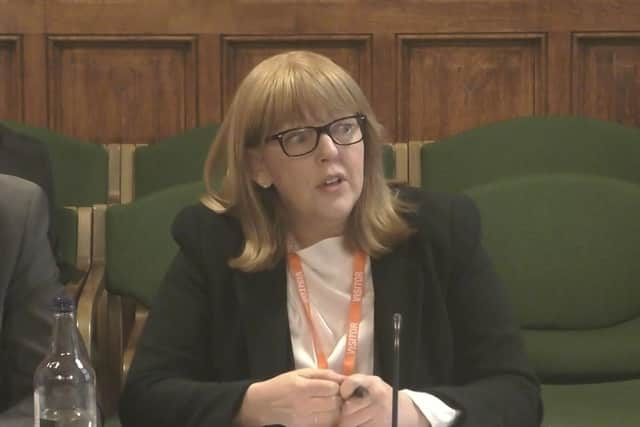
Chief commissioner Alyson Kilpatrick said that the body that has effectively replaced the PSNI – the Independent Commission for Reconciliation and Information Recovery (ICRIR) – was set up to halt investigations of soldiers, and the perception is that it only “became about reconciliation after the event”.
She was giving evidence to Parliament’s Northern Ireland Affairs Committee in Westminster on Wednesday about the amnesty system that was brought into being by the former Tory government’s Legacy Act, and about the ending of inquests into Troubles deaths.
Unionists had voiced anger that, under the old regular court system, soldiers and the police were disproportionately targeted for investigation, despite being behind only around 10% of Troubles deaths, and inquests focussed unduly on the culpability of the state for deaths.

However, the fact that the Legacy Act also prevents regular police investigations into paramilitary crimes has also been widely criticised.
The Labour government has declared its intention to scrap the Legacy Act.
The NI Affairs Committee is currently conducting an investigation into “the Government's new approach to addressing the legacy of the past in Northern Ireland”.
Speaking at the hearing in London, Ms Kilpatrick said that “what's happened is that the state has been enabled to close down all those investigations into itself” and “that is a huge step away from human rights principles, it's a huge step away from the European Convention on Human Rights”.
"As hard as I would like to be constructive and say I think the ICRIR can be maintained and enhanced and tweaked around the edges, I don't forsee a way it's going to end up being able to lawfully discharge the obligations," she said, adding: “We can't forget how this started off, becaus this is what a lot of families and members of Northern Ireland society remember how it started off: it was said expressly to be to protect veterans.
"It became about reconciliation after the event is how it's understood and I think there's some justification for saying that.”
She went on to add: “We had decades of cases going through the courts, and becoming more and more successful actually. The inquests were doing great work…
"In my view, it may be imperfect, but there was nothing wrong with what we had before.”
These imperfections included "a refusal to give disclosure" during inquests for example.
Daniel Holder, director of the Committee on the Administration of Justice (CAJ), was also called to give evience.
"Victims cannot be gaslighted anymore,” he told the committee’s MPs.
"The ICRIR has been re-traumatising enough, and having inquests being taken off them has been re-traumatising enough."
He added: "The legacy act was deliberately done to shut down the package of measures at a time it was most delivering for families.
"And why was that done? It was done because ministers in the then-government, and they openly articulated this, did not like the outcomes of these mechanisms.
"They felt they were creating 'a pernicious counter-narrative' that damaged what they saw as the official truth.
"So logic would have it they're not going to shut down those mechanisms that were doing proper investigations just to replace them with another mechanism that does exactly the same types of investigations and comes up with the same outcomes."