
What is DNA, what is chromatography and what does a scenes of crime officer do? Your questions answered
DNA is the hereditary material in humans and almost all other organisms.
Nearly every cell in a person's body has the same DNA.
Most DNA is located in the cell nucleus (where it is called nuclear DNA), but a small amount of DNA can also be found in the mitochondria (where it is called mitochondrial DNA or mtDNA), according to Medline Plus.They add that Mitochondria are structures within cells that convert the energy from food into a form that cells can use.
What does DNA stand for?
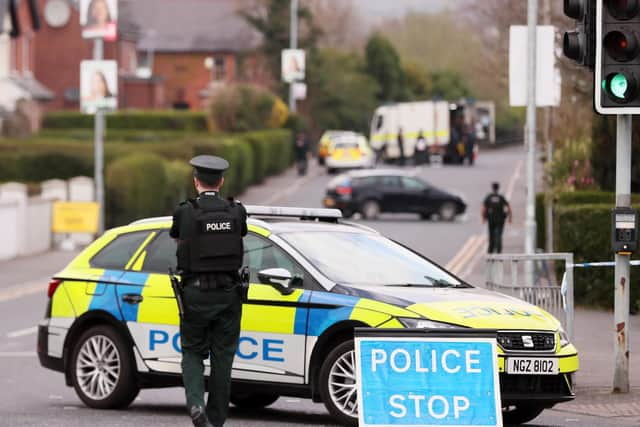

DNA, or deoxyribonucleic acid, is the hereditary material in humans and almost all other organisms.
Nearly every cell in a person's body has the same DNA.
What is chromatography?
Chromatography is a technique for the separation of a mixture by passing it in solution through a medium in which the components move at different rates.

According to ThermoFisher Scientific chromatography gets its name from a technique first used in the late 19th century to separate pigments in a complex mixture.
If a sheet of paper or cloth contacts a container filled with water or alcohol in which a complex pigment is dissolved, capillary action will carry the mixture up the paper or cloth, but the components of the pigment will not all travel at the same rate.
Chromatography was initially used by artists, color theorists and artisans hoping to perfect industrial dyes for textiles.
With time, it also spawned a unique branch of chemistry, and with it, the techniques used today to understand and purify mixtures.
In modern laboratories, the color aspect is no longer relevant, but the same principles apply.
By dissolving a mixture of interest in a mobile phase and transporting it through a stationary phase, the components of the mixture can be separated from one another based on their different speeds of travel.
AND a scene of crime officer, according to targetjobs.co.uk is able to use all the above in their daily work.
According to the job description, scene of crime officers identify and collect forensic, photographic and fingerprint evidence from crime scenes.
Scene of crime officers (SOCOs - work alongside police officers to help solve crimes.
They're experts trained to take photographs of evidence and identify traces left at crime scenes.
They attend a wide range of scenes including vehicle crimes, burglaries, murders and unexplained deaths. They may also attend post mortems.
Other typical responsibilities include:
* responding to and prioritising calls from police officers
* taking charge of crime scenes to avoid contamination
* establishing what evidence is required from incident scenes and how best to obtain it
* writing reports
* dusting for fingerprints and searching for footprints
* using scientific techniques to gather forensic evidence such as blood, hairs, fibres, paint, glass and other traces left at crime scenes
* taking fingerprints
* attending court and giving evidence.
According to the site the key skills for scene of crime officers are:
*a logical and enquiring mind
* meticulous attention to detail
* an understanding of the legal system
* understanding of certain scientific methods
* a certain level of photography ability
* excellent written and oral communication skills
* good teamworking and problem-solving abilities
strong people skills.