
Young Co Down driver who caused death of well-known musician Alisdair Wallace is given suspended sentence
A Co. Down woman who caused the death of well known musician Alisdair Wallace when she failed to see and stop at a notorious cross roads walked free from court today after her 12 month jail sentence was suspended for two years.
Sentencing Amy Allen at Downpatrick Crown Court, Judge Geoffrey Miller KC said it was clear that just like the grieving friends and family of the legendary trumpeter, the 24-year-old “knows only too well that because of her carelessness he has been denied the opportunity that time would have brought him to enjoy the many aspects of life that he had embraced.”

“She will have to live with those few seconds of inattention,” the judge told the court, highlighting that the tragic case serves as a reminder that “a simple act or lack of concentration can lead to catastrophic or in this case, life ending results.”
“All of us who get behind the wheel of a car must bear in mind that it can be an instrument of death and destruction if we allow ourselves to be distracted and the consequences for the road users…can be devastating,” he warned.
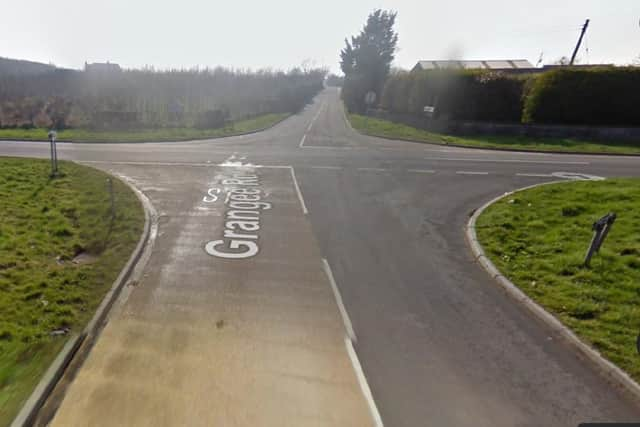
Judge Miller said while he considered Allen’s driving to fall just short of dangerous driving as she had failed to see multiple warning signs, it was also a factor in his consideration that not only had she led a “blameless life up to now” and was highly unlikely to ever stand in a dock again, but where the accident happened was an accident blackspot which had been the subject of discussion and lobbying by local politicians.
Known locally as the four road ends crossroads, the judge revealed that a Freedom of Information request from the Department of Infrastructure disclosed that in the six years before Mr Wallace tragically lost his life, there had been some 22 collisions including two which were fatal, five which were serious, seven people were seriously hurt and a further 43 were slightly injured.
Judge Miller said that since the tragedy on 1 April 2021, extra signs had been erected warning other drivers of the impending cross roads.
Allen, from Meadow Court in Ards, was due to go on trial yesterday (Monday) but after prosecuting counsel Jonathan Connolly added a second charge to the indictment, the 24-year-old entered a guilty plea to causing the death of Mr Wallace by careless driving.
Mr Wallace (66), who was from Kircubbin and played the trumpet at hundreds of pantomimes at the Grand Opera House, died after his motorbike collided with Allen’s VW Up car on the Ballyblack Road East on 1 April 2021.
Opening the facts of the case on Monday Mr Connolly said there was dash cam footage taken from the defendant’s own car which showed that as Allen approached the junction, her car was travelling at around 43mph in the 60mph zone but that she failed to stop.
As she crossed over the line, Mr Wallace’s motorbike struck the front driver’s side of the car, flinging him over the bonnet and roof as the VW carried out before crashing into a tree.
A post mortem established that Mr Wallace had sustained massive injuries including fractures to the majority of his ribs, lacerations to his heart and a bleed on the brain, the culmination of which meant that his death was almost instantaneous.
Turning to the mechanics of the fatal impact Mr Connolly outlined that the time there was a stop sign 100 yards from the junction, another one around 20 metres from the junction, markings on the road to warn drivers and also that the stop line itself would be visible to a driver 45 metres from the junction.
While Allen accepted during police interviews she had been talking to her sister on the mobile phone, prosecuting counsel pointed out that she had been using a handsfree kit.
Lodging a plea in mitigation, defence KC Frank O’Donoghue assured the court and Mr Wallace’s grieving relatives watching on from the public gallery that both he and Allen were “acutely aware that a life has been lost” and that the defendant is “fully appreciative and has to live with the fact that she has been responsible for the death of Mr Wallace.”
“She has instructed me to apologise to everyone for what has occurred,” said the senior barrister, describing the case as “terribly tragic.”
Mr O’Donoghue conceded that “whether or not the conversation [on the phone] contributes in some way to her clear inattention or failure to see the signs is a matter of judgement” but he added there were other factors including Allen’s inexperience, that she was on an unfamiliar road along with the topography of the junction itself.
He emphasised that while there are signs, the road layout was such that the road Allen was on “has the appearance of continuing” so anyone who misses the signs could think they’re able to drive on.
Allen “has always accepted her responsibility” and entered a guilty plea to the offence for which she stood to be sentenced as long ago as February but it was not accepted by the prosecution at that stage.
Mr O’Donoghue argued that along with a lack of aggravating features, there was a wealth of mitigation including Allen’s clear record, early guilty plea, clear shock and remorse and genuine insight on her part.
He revealed that according to psychiatric and psychological reports, as a direct consequence of the accident Allen suffers from PTSD, daily flashbacks and has been prescribed anti depressants although the KC did concede that he was not seeking to minimise the pain and suffering of Mr Wallace’s family and friends.
During his sentencing remarks, Judge Miller said it was clear that Mr Wallace was a “talented musician, described as the best trumpet and flugal horn player in NI going back more than 40 years” and who had played throughout Ireland and beyond, including at the Royal Albert Hall.
The Victim Impact Statements painted a clear picture of a man “with a wicked sense of humour, a warm and charismatic personality, a man of integrity” and who with his recent retirement, was looking forward to doing the things he cherished most.
Judge Miller said while their hurt and suffering was “palpably obvious,” he repeated the often used quotation that sadly, “nothing this court can say or do can restore the life that has been lost or ease that pain but it is hoped that in some very small way, the ending of these proceedings will afford everyone involved an opportunity to reflect and start to rebuild their lives.”
He told Allen while the road signs “should have alerted her to the presence junction, nevertheless the court accepts that this is an accident blackspot.”
In addition to the suspended jail sentence, he also imposed a three year driving ban.