
Soviet spies Guy Burgess and Donald Maclean laid waste to post-war UK-US security relations
Guy Burgess, Donald Maclean and Kim Philby were members of a Soviet spy ring that penetrated the BBC, the intelligence services and the Foreign Office and forwarded highly sensitive information to the Soviets before and after the Second World War and the early stages of the Cold War.
Philby tipped off Burgess and Maclean that they were under suspicion, prompting their defection to the USSR. Their flight in May 1951 caused deep consternation in the UK and the US, exposing deep failures within the security services, severely damaging the UK's intelligence relationship with the US, and generating a mixture of panic, embarrassment, and anger across the British Establishment.
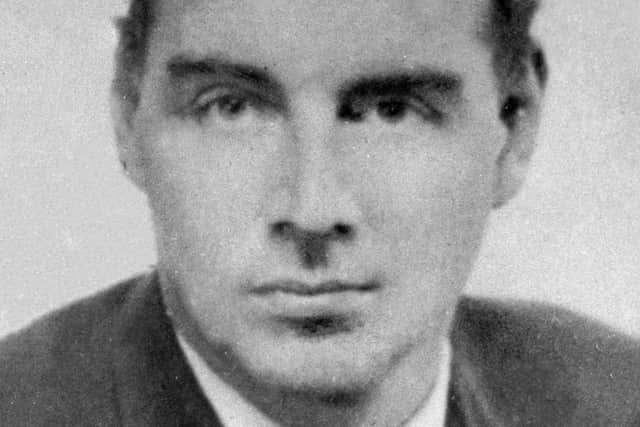

Born into an upper middle-class family, Burgess was educated at Eton, the Royal Naval College, Dartmouth, and Trinity College, Cambridge.
Embracing extreme left-wing politics at Cambridge, he joined the British Communist Party (CPGB).
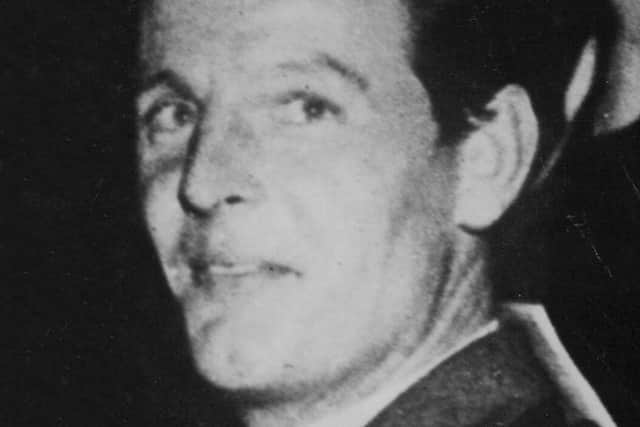
On the recommendation of Kim Philby, he was recruited by the NKVD (Soviet Intelligence).
After Cambridge, he worked for the BBC as a producer and briefly for MI6 before joining the Foreign Office in 1944.
In the Foreign Office he acted as confidential secretary to Hector McNeill who was Ernest Bevin’s deputy.
This post gave Burgess access to secret information on all aspects of Britain's foreign policy during the critical post-1945 period.
Maclean was the son of a senior Liberal politician and grew up in a strongly Presbyterian atmosphere.
He read Modern Languages at Trinity College, Cambridge, and graduated with a First. After spending a year preparing for the civil service examinations, Maclean passed with first-class honours.
At the Final Board, Maclean was asked by one of the panel interviewing him, whether he had favoured communism while a university student, ostensibly because the panel knew of a trip he had taken to Moscow in his second year at Cambridge.
Maclean said: ‘At Cambridge, I was initially favourable to it but I am little by little getting disenchanted with it.’ His apparent sincerity satisfied members of the panel, which included a family friend, Lady Violet Bonham Carter.
In 1938, he was appointed as third secretary at the British embassy in Paris. He also served in London and Washington DC, achieving promotion to first secretary. He was subsequently posted to Egypt, and then was appointed head of the American Department in the Foreign Office.
After their arrival in Moscow, Burgess and Maclean were sent to Kuybyshev, a grim industrial city at the confluence of the Volga and Samara river, which Burgess described as ‘permanently like Glasgow on a Saturday night’.
In February 1956, the Soviet government allowed Burgess and Maclean to hold a press conference – the first hard evidence that the missing diplomats were still alive. In a short statement, they denied they were communist spies and claimed they had come to Moscow ‘to achieve better understanding between the Soviet Union and the West’.
Burgess spent most of his time drinking excessively and complaining to the Soviet authorities. He thought British communists were ‘nicer’ than Russian ones, wore his Old Etonian tie, retained a close interest in cricket and looked forward to Fortnum hampers from his mother.
Viewed as ‘a constant drunk’ and a liability to his handlers, Burgess died of acute liver failure, aged 52, in Moscow in August 1963. He was buried in Donskoi Crematorium. Maclean delivered a eulogy describing Burgess as ‘a gifted and courageous man who devoted his life to the cause of a better world’. ‘The Internationale’ was played by a contingent of the Moscow Silver Band. His ashes were brought back to the UK and interred in a plot next to his father in West Meon in Hampshire in October 1963.
Maclean, a gifted linguist who learned Russian and who worked as a foreign policy analyst, adapted better than Burgess. He died in Moscow, aged 69, in March 1983. After cremation, his ashes too were brought back to the UK and interred after a discrete burial service at Penn in Buckinghamshire.
MICE is a mnemonic used by the CIA to identify the four primary motives for spying: Money, Ideology, Coercion, and Ego.
Burgess and Maclean’s motivation was primarily ideological commitment although ego too may have played a part. In the 1930s they saw the USSR as the chief bulwark against the advance of Nazism and fascism and they had a deep ideological commitment to Marxism-Leninism, believing communism was superior to capitalism.
During the Cold War, they convinced themselves that the US was the chief threat to world peace.
They persisted in believing that the Soviet Union would be ‘a communist paradise’ long after it had become obvious to practically everyone that this was a delusion.
It is difficult to assess accurately the extent of the damage caused by their espionage activities.
Between 1941 and 1945 they provided the Soviets with 4,605 and 4,593 documents respectively.
It is assumed that scarcely anything done by the Foreign Office was not known to the Soviet intelligence services.
However, the apparent ease with which they could acquire and send such significant volumes of data also created suspicions in Moscow that they were being fed misinformation. About half the documents they sent to Moscow were never translated nor read due to this distrust.
The disruption in Anglo-American relations caused by their defection was probably of greater value to the Soviets than the intelligence they provided.
US confidence in British intelligence nosedived when Burgess and Maclean disappeared. Despite their sexual promiscuity, extreme drunkenness and total indiscretion, they had been appointed to prime jobs in London and at the British Embassy in Washington, DC.
The Americans were adamant that such behaviours ought to be regarded as security risks and dismissible offences.
In 1991 Alan Bennett claimed: ‘No one has ever shown that Burgess did much harm, except to make fools of people in high places.’
This is manifestly untrue. They tipped off the Soviets about Western agents and operations, resulting in the compromise, capture, and execution of many anti-communist operatives behind the Iron Curtain who paid with their lives for the betrayal and treachery of Burgess and Maclean.