
Spitfire AA810 Project London: Memorial for WWII RAF unit in which Ballymena man made ultimate sacrifice - the RAF's Photographic Reconnaissance Unit (PRU)


There have been renewed calls for a memorial in London for the unsung heroes of clandestine WWII RAF unit in which a Ballymena man made the ultimate sacrifice.
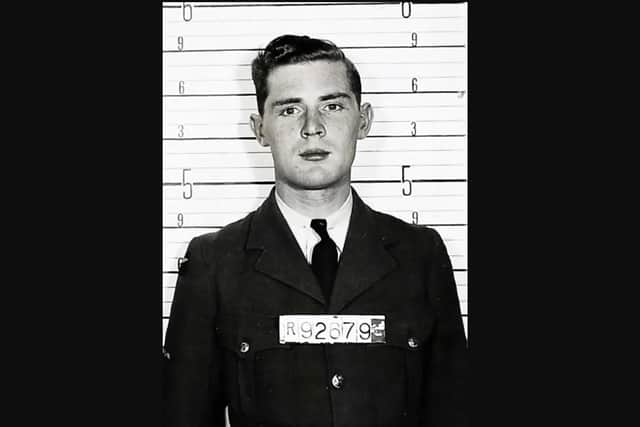
Warrant Officer David O’Neill was a member of the RAF's Photographic Reconnaissance Unit (PRU), made up of many men who risked and gave their lives during the Second World War.
Flying deep into enemy territory, they photographed the movements of enemy supplies, men, ships and planes to gain the vital intelligence for Allied commanders to plot the strategy of the war.
The pilots flew specially adapted Spitfires and Mosquitoes, stripped of weapons and armour to maximise their range, and were thus especially vulnerable to Nazi air defences.
The PRU captured more than 26 million images of enemy operations which were instrumental in planning major operations such as D-Day, the Dambusters raid, the monitoring of major shipping movements such as the Bismarck and Tirpitz, and locating of the launching site of the V1 and V2 rockets at Peenemünde.
Due to the clandestine nature of their operations – they flew solo operations, unarmed and unarmoured – the death rate was nearly 50%.
However, despite having one of the lowest survival rates of the war – life expectancy was around two-and-a-half months – there is no national memorial to the PRU.
One of the pilots was Mr O'Neill, who was born on January 20 1918 in Ballymena.
Living with his parents at 10 York Terrace, he went to school in Ballymena and studied to be an electrician, carrying out part-time work in the local area.
In 1937 he moved to Canada to live with his uncle where he worked in the King Edward Hotel in Fernie, British Columbia as well as volunteering in the local fire department.
He applied for the Royal Canadian Air Force in February 1941 and trained as a pilot before returning to the UK in June 1942. There he was posted with 254 Squadron Coastal Command, but was later moved to 540 Photographic Reconnaissance Squadron at RAF Benson in early November, flying Mosquito aircraft. That same month he married Jane Johns, from Chester.
However, his time with the unit was sadly cut short. On February 20 1943 he and his navigator Sgt Alfred Lockyer took off from RAF Benson for a reconnaissance of Bergen in Norway.
German reports indicate that their aircraft was hit by flak over the suburb of Loddgfjiord. Both men are buried locally in Bergen.
The ‘Spitfire AA810 Project’ in London hopes to have a national memorial to them created in London.
North Antrim MP Jim Allister is keen to have Mr O'Neill included in the memorial and met recently with the project to lend his voice to previous calls.
He said: “I am delighted to support this fantastic campaign to commemorate those who served in the Photographic Reconnaissance Units.
“This includes David O’Neill, who served admirably under exceptionally difficult conditions.
“I look forward to working with the Spitfire AA810 Project to establish this memorial and I look forward to being able to pay my respects there once it is completed.”
Tony Hoskins, spokesman for the Spitfire AA810 Projectm told the News Letter: “The work of those who flew unarmed reconnaissance during the Second World War was so clandestine, its vital contribution to the war effort has almost been forgotten.
"Their dangerous work gathering real-time aerial images, after the analysis work of the photographic interpreters, the information gleaned from these photos provided some 80% of the tactical intelligence used in the allied strategic campaign.
“These young men went to war, deep into enemy occupied territory knowing they were defenceless against attack. In the face of incredible adversity and whilst enduring such huge levels of casualties, these fewest of the few shaped the course of the war in every operation, every offensive plan, and every action, their work was critical.
“For five years we have sought relatives of those who flew these missions of analysed the images, we would dearly love to hear from anyone who might have information. For those in a position to support the monument, we are taking donations via our webpage here: https://www.spitfireaa810.co.uk/product-page/national-pru-monument-donation”.
Contact Tony at: [email protected].