
Ulster veterans of the Iraq war recall the heat and pressure of the conflict 15 years after UK withdrawal
Two Ulster veterans of the Iraq war have remembered the pressure and privations they faced, 15 years after the UK left the country.
The last UK troops in Operation Telic left Iraq on May 22, 2011, bringing to a close the eight-year deployment.

Some 179 UK personnel died during the deployment.
The Royal British Legion had organised an event at Stormont to mark the end of Op Telic in Friday evening, addressed by NI Veterans Commissioner David Johnstone, himself a veteran of the conflict.
Now two other Northern Irish people who were posted there have also shared their stories with the News Letter.
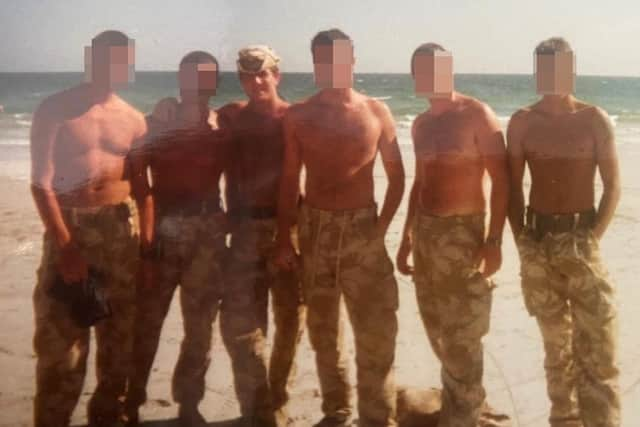
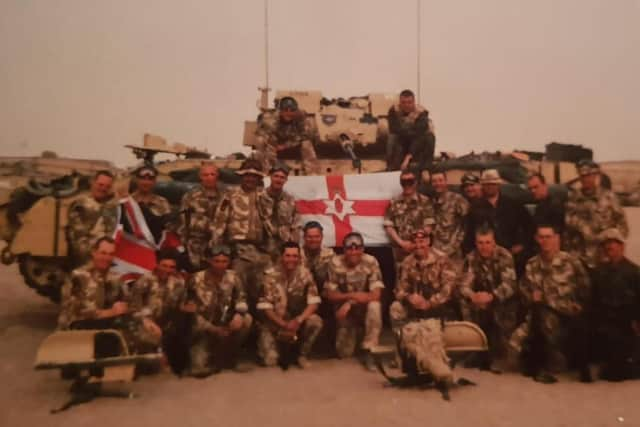
Graham Fergus, 49 and from Carrickfergus, was a lance sergeant with the Irish Guards when he was posted to southern Iraq in April 2003.
He recalled a lack of equipment, the sight of the oilfields burning, and the fear that would may face chemical weapons.
He also remembers the deaths of two fellow Irish Guards whom he had known: Piper Christopher "Muz" Muzvuru (20), from Zimbabwe, and Lance Corporal Ian Malone (28), from Dublin.
"They were killed by some insurgents who sort of snuck round behind them when they thought everything was nice and calm,” he said.
He went on to add: "It was difficult at night-time going to sleep.
"You could just see the tracers flying throught the air – each different nation has different coloured tracers, depending who they were.
"There were repeated mortar attacks while we were lying there.
“We didn’t have the facilities to properly wash or eat.
"We were living off rations and washing in the back of our armoured vehicle which was difficult with seven grown men living in it.
"It was a very small space… but getting out was not deemed safe at that stage.”
Then there was the heat – in celsius terms, it was in the high 40s, and he was inside an armoured vehicle with the engine running.
"And you can’t just get into your flip-flops and shorts,” he said.
"You’re wearing all your equipment, you’ve got you weapon, your helmet on.
"So working in the desert can be challenging.”
What kind of difference does he think he made?
"This is something that probably I will get some flak for,” he said.
"But I don’t think I made a difference at all.
"I still don’t understand what the invasion of Iraq was about.
"I know that the mandate, the story, was that they had WMDs, but that wasn’t anything I encountered.
"I encountered a broken country.
"Soldiers that had surrendered to us were not in good health, they were malnourished.
"The people, apart from saying about the war crimes the government and the regime had committed on them, were just trying to get back to normal as quickly as possible.”
After returning from three months in Iraq, he was posted to south Armagh.
Today he works as a property manager, and often fundraises for veterans’ causes.
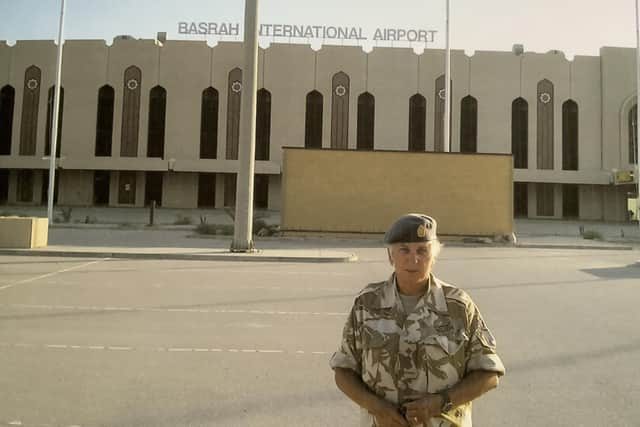
Helen Wilson, aged 68 and from north Armagh, was 45-year-old matron of The Retreat Care Home outside Loughgall when she deployed as part of the TA’s Manchester Field Hospital from April to November 2004.
A captain, she was posted to Shaibah, just outside Basra, working in a field hospital as a mental health nurse.
“On one occasion I was taken, along with two other mental health nurses, in an open-topped Land Rover with my full body armour and weapon, down to Basra Palace,” she said.
"One of the soldiers there had lost two comrades and was in a bad way [mentally].
"It was my duty to assess that young soldier and see if he was well enough to remain and give him other support, and we were able to do that.
"He was feeling guilty that he was alive and his two colleagues had been killed.
"Feeling guilty – could he have done more to have saved them?
"And again feeling ‘am I of any use in the army at all?’”
Being older than many of her comrades helped people “open up” to her, and her previous work as a nurse in Craigavon A&E during the Troubles had helped prepare her.
It was dangerous too.
On one occasion, a colleague had left the base and been pinned down on the road for half an hour, and had been left running low on ammunution.
Mrs Wilson was scheduled to travel along the same road a day later – but they decided on a different route.
"It’s as well we did because there were two IEDs on that road later discovered,” she said.
Like Mr Fergus, she too remembered a lack of proper gear and the fear of chemical weapons.
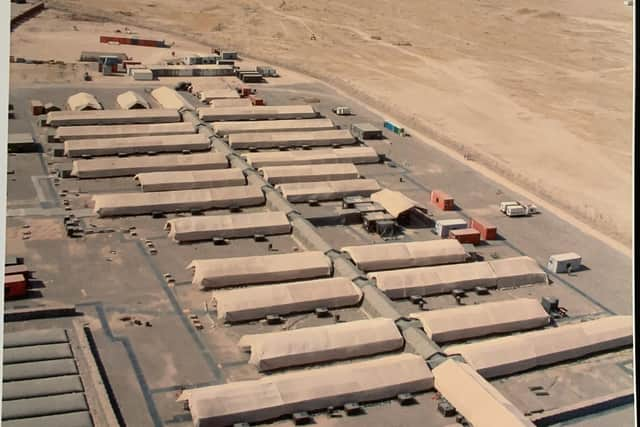
She joked that her “luxury” accomodation was a shipping container, and remembers having to weigh down the tents to protect from sandstorms.
Does she feel she made a difference?
“Quite honestly when you look back now I don’t think we made any difference,” she said.
"The only people we made a difference to was the injured soldiers.
"We were able to help them, and we’ve learned a lot from the treatment of casualties which has helped on Civvy Street as well.”
Mrs Wilson went on to be posted to Afghanistan too.
Ultimately, she had “a positive experience in the military, and I felt honoured to have been able to serve with them now – I don’t regret it”.