
Blue-green algae plaguing Lough Neagh 'could be turned into food and face-cream' says scientist
A company which has been handed a government grant to try and solve the problem of blue-green algae on Lough Neagh says that the toxic bacteria actually has some useful applications.
Varicon Aqua Solutions Ltd is one of five groups to have shared in a £450,000 pot of cash parcelled out by the Department of Agriculture, Enterprise and Rural Affairs (DAERA) this week in order to conjure up workable ways to combat the infestation.
Jacob Searle from Varicon said once captured and processed, a substance called phycocyanin can be extracted.
This is used as a food pigment and in skincare items.
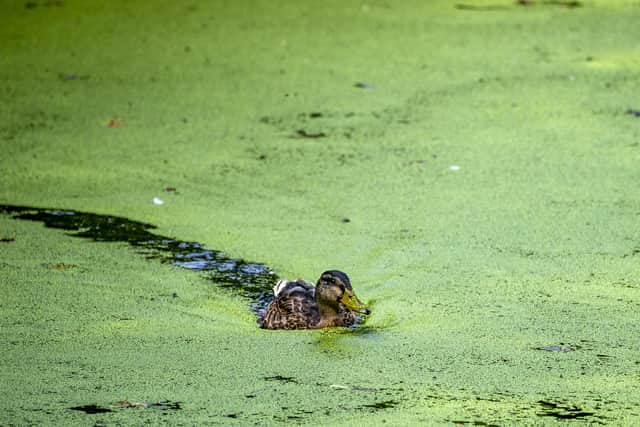

The blue-green algae blooms which are plaguing the lough rely in part on phosphorous.
Mr Searle said that if you simply kill the blue-green algae (more properly known as cyanobacteria) then “the phosphorous, which is the problem, is still in the system, because you sank it down to the bottom of the lake”.
Instead, they are working out how to harvest it, possibly using some kind of barge.
"We’re taking it out of the system, and we’re essentially trying to get value-added out of the algae itself.
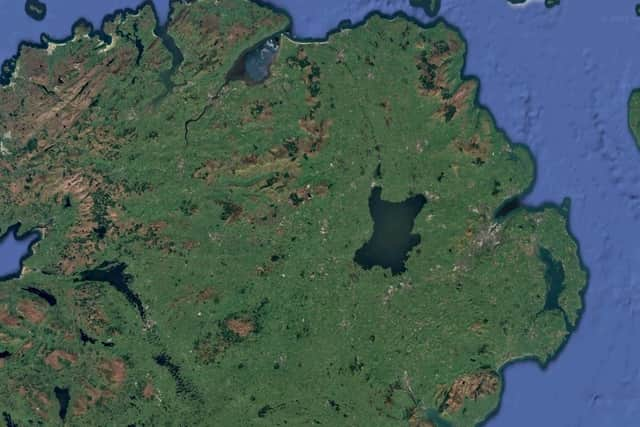
"Phycocyanin is kind of the key focus in terms of a higher value product.”
For an example of how it could be used, Mr Searle pointed to the fact that blue Smarties were withdrawn from production some years ago over fears that the E-number in them “made kids hyper”.
Instead Nestle replaced the E-number with… phycocyanin from blue-green algae, putting them back on the market.
"That’s one random example,” said Mr Searle.
"It’s the ‘blue’ in the blue-green algae. That’s one of the key focuses.
"There’s fertiliser options and biogas options and stuff, but primarily phycocyanin is the angle we’re approaching.
"It’s actually good for you. It’s an anti-oxidative compound – they put it in face-creams and stuff like that.”
Very roughly 10% of the algae’s weight could be phycocyanin, and the proposal is to harvest it and keep it alive to retain its chemical value up until the point it can be freeze-dried.
“That’s the idea: instead of it just costing the government money to deal with this, there [can be] a bit of a circular economy in fixing it,” said Mr Searle, who has degrees in marine biology.
"We’re not the final solution. The solution is to reduce phosphate loads from, mostly, agricultural run-off.”
This, he said, is a perhaps 40-year endeavour.
The handing out of grants to the five groups to come up with ideas of combating blue-green algae is Phase 1 in the plan.
DAERA has said: “Following the conclusion of this proof-of-concept Phase 1, we are expecting to launch a closed call competition for a further development phase.
"The five suppliers who participated in Phase 1 will be invited to submit proposals.
"It is anticipated that the most promising two or three potential solutions will be funded at this stage, but the number will be dependent upon the outcome of the research findings and budget available."
Varicon is a 14-strong firm based in Worcester, in the English east midlands.
The other groups which were handed funding were: Clear Water Systems Ltd (based in Bermuda); Helix8 Ltd (based in London); Queen’s University Belfast; and Wholeschool Software Ltd (Biild), based in Belfast.