
Mechanical beach cleaning plan is blocked
A bid by the DUP to push through a mechanical cleaning regime on coastlines along North Down and the Ards Peninsula has been blocked by other political parties, after being described as “expensive” and “dangerous.”
Opponents claimed the mechanical equipment would prettify beaches and sand dunes to the cost of local biodiversity and the ratepayers, and could sit dormant and unused due to Northern Ireland legislation.
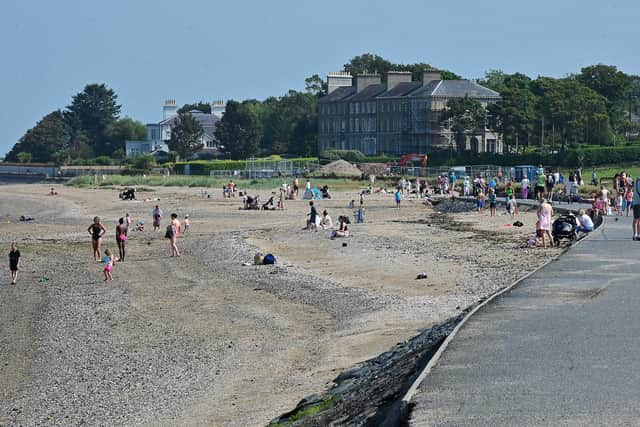

Ards and North Down Borough Council officers estimated an initial capital cost of approximately £125,000 for a mobile machinery wash-down unit and a mechanical beach cleaner.
At the meeting of the council’s Environment Committee earlier this month, officers recommended that the mechanical beach cleaning equipment not be used, but DUP Alderman Robert Adair led the charge to ignore the officers’ recommendations.
Alderman Adair said residents and tourists alike frequently raise concerns relating to cleanliness, maintenance and environmental protection of beaches in the borough, and argued mechanical beach cleaning used to be standard practice, without negative effects.
A host of absences from opposing parties in the chamber during the committee meeting at Church Street in Newtownards affected the vote, and the DUP were able to push through a decision to ignore the officer’s recommendation and go ahead with purchasing of the equipment.
However at the full monthly meeting of Ards and North Down Borough Council on Wednesday evening this decision was blocked after a UUP amendment was adopted which proposed gathering more information from experts on the mechanical cleaning regime.
UUP Councillor Peter Wray proposed the amendment to the DUP proposal that the council agree “in light of the regulatory, ecological and financial evidence to pause the proposed purchase of the mobile washdown unit and mechanical beach cleaning equipment.”
He also proposed that the council invite the Department of Agriculture, Environment and Rural Affairs, and the Northern Ireland Environment Agency to present to the council’s Environment Committee on mechanical beach cleaning, including benefits and potential impact on wildlife, dunes, and vegetation and its relationship to erosion.
Alliance Councillor Patricia Morgan said: “This saga has been going on for all too long. We’ve been debating this since 2023, every angle has been considered. DAERA and NIEA will tell us what we have already been told, and what is also contained in the report.”
She said: “It is not likely that permission to use these machines will ever be granted, and in my view, that is quite right. Beaches are natural areas, some have seaweed, some don’t.
“Seaweed on a beach is not a sign of neglect, it is the way it is, it is the way it is made. We desperately need to start thinking about beaches and seaweed differently.
“We have learned much much more about our environment and we need to do many more things to improve our environment. Mechanical beach cleaners are damaging to the beach environment.”
She added: “I actually asked about the level of complaints at beaches, and was told there were six complaints on peninsula beaches since 2022, all of which were dealt with appropriately, without the need of a mechanical beach cleaner.”
A vote on the UUP proposal to block the purchase of the equipment pending further advice passed, with 22 votes in favour from the UUP, the Alliance Party, the Green Party, and three Independents, to 13 votes against from the DUP.
Officers said in a report for the Environment Committee: “The proposed beach cleaning and seaweed removal works are likely to require careful assessment because all four locations identified: Millisle, Cloughey, Seapark (Holywood) and Portavogie, are within or affected by sensitive coastal, marine or bird designations. The main legislative controls are likely to include marine licensing, protected site assent, Habitats Regulations Assessment, wildlife protection and waste/disposal controls.”
They recommended councillors “endorse a phased, nature-based management approach for the surveyed sites, subject to site-specific assessment, approvals and available budgets, including appropriate conservation, access management, community engagement and monitoring measures.”
The Northern Ireland Environment Agency have already told council officers that the environmental designations and site-specific conservation objectives applying to the Ards and North Down coastline would “make approval difficult and, where any activity was capable of being approved, it would be subject to significant restrictions and mitigation.”