
QUB academic says original reasons for moving clocks forward in Spring now redundant
An academic at QUB says the original reasons for moving our clocks forward in Spring are now redundant.
However he says that despite an EU vote to do away with the convention seven years ago, no member state has yet implemented it.
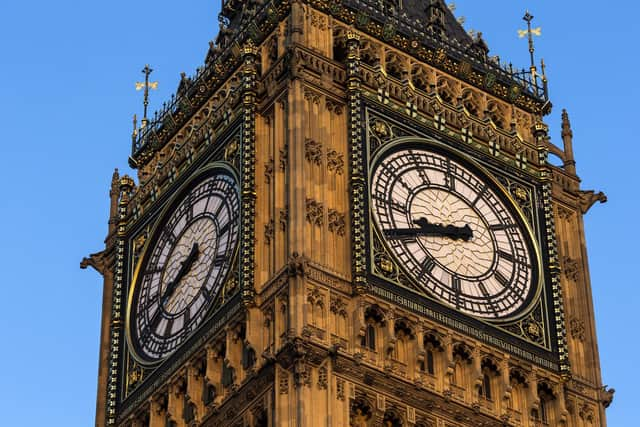

Dr David Laverty, a Reader in the School of Electronics, Electrical Engineering and Computer Science at Queen’s University Belfast was speaking ahead of the clocks changing changing to British Summer Time this weekend.
He says that the practice of changing the clocks twice yearly dates back to 1916 to boost industrial productivity and conserve fuel used for lighting and heating across Europe during the First World War.
However, technological changes since then mean that a reduction in energy use from the clock change is likely to be negligible.
The big challenge in future, he says, will be matching the variable power generation from seasonally variable renewable energy sources to the precise timing that it is needed by consumers.
Discussions have been ongoing for years on whether to abolish the clock change, he says.
Some critics have argued that money could be saved on energy consumption while others believe the change disrupts circadian rhythms.
“Changing the clocks to save energy used to make sense whenever lighting was one of our main uses of electricity, and when industry was tied to daylight hours. However, we now use very efficient LED lighting and most of our electricity consumption is for other tasks.”
Modern electricity use is dominated by activities such as electronics, cooking and heating, which are largely unaffected by a one-hour shift in the clock, Dr Laverty argues.
He added: “As we move towards renewables, however, we’re dealing with energy sources inherently linked to weather patterns and the seasons, which means that although their output can be forecast, it might not be when we’re expecting to use it.”
This is being addressed through battery storage and other approaches, however, we need to find new ways of using energy at times when it’s more available.
“In that sense, we do need to change how we consume energy – but not necessarily change the clocks!”