
Ireland 'marking UK's homework' on new Troubles legacy bill
The idea the Irish government is committed to Troubles legacy laws is “fanciful”, DUP leader Gavin Robinson told the House of Commons today.
Speaking as Northern Ireland Secretary Hilary Benn unveiled new legislation intended to deal with issues stemming from the conflict this afternoon, Mr Robinson said: “That we stand here today during a statement on legislation that has yet to be introduced, and therefore we have no detail, is disgraceful.
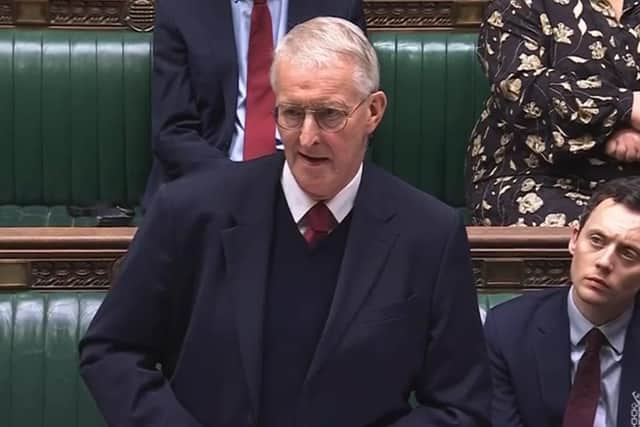

“And the suggestion that the Irish government have committed to legislate at all is entirely fanciful. They have not.”
Brought to the Commons, the Northern Ireland Troubles Bill is to repeal and replace the controversial Legacy Act introduced by the last Conservative government.
It will reform the Independent Commission for Reconciliation and Information Recovery set up by that act, renaming it the Legacy Commission.
It’s also claimed to pave the way for new information-sharing arrangements with authorities in the Republic – an idea unionist politicians poured scorn on.
TUV leader Jim Allister argued the bill “requires nothing meaningful” from the Irish government, and queried how it could “command any respect” from victims.
And UUP MLA Doug Beattie accused Mr Benn of having been “pulled by the nose” by the Irish government, stating Dublin “would stand like a schoolteacher marking the UK’s homework” yet is not required to set up its own enquiries into Troubles cases.
Shadow Northern Ireland secretary Alex Burghart brought up protections for veterans who served in Northern Ireland, stating said the last Conservative government brought in laws to “draw a line under” cases against them.
“This government is erasing that line and, as it does so, many former servicemen will again feel with profound unease that the lawyers are coming,” he said.
He claimed that there are “no new protections for veterans” as anonymity, age-related considerations and remote hearings are already available at the discretion of the court.
Responding, Mr Benn said that, while the last government sought to draw a line under litigation, “it didn’t work” and that when doing so they also gave terrorists immunity from prosecution.
He promised “strong safeguard for veterans” that reflect fairness under the law, rather than immunity.
Said Mr Benn: “The government is introducing strong safeguards for veterans that respond directly to the concerns that have been expressed to us.
“The welfare of veterans will be given proper consideration as part of any assessment as to whether they are required to give evidence. This will include the right for veterans to seek anonymity.”
Nine inquests will be restored by the bill, said Mr Benn, including one into the deaths of eight IRA members and a civilian shot by the British SAS and Loughgall in 1987.
A further 24 cases will be referred to the Solicitor General to decide whether they will be best served by the coronial system or the Legacy Commission.