
Northern Lights dazzle the skies in Northern Ireland and could make further appearances on Sunday and Monday
Stargazers were treated to a dazzling Northern Lights display on Saturday night which was visible across Northern Ireland – and they may be visible again on Monday evening.
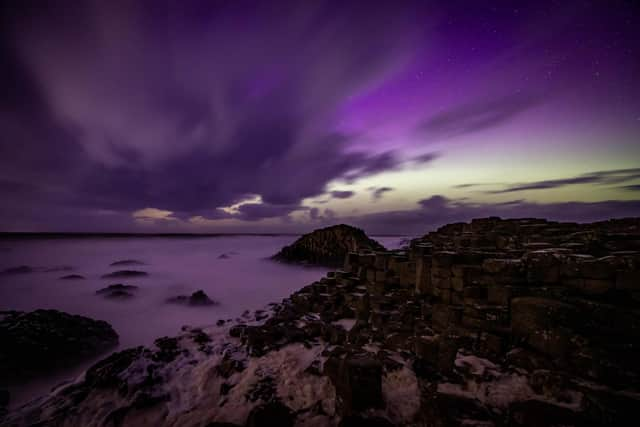
The aurora borealis lit up skies over the Giant’s Causeway along the north coast to Helen’s Bay in Co Down.
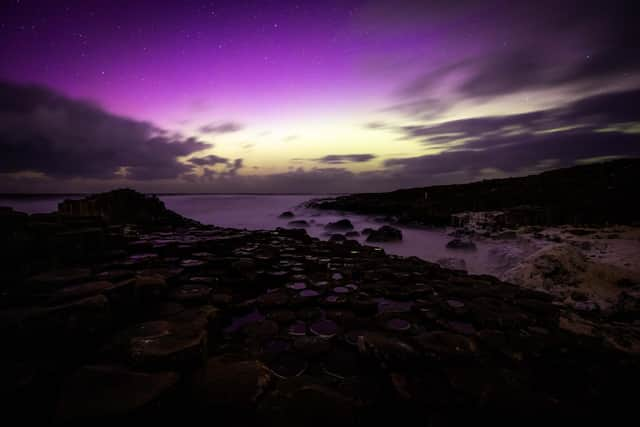

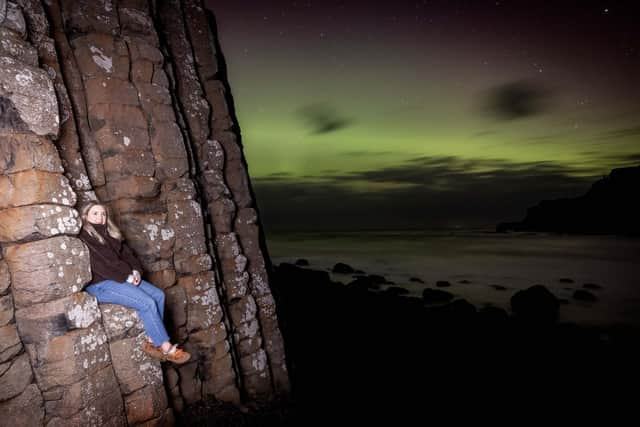
Pictures shared on social media also capture the green and pink spectacle in parts of Co Armagh and Co Tyrone, as people across Northern Ireland looked to the skies to catch a glimpse of the natural phenomenon.
The Met Office said the Northern Lights could be visible in Northern Ireland again on Monday night and possibly even Tuesday.
"The northern lights are expected to be a little weaker on Sunday night but may still be visible,” said forecaster Greg Dewhurst.
"There is a stronger signal for them to return Monday night ahead of them fading again from Tuesday.
“Cloud will slowly increase from the south on Sunday night and overnight, so may begin to limit viewing. This cloud may clear slowly though Monday night.”
The phenomenon is most visible in the time around the equinoxes in spring and autumn.
It is triggered by solar activity, the Met Office said.
The sun emits charged particles known as solar wind, which, when they interact with the Earth’s magnetic field, are funnelled towards the magnetic poles.
As the energetic particles collide with gases in the upper atmosphere, they release energy as light.
Oxygen produces green and, at higher altitudes, red, while nitrogen creates blue and purple hues, the weather forecaster said.
The spectacle can sometimes be better seen through a camera than by the naked eye, meaning even those who struggle to spot the colours overhead may be able to capture them using a smartphone or camera.
Conditions also play an important role in viewing the display, with clear skies offering the best opportunity to see the lights. Increasing cloud cover can obscure the phenomenon, even when solar activity is strong enough to make it visible.
“Long exposure camera shots may show something each night a little further south than the above visible by eye forecast,” Mr Dewhurst added.