
Ben Lowry: Electricity is just the sort of complex long-term issue that Stormont might neglect
Further up the paper our reporter Adam Kula has been trying to figure out whey Northern Ireland was out of power for so long.
Was it merely the force of the storm? Was it a failure in the response? Was it in fact an infrastructure issue?
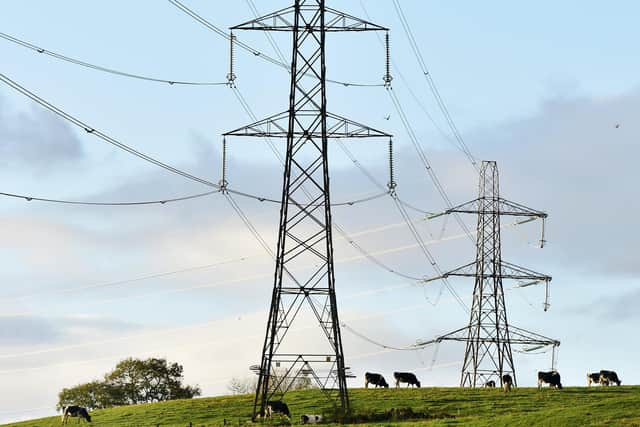

It will take time to understand the answer to all those questions, and it might be a combination of all three. We will continue to examine the matter in our reports.
Certainly, as John Wylie of the Met Office explains, the storm was not just severe in terms of its unusually high wind speeds (approaching 100mph) it was the duration of those winds and the fact that they were prevailing across Northern Ireland.
Even so, however, the Republic was battered too, as was Scotland, yet the latter had by Monday restored power to the same percentage of overall Scottish properties, pro rata, as it took us until Thursday to achieve.
As Adam reports there are indeed infrastructure concerns with regard to our electricity network.
Electricity and the power grid is a very complex aspect of engineering, with responsibility divided between NIE and the regulator.
Even so, I would be surprised if there were not infrastructural problems that have been caused by politics here.
I often think that the potholes that have been emerging in roads across the UK, often left unfixed, are a manifestation of the sort of problematic, you could even say cowardly, politics that we now have.
Things like potholes are neglected because they are not glamorous. It is much easier to spend money on pay rises for public sector staff than on the services themselves.
I think we see this more and more in issues like the health service, the symptoms of which are breathlessly reported (waiting lists, ambulances queuing at A&E, etc), but the underlying causes are ignored. Pay demands are made, the public sounds its horn when it drives past strikers, settlements are made, and then there is even less money for the actual services.
Increasingly we have political leaders, even conservative ones, who refuse to argue against such demands.
They don’t explain that much of the pay package is already good – pensions are so generous in the public sector that they are helping to bankrupt the country.
Politicians don’t explain that we can’t keep providing so much on the NHS amid a massively rising population, in particular an ever growing elderly population. There might be things such as over-the-shelf medications that can no longer be given out on prescription for free. There might be services that have to be axed (have you noticed that GPs no longer remove ear wax?).
Unless we are honest about the impossibility of providing all non-urgent services for free amidst greater health pressures, we will see the slow, undeclared privatisation of much of the health service, as we are seeing in dentistry.
Politicians in Westminster are bad at all these things. Politicians in Northern Ireland are all the worse. They never tell people difficult truths. They always back demands for more funding, yet refuse to ask people to help with such funding by – for example – paying water charges, as everyone else in the UK has to do.
We saw that last week in response to Storm Eowyn, with demands for compensation for those who lost power for days. The suggestion is perfectly reasonable, but it again addresses the symptoms rather than cause. Was there a failure to invest in infrastructure that helped cause the unacceptably long power outages?
Look at our crumbling water and sewerage infrastructure, which is just the sort of complicated, ugly, costly long-term matter that MLAs have neglected.
Meanwhile, debt in western countries like Britain and America and France is at sky high levels. It means that more and more money is spent on interest instead of services. It is happening at a time of vast expenditure demands in education, in defence, in welfare, and – above all – in health.
I think this is all a threat to democracy in that we will increasingly find that tyrannical societies such as China make the difficult policy changes that need to be made, but democracies don’t.
I don’t write that to advocate a retreat from democracy. I say it in dread of such an outcome.
• Ben Lowry (@Benlowry2) is News Letter editor