
Ben Lowry: Northern Ireland's Olympic heroes deserve an open tour bus tour through Belfast city centre
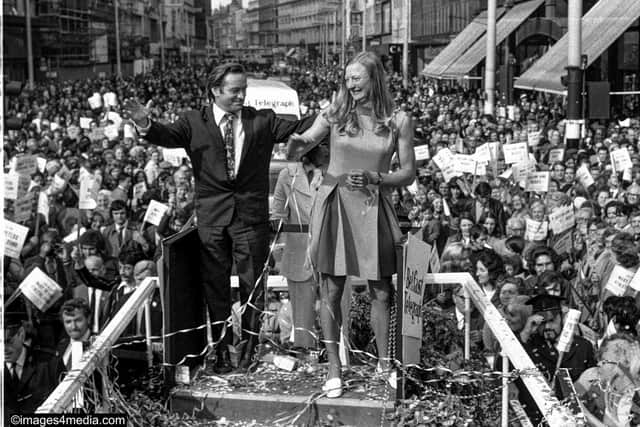
The picture on this page will be familiar to many people who remember Mary Peters winning Olympic gold in 1972.
It shows a scene, indeed, that is familiar even to people like me who were too young to remember it but have since seen images of the joy that her victory in the pentathlon in Munich generated back home.

Mary Peters went on to win BBC Sports Personality of the Year, which few sports people from Northern Ireland have won, perhaps because the entire UK public gets to vote on the winner, and our NI stars are often less well known in Great Britain than footballers and other sporting names.
But there is another striking aspect to that Belfast open top ride through the city centre – it was taken at the only time NI came close to civil war. The 1970s was by far the worst phase of the troubles, worse even than the worst years of the 1980s, which were grim. The most violent year of all was 1972, when almost 500 people were killed – a terrible toll for a small society with a then population of 1.5 million people. And the worst point in that most violent year was the summer. July and August of 1972 saw scores killed each month, more than any other months in any other year.
This was the backdrop to Mary Peters’ gold medal in an Olympic Games that began in August of that year, and ended in early September. It was a stunning success at a time when NI had little else to cheer about. Sport was one of our big escapes from the trauma. George Best, one of the world’s best footballers, was still playing top flight soccer at Manchester United then. Alex Higgins won the World Snooker Championship in 1972.
Terrorism then was not just a problem in NI. The Munich Olympics ended in the horror of Palestinian extremists murdering 11 Israeli athletes and coaches. But as we showed in NI, you try to keep the show on road in dark times. When pop stars began to return to Belfast from the late 1970s, they often said they got a better reception here than anywhere else. It was normality and a release.
And so Mary Peters was driven through central Belfast just weeks after the IRA Bloody Friday massacre in the city, and months after other atrocities such as the bombs at the Abercorn bar and the News Letter in which nine people were killed. Amid such dangers, did people cower at home when Mary Peters made her triumphant return? Heck no. Look at the delighted crowds stretching down Donegall Place towards Royal Avenue.
This year something incredible happened at the Olympics. Not only did Northern Ireland athletes win the first summer Olympic individual NI gold since Mary Peters in 1972, but NI competitors won four golds (two of them individual). Six athletes competing for both Team GB and Team Ireland won seven medals. This is not merely NI’s best Olympic medal haul by far, it is also a triumph disproportionate to our population of two million people. NI makes up less than 3% of the population of Britain and Ireland, yet our athletes got 10% of the medal haul – 7 out of 72 medals for Team GB and Team Ireland (the number of athletes who shared in a medal is greater than the number of medals, due to team wins, but even so NI won more medals per head of population than the rest of these islands). And this, we should note, is despite Team GB having had its third biggest number of medals since the Olympics began in 1896.
Some of the happiest memories of my childhood are the NI team beating Spain in 1982, Barry McGuigan becoming world featherweight champion in 1985, Dennis Taylor winning the World Snooker in 1985. Taylor’s win was so thrilling he still has the biggest after midnight audience ever on British TV. McGuigan was driven through Belfast to throngs of crowds.
The key question for me regarding a Belfast homecoming bus parade is why it has not yet happened. But if politicians are slow to act Trevor Ringland has a great idea: that the private sector arrange it.
Mary Peters’ bus tour and reception at Belfast City Hall was two days after the 1972 games ended. It is now a week since the Paris games ended. The crowds that have turned out to greet Hannah Scott, Daniel Wiffen, Jack McMillan and Rhys McClenaghan show the appetite there is for honouring the fine young athletes, who have brought fresh joy to our sometimes troubled country.
Some people might fret about what flags should be flown in such a homecoming. I say let the athletes come in their team outfits wearing their medals, and let crowds fly whatever flags they want, if any. I might wave an NI flag, others a Union flag, or a Tricolour or a peace flag, or none at all. But we must let the public show its happiness for our athletes who have proved themselves best in the world.
• Ben Lowry (@BenLowry2) is News Letter editor