
Alex Burghart: If need be to protect veterans and prevent wounds of the past being reopened, we’ll scrap Labour legacy plan
Last week the House of Commons debated the latest phase of the Labour government’s Legacy reforms.

This was a so-called Remedial Order which, if passed, allows the government to strike down the parts of the Conservative’s Legacy Act which created conditional immunity and ended civil cases.
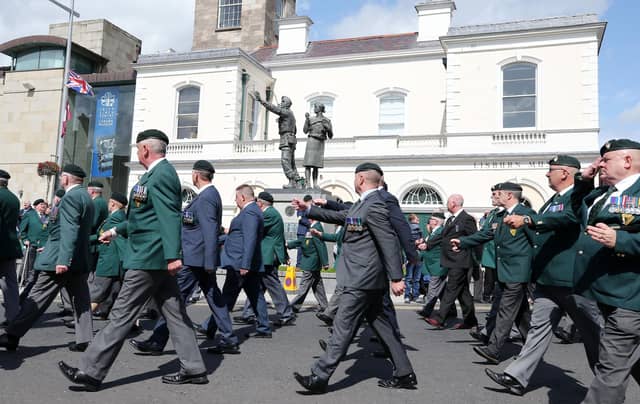
Our reason for introducing these measures was two-fold. First, to extend the peace process policy of offering immunity in return for information, Second, to help draw a line under the litigation of the Troubles which, now, at this distance, so rarely gives closure but which regularly drags veterans through the courts for years at a time. Late last year we saw the collapse of the case of Soldier B, a former special forces soldier. The judge in the High Court described the case against him as “ludicrous”, “unmeritorious”, and “utterly divorced from reality”, but not before the veteran in question had been investigated for four long years.
It was time, we believed, to let wounds heal. To accept that that could not be done through an adversarial system that was one-sided and which was the continuation of the Troubles by other means – and that this itself was a barrier to reconciliation.
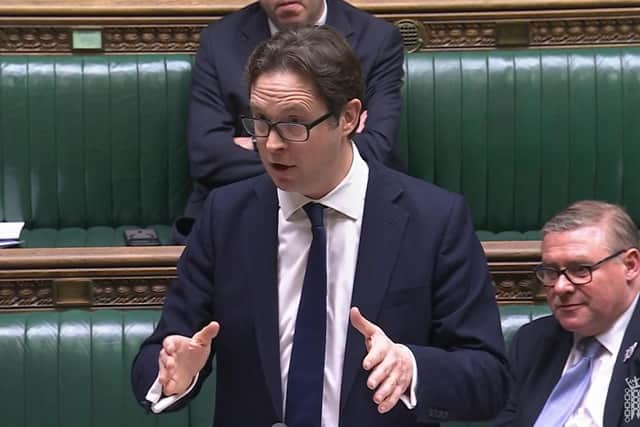
The Labour Party is currently seeking to dissolve this settlement agreed by the last government – but, as I emphasised to the Secretary of State in the Commons, its reasoning is heavily flawed. The government claims that it finds conditional immunity abhorrent. And yet conditional immunity underpinned much of the peace process legislation which, in power, Labour passed.
The laws that underpinned the decommissioning of weapons allowed for the destruction of huge amounts of forensic evidence which could have led to convictions. The legislation around victims remains granted immunity to those who disclosed the location of murder people – and prevented the use of forensics from their bodies being used in court. And then there were the Letters of Comfort, the use of the Royal Prerogatives of Mercy, and so on. Each of these uses of conditional immunity effectively created protections for paramilitaries. But when the Conservatives sought to deploy conditional immunity for the protection of veterans, the Labour Party objected.
The government also claims that it had no choice but to repeal our legislation because the courts had found it incompatible with the European Convention on Human Rights. But the government dropped our appeal to the Supreme Court which stood a very high chance of success. Not least because conditional immunity has already been used and accepted in Northern Ireland. But ultimately it also has the choice, which Conservatives would take, of leaving the convention which was created in a different age and whose jurisprudence has warped it out of recognition and good sense.
Likewise, Labour have asserted that our legislation had no political backing in Northern Ireland. But by that logic, they would not proceed with their own which has commanded no support. In any case, legacy is not a devolved issue. Had there been a solution which commanded cross-party support Stormont would have found it. As it is, there are many in Northern Ireland who, in private, fully respect the decision to draw a line and move on, just as they did in 1998.
The question then becomes, what is the real reason for the government’s desire to override our legislation? One suspects – but cannot know – that this is a misjudged attempt to curry favour with Dublin which has been always opposed to immunities for veterans in any form. Labour, it must be assumed, believes that the support of Dublin is essential for its so-called EU Reset (a code for accepting EU laws whilst having no say over their construction and paying for the privilege). Even on its own terms this is mistaken. The EU Commission’s position is rarely swayed by democratically elected governments.
The painful truth is that the collateral damage of this miscalculation will be that inquests, and civil and criminal cases will reopen. These will, for the large part, afford victims false hope of resolution, and pull aging veterans back into court to hopelessly chew over events anywhere between 28 and 60 years ago.
Nor is it in anyway clear that the government is willing to acknowledge the financial cost of this reform. Chief Constable Jon Boutcher has warned that the cost of legacy to PSNI could spiral to a billion pounds over the next 10 years – numbers supported by the independent thinktank Policy Exchange. Without additional support from Westminster – and it is clear from the Secretary of State’s responses to my questions that none is forthcoming – that funding will come out of frontline policing. Equally, one must ask where the money will come from to pay for the considerably increased case load that the new Legacy Commission will face. The Independent Commission for Reconciliation and Information Recovery (ICRIR) was funded generously – but the legacy commission will have the same budget and much more work. This can only mean long, long delays and all of the disappointment and disillusionment that goes with them.
The government still has time to see sense. The basis of its Remedial Order may be undermined by the Supreme Court’s forthcoming judgement in a major legacy case (re Dillon). And the rebellious Labour backbench in the Commons may yet force another u-turn on this beleaguered prime minister. But if not, the wounds of the past will be reopened and the risk of infection will be high. Should that happen, the next Conservative government will have no qualms about scrapping their legislation and restoring the protections we previously introduced.
• Alex Burghart MP is Conservative Northern Ireland spokesman