
Ben Lowry: For once, the Northern Ireland courts have been utterly overturned on legacy
The chief constable’s attempt to overturn the policy of not naming informers, about which I wrote last week, has suffered a devastating setback.
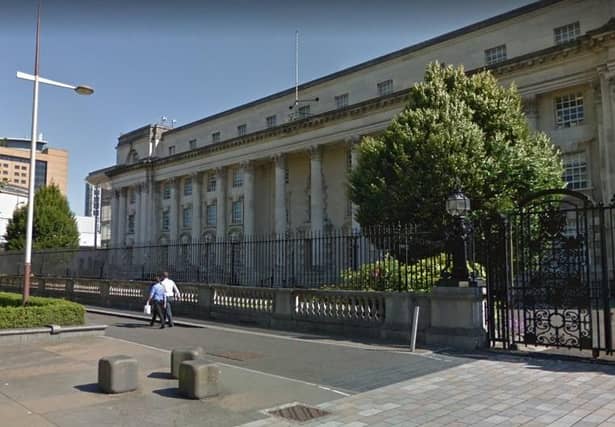

(To read Ben Lowry on how we have already passed the shortest evening of the year, click here)
On Wednesday, the Supreme Court – the highest court in the land – strongly upheld the right of the government to protect informers, and made clear that it is not a matter for the chief constable.
It overturned the logic of Jon Boutcher, and a coroner, then a high court judge, then two of the Northern Ireland Appeal court judges.
You would have had no inkling from BBC Northern Ireland – or certainly not from its main programme BBC Newsline or from its website – that this was a huge ruling that, rarely, overturned NI judges.
The courts here, as we have been almost alone in pointing out in the News Letter, have played a central role in how legacy is being investigated in a grossly imbalanced way that favours terrorists against the UK state forces who prevented civil war. Gradually – painfully slowly – there has been an increasing awareness of this in London. Yet, incredibly, the current Labour government – either deliberately or as a result of monumental naivete – is about to worsen that imbalance in its capitulation to the Irish government on legacy. This will lead to the return of legacy inquests and civil actions, almost all of which relate to killings by the security forces.
And Dublin has made clear that it will not drop its hypocritical legal action against the UK for its now abandoned plan for a conditional amnesty until it sees the details of Britain’s new legacy plan – in other words, until it is sure the focus will be kept on soldiers and ex RUC (Ireland doesn’t say this of course).
Again, we have pointed all this out exhaustively on these pages, and some of it we pointed out a decade ago.
The key thing to understand in this week’s ruling is that the plan of the chief constable and others to be able to name informers in some circumstances such as Stakeknife (Freddie Scappaticci) has been comprehensively rejected by London’s highest court (Click here to read Ben Lowry last week challenging Jon Boutcher for publicly taking highly political stances). That is very significant, because the Supreme Court in at least two other major legacy cases – that around the lawfulness of Gerry Adams’s detention in the early 1970s, and the holding of a public inquiry into the murder of Pat Finucane – has played its own role in perpetuating the legacy scandal. The UK’s top judges seem to be retreating from that.
This week the Supreme Court was highly critical of a the decision of a Northern Ireland coroner – Louise Fee – to publish so-called ‘gists’ of intelligence information that would have had implications for the identifying of informers. This arose in the inquest into the loyalist 1994 murder of Liam Thompson. The court found six errors in her decision to discloses the gists. Her decision had been upheld by a High Court judge, Mr Justice Humphreys, then two out of three judges in the NI Court of Appeal, the Lady Chief Justice Siobhan Keegan and Mr Justice Horner. Only the dissenting appeal court judge, Mr Justice McCloskey was vindicated (here are two previous articles I wrote in which I explain why I believe he was correct in a legacy decision: 2018: Judge standing aside in Loughinisland case was an astonishing decision; and this essay from 2020: The troubling saga around the Loughinisland legal case shows the value of newspapers)
Judges are often overturned on appeal – it is a cornerstone of the justice system in any nation that has the rule of law. The problem is that highly, highly contentious NI decisions on legacy (we have covered dozens of them) are rarely overturned – although this might be about to change. There are two other contentious NI court rulings before the Supreme Court, including the astonishing decision of the Belfast courts to order a public inquiry into the loyalist murder of Sean Brown. That sectarian murder was atrocious, but its heinousness is immaterial – there are many hundreds of heinous unsolved murders in the Troubles, most of them carried out by republican terrorists.
One of the most disturbing features of legacy is the breathtakingly one-sided coverage of it in the NI media, which was so apparent at the recent Kenova report launch (about which I wrote last week in the link further up this story) and again this week. BBC Newsline’s report gave no hint of the way in which NI judges had been utterly contradicted. The key responses it led to were Amnesty International, the Committee for the Administration of Justice and Relatives for Justice saying that it would help the UK state to cover up murder.
Where are the counterpart organisations to these activist groups? I can think of one: the Malone House Group, that campaigns on the imbalance on legacy, but it is made up of volunteers of retirement age, led by the excellent Jeff Dudgeon. And it is barely ever quoted in the media, and certainly not as much as those other groups.
The barrister Austen Morgan of Malone House will be writing an essay for us on this key Supreme Court judgement.
• Ben Lowry (@Benlowry2) is News Letter editor