
Ben Lowry: The Gordon and Denton by-election result has only shown how scarily divided the UK now is
The big lesson from the dramatic outcome in the Gorton and Denton by-election is not the rise of the Green Party and Reform.
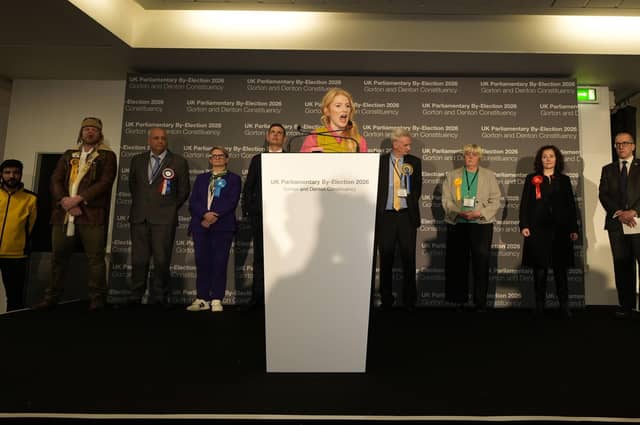

It is not even the fact the Sir Keir Starmer has proved an ineffective prime minister, whose days are probably numbered.
The main conclusion that I have deduced from it is how divided is the United Kingdom now.
I did not think that Reform UK would win the seat: I had looked up the result from general election two years ago and the maths in the seat were clear. The total left-wing vote in the constituency, which is in greater Manchester, was 27,131 (the Labour, Greens, and Workers Party candidates). If you add in Liberal Democrats, it was 28,530.
The total right-wing vote was less than a third of that – Nigel Farage’s Reform UK party and the Conservatives combined got 8,030.
Given that there was no Workers Party this time, it was clear that even if, say, 3,000 votes moved from the left to Reform UK, and if the two parties of the left split their vote evenly, and if the right-wing vote then went overwhelmingly to Reform UK, the latter would still lose.
In the event, a variation on this outcome happened: the combined left-wing vote (24,344 on Thursday) was significantly split between Greens and Labour, the combined right-wing vote (11,284) went overwhelmingly to Reform UK (who hoovered up 10,578 of those votes), and still one of the candidates from the combined left-wing vote, Hannah Spencer of the Greens, easily defeated Matt Goodwin of Reform UK with a majority of 4,402 votes.
My point is this: the left-wing vote easily prevailed, even though there was a significant move of voters from left to right (and, I would say, deservedly given that politicians like Sir Keir dismissed as racist poor people around the UK who had to suffer the effects of uncontrolled immigration into their communities).
The divided outlook for British politics is similar to the political divide in the United States, between supporters of Donald Trump and radical (by American standards) left-leaning politicians such as his rival for president in 2024, Kamala Harris. There are big divides in Australia and Canada too and a divide so bitter in France that the country is almost ungovernable.
But the UK not only has a gulf between major political leaders such as Zack Polanski of the Greens and Mr Farage, it has separatist tensions in Scotland and here in Northern Ireland.
This new polarisation is so different from the 1990s – when the Tory John Major was evicted from Downing Street by Tony Blair, both centrists leaders who (ultimately) respected each other.
Now we face huge problems with our first-past-the-post electoral system. I am more sure than ever that the UK made a mistake in not adopting the AV proportional vote system in the 2011 referendum. People who share my own political views, which are unionist and right of centre, overwhelmingly rejected that proposal and instead supported the current system, which is now throwing up results that are ever more distorted (such as Starmer getting one of the biggest ever landslide victories in British electoral history in terms of number of Labours MPs in the 2024 but doing so on one of the lowest ever shares of the vote for the two main parties, a mere third of the votes cast). Another grotesque result was the Greens and Reform UK getting six million votes between in 2024 them and a ridiculously small tally of nine MPs total.
Such unrepresentative outcomes are increasing the bitterness, and making it ever more likely that we lurch left, then right, etc for the foreseeable future.
I am struck by how little attention has been paid to what happened in the 2017 general election. The headline story from that result was that Theresa May unexpectedly lost her overall majority. But it was more dramatic than that – it was the biggest polling error since the 1992 general election in which Mr Major unexpectedly beat Neil Kinnock, to stay prime minister. Pollsters then both underestimated the Conservatives and over-estimated Labour. In 2017, pollsters predicted Theresa May’s vote, 42.3%, almost perfectly but underestimated her challenger Jeremy Corbyn almost by as much as they did John Major 25 years before. Mr Corbyb got a mammoth 40% of the vote, one of the best Labour results since the 1960s.
Mr Farage might well be favourite to win the next election but in recent elections there has been a huge combined left-wing vote and a huge right-wing one. If you think a radical leftist like Mr Corbyn or Polanski can’t also win, perhaps a few years after a firmly right-wing government, sending the country lurching back the other direction, think again.