
Ben Lowry: Why I am pro vaccines, and have just got my flu jab
Not long ago the idea of getting a flu jab was not on my radar.
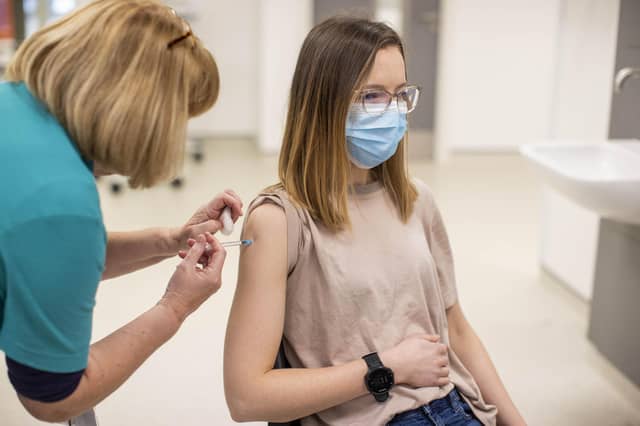

Even when I reached 50 and became eligible one of the covid years (just after lockdown) I was in no rush to get one.
I did not feel at risk. But this is another year in which I have been eligible and in which I have had the jab – this week.
The flu vaccination this year is available on the NHS for children up to 16, over 65s and people with chronic health conditions. I fall into the last category, having asthma. My asthma is actually mild so being technically available would not necessarily have been enough to prompt me to get the jab, had I not heard Dr Alan Stout and others say that this particular strain can cause significant breathing difficulties.
The rollout of the flu vaccines seemed to me one of the success stories of our currently fraught NHS, so I phoned Dr Stout to see if he agreed with that (I know him both through his health work with the media, and also from primary school way back).
“Oh it absolutely is a success,” he said. “We still get flu deaths every year, that can be as low as 2,000 UK-wide, although was around 7,000 last year. But there would be far, far more deaths and morbidity without vaccination.”
He also said that there was a misconception about the vaccine’s effect: "I was on the radio on Thursday and a caller said that they had asthma, got the vaccine and still got flu, and so it didn’t work. I said that that was actually an example of its success. It doesn’t stop you catching infection but prevents you becoming seriously unwell. It could have been very different for him if not vaccinated.”
We keep hearing that Northern Ireland’s health problems are worse than the rest of the UK but Dr Stout does not say this about the flu jab rollout. He says that even people who are not eligible for the jab on the NHS are nonetheless paying for it, and that some employers pay for their staff to have it to avoid large-scale sickness absence this winter.
Sadly, the flu vaccine programme, for all its success, seems to be affected by the growth in anti-vax feeling in countries including Britain.
During covid, I diverged from many other lockdown sceptics when I strongly embraced vaccines as the safest route out of the the bid to keep people at home people (even those at low risk of coronavirus). But now in America there is substantial public support for anti-vax conspiracy theory nonsense, peddled by the US Health Secretary no less, Robert F Kennedy.
A recent poll found that a third of Republicans (the party of the current president, Donald Trump) believe the MMR vaccine causes autism in children – a thoroughly discredited theory peddled by the fraudster Andrew Wakefield. This year America has seen the most cases of measles since the disease was declared eradicated in the US a quarter of a century ago.
This is a dismaying retreat from immense medical achievement and human advance. Vaccines over the last century have helped transform public health and prevent serious illness around the world, including in some the most impoverished people on the planet.
Back home, while the NHS has a formidable flu vaccine project our health service is otherwise in crisis.
I am struck by media failures on this. The breathless reportage of the symptoms of the NHS crisis – in which BBC Northern Ireland has specialised for years, well before lockdown – gives the impression that the problem is a cruel lack of funding from London, compounded by local political incompetence.
But the over-riding problem is Stormont cowardice more than incompetence, going back to the resurrection of the assembly at the end of the 1990s. It is 25 years since the highly respected civil servant Maurice Hayes issued the first of multiple expert reports, the most recent of which was Bengoa, which found that NI had too many acute hospitals, so that major units do not have the critical mass in terms of staff that can turn them into world-class hospitals (as Mark Dayan of the Nuffield Trust told the View on Thursday in one of the better BBC debates on health).
MLAs fear being seen to close hospitals, yet a child child could grasp the key issues: NI needs a smaller number of acute hospitals but these can then become centres of excellence with lower death tolls. You might in some cases have to travel further to get to your hospital, but you will be more likely to survive when you do.
Failure to act on these reports is at the heart of the crisis. Our NHS would be transformed, Dr Stout told me, if MLAs would fully implement that reform.
• Ben Lowry (@BenLowry2) is News Letter editor