
David Armstrong and Dr Philip Barnes: Shake-up of Northern Ireland's religious education syllabus following Supreme Court ruling will require extreme care
Religious education (RE) has been a flashpoint in Northern Ireland since its inception, evolving from Lord Londonderry’s 1923 vision of ‘godless’ state schools to its current status as the curriculum's most legislated subject.

Historically, Christian non-conformists feared Anglican classroom dominance; today, non-religious parents claim concerns about indoctrination and the potential isolation of children who opt out.
In the early 1990s, the government invited the Catholic Church and three main Protestant denominations to draft a core RE syllabus – in the midst of the Troubles, this move was widely hailed as an ecumenical success. There is little evidence of widespread parental concern over that syllabus. However, the landscape shifted dramatically with the November 2025 Supreme Court judgment declaring NI’s Christian-focused RE syllabus unlawful. The court found the curriculum lacked an ‘objective, critical, and pluralistic’ framework, effectively amounting to indoctrination and breaching human rights.
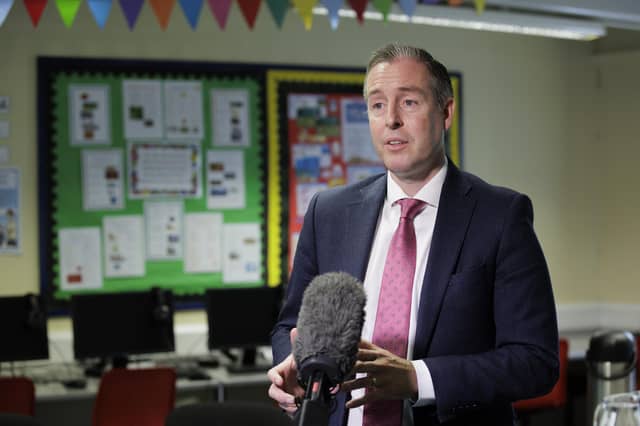
This mandate for reform is now unavoidable. This month, education minister Paul Givan established a new RE drafting body to launch public consultations. While the churches have lost ‘ownership’ of the syllabus, the minister has confirmed they will retain a formal consultative role. There is no explicit mention of official representation for other faiths or non-religious worldviews. The minister’s insistence that the Christian faith remains central may suggest to some that this is more a rebranding exercise than a significant reform. Given the Supreme Court’s ‘plural’ mandate, the potential for further litigation persists should the new drafting committee be perceived as insufficiently inclusive.
This transition from church control to a panel of educational subject specialists became an inevitable consequence of the court's judgment. Nevertheless, the transition requires extreme care. Despite ministerial assurances, shifting toward a multi-faith and non-religious worldview syllabus raises concerns – particularly in primary schools – regarding children's cognitive readiness and the rights of Christian parents to have their children educated according to their convictions. There is a risk that a multi-faith syllabus may confuse a child's perception of the faith taught at home or church by presenting it as just one of many options.
Minister Givan faces the immense challenge of navigating a legal conundrum: the Supreme Court demands pluralism, yet existing statute requires controlled schools to base RE on the Holy Scriptures. The danger lies in replacing perceived religious indoctrination with a perceived secular indoctrination that ignores the prevailing Christian context acknowledged by the court itself.
NI might look to international models to balance differing expectations: in Germany, Christian-based confessional RE runs parallel to separate secular ethics and worldviews programmes. RE remains confessional in much of Europe, and countries like Canada, Australia, and New Zealand provide for confessional teaching in state schools.
A dual-pathway model for NI’s controlled schools could be a viable solution: a confessional track, rooted in Christian heritage but delivered in an age-appropriate, open manner; and a multi-faith track focused on ethics, philosophy, and non-Christian religious traditions. By offering choice, this model meets the Supreme Court’s demand for pluralism without imposing a ‘one-size-fits-all’ curriculum that may not fit the local context.
Implementing such a ‘one-size’ syllabus across all grant-aided schools may inadvertently entrench and widen the ‘faith-gap’ between school sectors. RE in Catholic schools will likely embrace the proposed syllabus while preserving its distinct confessional identity. In contrast, the syllabus shift toward a critical and plural approach signals the end of any faith-based element in controlled schools. This transition aligns with the British model, where RE teachers act as impartial, secular educators whose task is not to nurture any specific religion but to promote the educational value of a religious studies approach.
This is a defining moment for religious education - minister Givan has a historic opportunity to establish a sustainable settlement. By implementing a dual-track framework, the minister can harmonise the region’s deep Christian heritage with the Supreme Court’s mandate for pluralism. This is not merely a legal fix; it is a vital safeguard for parental choice that will minimise classroom withdrawals and prevent further costly litigation. Embracing this balanced model can transform RE into a modern academic standard that respects every family’s convictions in an increasingly diverse society.
l David Armstrong was a Senior Lecturer in RE, now retired. Dr Philip Barnes is Emeritus Reader in Religious and Theological Education, King’s College, London