
Esmond Birnie: Gambling is one of the areas which Rachel Reeves could have taxed more
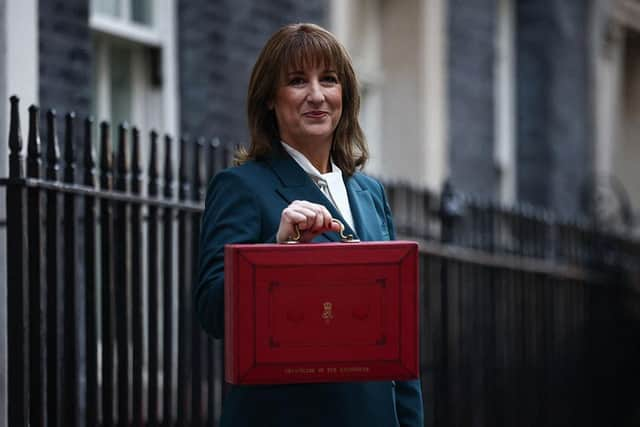
The Chancellor Rachel Reeves’ recent budget has a been characterised as a smorgasbord: a lot of individual tax raising measures.
Understandably, consumers and businesses are groaning under the added tax burden but there was one area where the chancellor actually pulled her punches. The expected increase on taxes on gambling was much smaller than expected.

This will raise about £1 billion annually as opposed to the £3bn extra which might have occurred.
Back in the summer the think tank the Institute of Public Policy Research (IPPR) recommended that if £3bn could be raised in this way this could fund the removal of the two child benefit cap. However, the case for reformed and higher gambling taxation stands on its own merits regardless of that welfare policy change.
The broader rationale for higher taxation of gambling is not some sort of killjoy instinct but rather a recognition that gambling does have major negative social consequences. These should be recognised. Higher taxation would raise revenues which could, in part, be spent mitigate those harms.
If gambling industry profits were more highly taxed – and it is a highly profitable sector – then the odds offered to customers would probably worsen which might deter some problem gamblers. We also need tougher regulation of the betting industry.
One recent estimate is that there are about 430,000 problem gamblers in the UK: those who gamble to the extent that it has become somewhat addictive with consequent harm to health and family life. And about 55,000 of those problem gamblers were aged only 11-16.
Another stark statistic is that 60% of gambling profits are generated through 5% of the customers, which suggests addictive gambling.
A 2016 survey which was linked to a Stormont consultation on gambling suggested that the rate of problem gambling was much higher in Northern Ireland than in Great Britain and represented 2.3% of the population. True, the most recent NISRA (Northern Ireland Statistics and Research Agency) official data indicates that 2,200 people were employed in the sector (in 2022) but that employment gain must be weighed against a huge level of social harm. In any case, this is a profitable industry which would be able to stand higher tax charges, in many cases the existing rates paid by the gambling firms is very low.
Across the UK the NHS has recognised gambling as a public health issue.
In GB there is some albeit weak regulation of gambling. There is a Gambling Commission which is charged with holding the gambling businesses to account. This watchdog may not be powerful enough. In any case its remit does not include Northern Ireland.
Interestingly, and probably appropriately given the potential for addictive betting, the IPPR report in August 2025 suggested that the tax on online gambling and gaming machines be raised to 50%. Those being probably the areas where addictive gambling is most likely. Reeves in fact increased remote gaming duty (online slots and casinos) to 40% and left the duty on gaming machines at 20%.
Back in 2024 the Stormont Communities Minister Gordon Lyons indicated that his department would not be bringing forward any legislation on gambling during the rest of this mandate. There are in fact plenty of anomalies relating to the state of gambling law in Northern Ireland. Much of that law dates to 1985, with only a few amendments in more recent years, so it is partly stuck in the pre-online era.
The legal status of Fixed Odd Betting Terminals (FOTBs) (electronic machines playing a range of games such as cocaine, sometimes dubbed the ‘crack cocaine’ of the gambling world because it so easy to lose a lot of money very quickly) in NI may not be entirely clear, although legislation introduced into the assembly in early 2025 will probably deal with this.
None of this is about banning gambling but there are in fact many regulatory measures which could and should be applied across the United Kingdom:
Place the Gambling Commission on a firmer basis. And ensure that in some way an independent regulation operates here in Northern Ireland. Provision for a compulsory levy on gambling companies has recently been introduced but still does not exclude online activity in Northern Ireland.
Phase out sports sponsorship, notably in football, related to gambling.
Mandatory affordability checks which kick in when individuals rack up non-negligible monthly gambling losses.
It is worth pointing out that as Gordon Brown noted in a recent newspaper article the excise duty on cigarettes is currently 80% and that on whisky 70% so there is a lot of scope to raise gambling taxes even given the recent UK Budget.
• Dr Esmond Birnie, Senior Economist Ulster University Business School