
Esmond Birnie: Storm warning for NI private sector battered by at least four headwinds
This year and next there will be large increases in public spending in Northern Ireland (NI). More than £700m in this financial year, 2024-25, and more than £1.5bn in the next, 2025-26.
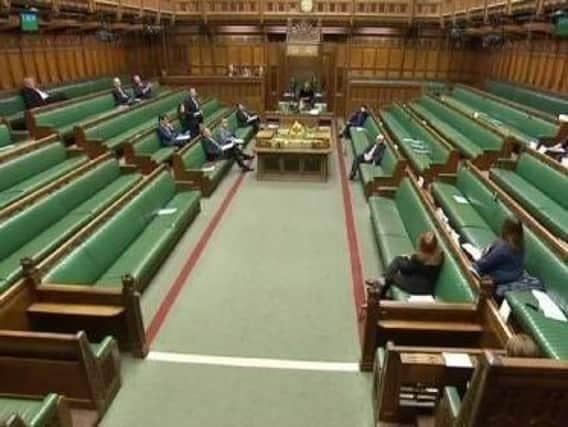

The NI public sector will be benefitting from a combination of the “Barnett consequentials” linking NI funding to the increases in spending in England announced at the recent UK Budget as well as the continuing impact of the funds agreed in the January 2024 package which accompanied the restoration of the NI Executive.
Although one recent forecast (UUEPC, December 2024) gives NI an economic growth rate of almost 2% in 2024 and about 1.5% next year, all is far from rosy in the economic garden. Given policies both devolved and UK-wide business costs are being raised to an extent that could threaten a near recession in the private sector. A near recession made in Stormont and Westminster.
Business is faced by a storm consisting of four types of cost increases:
Higher National Insurance Costs (NICs)
The October Budget increased NIC charges (in terms of the rate and a lower threshold), amounting to a charge on employers of about £24bn annually.
Given that total UK labour costs amount to £1.3trillion, that implies employers’ labour costs are increasing by about 1.8%. That may not sound like very much but international experience would suggest an increase of that magnitude would translate into a decrease in demand for labour of about 0.9%.
At a UK level that would imply about 300,000 fewer people have jobs or about 9,000 people here in NI. In practice, businesses will respond to the higher NICs in a variety of ways such as raising prices or cutting wages but even these are not desirable outcomes from a broader economic point of view and in the medium run will contribute to less output and jobs.
Enforcement of increased ‘employment rights’
The UK government is consulting on its Employment Rights Bill which it is claimed will increase protections in terms of firing, trade union representation and sick pay, etc. The inevitable downside is higher costs to business.
Here in NI the economy minister has his own agenda of “good jobs”. The UK legislation has been subject to relatively intense regulatory impact assessment (the NI proposals for “good jobs” to a lesser extent).
We can take the UK proposals as a sort of indication of what could happen in NI given that the NI minister would wish to at least replicate the standards in England/GB and then probably push further.
It has been estimated that the UK proposals would raise business labour costs by 0.4%. Other things remaining equal that could translate into a 0.2% reduction in employment demand. In the NI context that would be equivalent to a job reduction of about 2,000.
The employment rights agenda will have a disproportional impact on businesses in NI given the greater representation of small and medium sized firms in this region. Over and above the cost impact arising from the NICS and employment rights will be the impact of the substantial increase in the National Living Wage.
NI economic development being capped by inadequate water and sewerage network
We know for sure that one reason why the NI planning system is limiting new house building or factory and office expansion across the region is the inability of the NI Water network to cope with new customers. Anecdotal evidence includes businesses are delaying, stopping or even diverting new investments (possibly to the Republic of Ireland.
This constraint or hard ceiling against further economic growth will get worse in the absence of a sustainable increase in funding to NIW to allow the necessary investment. It is very hard to see any solution to this sort of increased charges on households and businesses whether these be called “water charges” or some sort of contribution or levy.
The Windsor Framework frictions at the Irish Sea economic border
Official data shows that every year NI “imports” about £11bn worth of goods from GB whether for direct consumption in NI or for further processing and then re-sale to the rest of the world. This is our main outside source of supply of goods.
Notwithstanding the January 2024 agreement, the Windsor Framework/Protocol frictions still exist. Every one percentage point increase in costs would be equivalent to a charge on NI importers of GB goods equivalent to about £100m. In evidence given to the House of Lords in 2022 the aerospace consortium ADS said that the protocol frictions were adding 2-3% to the costs of materials being brought into NI from GB.
Earlier, in its 2018 analysis relating to the possible economic impact of Brexit HM Treasury argued that an “economic border” could be equivalent to 5-8% tariff barrier.
Conclusions
As on previous occasions, the NI economy at the end of 2024 is a tale of two cities. Parts of the public sector will undoubtedly benefit in the short run from the sugar rush of extra public spending.
The private sector, however, is faced by the four types of cost increases. Whilst the NI Executive cannot be blamed for the big geopolitical developments in the world economy such as Trump’s possible tariff wars, they should attend to the things they can control.
Is this a good time to be loading NI businesses with further employment costs? Why has the executive repeatedly set its face against a sustainable funding model for the water infrastructure in NI? Speaking on December 5, PM Starmer complained about those too settled in the tepid bath of managed decline. In NI it would seem, alas, we settle too easily for unmanaged decline.
l Dr Esmond Birnie is senior economist, Ulster University Business School