
Esmond Birnie: Stormont’s ineffectual approach to subsidising household energy costs - perhaps a more radical response is desirable
Speaking in Westminster on Tuesday, chancellor Rachel Reeves confirmed that the UK government would be providing no general subsidy to households to cushion against the effects of higher oil, gas and electricity prices.
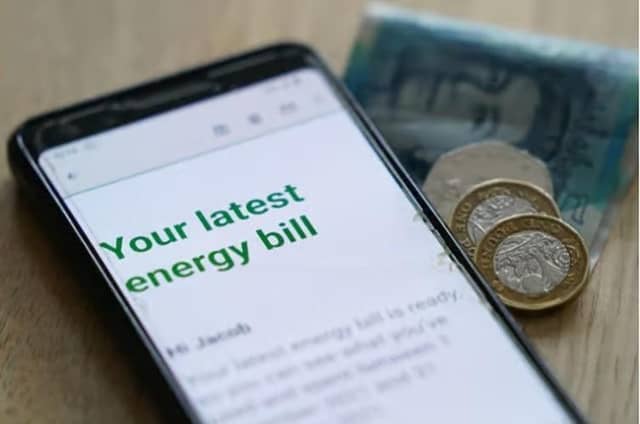

Her statement was hardly surprising. It partly reflects the difficult legacy we now face given years of very high borrowing first by Conservative governments and then by Labour since 2024.
Before being highly critical of the UK government, let’s focus on what the Stormont Executive has been doing (or not doing).
When faced with a major policy challenge, and the global hike in gas and oil prices surely ranks as such a challenge, the executive’s default position tends to be two-fold.
First, opt for the easiest option. Second, blame the UK government for not supplying enough money.
Such an inadequate policy response has certainly been evidenced in the earlier announcement that £81m of money coming from the UK government to subsidise electricity prices will be spread very thinly as an annual payment of £30 in each of the three years starting July 2026 to every NI electricity bill payer.
Similarly, regarding the £17m made available from the UK government regarding home heating oil there is a talk of a single £35 payment to every household which uses oil.
Such universal payments are relatively easier to administer than means-tested ones.
However, a form of means-testing was probably possible.
For example, access to the energy subsidies could have been restricted to receipts of certain benefits, e.g. pension credit or universal credit.
Such an approach would not have been perfect - there would be some hard cases where individuals were excluded - but it would have provided some targeting of the limited funds.
Albeit the sums being provided per household would still have been much smaller than the increase in energy bills seen since the end of February 2026.
Perhaps a rather more radical and long term approach is desirable.
Given that if the two pots of money are combined they represent nearly £100m perhaps the best thing Stormont could do, though not necessarily the most popular response, would be to invest in improving our long run energy resilience.
£100m could, for example, be used to improve the energy efficiency of some, even if a small proportion, of the 80,000 homes managed by the Northern Ireland Housing Executive.
As to the habitual commentary coming from local politicians about the alleged inadequacy of the sums of money coming from the UK government to help cushion household energy bills, several things are going on.
First, it is all too easy for politicians, even those whose parties sit in the executive, to default to opposition mode whereby everything is the fault of London.
Second, there seems to be a lot of fantasy economics that assumes that the UK government has infinite financial firepower and can insulate us from permanent and massive shocks to the economy.
The London government does not have such resources.
Tens of billions were borrowed to sustain the furlough payment scheme during Covid in 2020-21.
Then, in 2022, £40bn was spent on electricity price subsidies.
A third wave of massive subsidies and borrowing was always unlikely to be fiscally sustainable.
Unfortunately, it is beginning to look as if the war in Iran is going to lead to a long lasting energy shock similar to the ones which happened in the 1970s.
Higher oil and gas prices will imply that energy importing countries such as the UK are poorer than they would have been and government borrowing in response to that situation cannot really reverse that harsh reality.
The best they can probably do in the circumstances is provide some relief for the very poorest households.
Dr Esmond Birnie is senior economist at Ulster University Business School