
Esmond Birnie: The very strong case for minimum unit pricing of alcohol in Northern Ireland
It is often said that public policy should be evidence based. Without such a base there is a strong likelihood that policy will be determined by political expediency or the triumph of some special interest group.
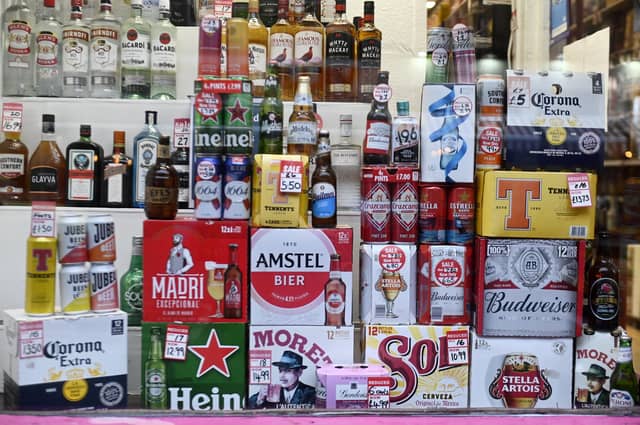

The proposal to adopt Minimum Unit Pricing (MUP) for alcohol in Northern Ireland is an interesting case study. Under MUP each unit of drink could not be sold for less than a legally stated minimum. If that minimum was, say, 65 pence, then a 2.5 litre bottle of cider which now costs £5.99 would sell for £12 or more. The rationale for MUP is simple: a higher price usually implies less consumption and less consumption means less harm.
Over the years various Stormont health ministers have talked about MUP. Most recently, minister Mike Nesbitt expressed his sadness that it was not going to be possible to introduce MUP ahead of the 2027 assembly elections. It seems his MUP proposal was blocked at the executive. The DUP have been blamed for this. Certainly, the deputy first minister claimed that she and her colleagues were waiting to see more evidence that MUP would work.
The argument that we need more evidence is a curious one given that there is a huge volume of evidence about the effectiveness of MUP. This is partly because such policies have been introduced around the world (Scotland in 2018, Wales in 2020 and the Republic of Ireland in 2022). The Sheffield Addictions Research Group at Sheffield University argue that the evidence is overwhelmingly positive. First, summary studies which combine the results of over 100 individual studies from various parts of the world. Second, statistical modelling of the likely behaviour of consumers following a price rise. Third, evaluation studies of specific examples of the use of MUP. Regarding the latter, there has been extensive research on the effects of MUP in Scotland where a 50 pence minimum price was introduced in 2018. This was associated with a 3% decline in consumption and a 4.1% decrease in hospital admissions along with a substantial reduction (13.4%) in drink-related deaths.
It is certainly true almost no public policy is perfect. In the case of MUP there are likely to some unintended and even harmful consequences although these are not likely to be large enough to outweigh the gains in terms of less alcohol-related social and health costs. We need to ask who pays and who gains? There is a likely redistributive effect at the retail level. The MUP is unlikely to impact on prices in pubs, restaurants and nightclubs where prices will already be above the minimum. The big price effect will be seen in terms of low price/high strength drink in supermarkets and off-licences. If MUP led to the proportion of drinking happening in more “controlled” social settings increasing as opposed to drinking done at home, some might argue that was a good thing in terms of harm reduction.
Given that it is likely the percentage decline in volume of sales in the supermarkets and off-licences will be smaller than the percentage increase in prices (in economists’ jargon drink has an inelastic demand), those outlets may find their revenues go up. This would be a windfall gain and some would argue that was unfair (government would also gain some extra VAT revenues).
To the extent that purchases of high strength/low price alcohol is probably proportionally higher in lower income groups then there is a regressive aspect to MUP. Low income groups may end up paying disproportionally more than richer drink consumers. That said, given that the alcohol-related harm is also concentrated in such groups they will benefit disproportionally when the harm is reduced.
Another criticism of MUP is that whereas it may well encourage heavy drinkers to drink less, the Scottish and other evidence certainly confirms that, it is unlikely to lead to reduced consumption and harm amongst dependent drinkers. This is not really a reason to abandon MUP but we do need to recognise that we will need other policies to help those who have strong addictions.
There are wider political implications arising from the failure of the Stormont executive to adopt MUP. If the assembly cannot put through a policy which is backed by such a strong evidence base one wonders how they will cope with policy debates where the arguments are more finely balanced.
There is a particular irony presented by the DUP’s opposition to MUP: what would its founder, the Rev Ian Paisley, make of it? Some speculate the DUP is being influenced by a supermarket lobby interest but it is quite possible MUP will boost supermarket revenues. DUP opposition to MUP is consistent with their 2020-21 opposition to Covid lockdowns. Are they trying to bolt an extreme libertarianism, of perhaps populist American origin, on top of conservative Christian traditions? I doubt the selfish anarchism of the novels of Ayn Rand fits well with the Bible. I say that as someone who accepts that we have become too dependent on the state as the supposed cure for all ills. Classical economics is usually right that people are the best judges of their own interests. Sometimes, however, the weak need special protection and MUP is an evidence-based way of helping those who are heavy drinkers to drink less.
Dr Esmond Birnie is senior economist at Ulster University Business School