
Geoffrey Sloan: Tony Blair used Jonathan Powell to resume the 1920s British tactic of appeasing violent republicans in Ireland
Keir Starmer’s National Security Adviser is an enigma to some. But he need not be.
Ever since he hit public attention as Blair’s chief of staff, Jonathan Powell has had form.
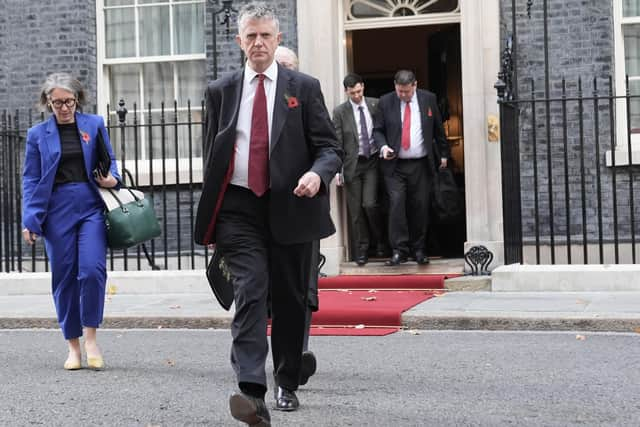

Powell has been implicated in giving away Hong Kong with no legal necessity and surrendering to PIRA in 1997, to wishing to keep EU suzerainty over sovereign freedoms, to giving away the Chagos Islands in 2025 and now destabilising British Gibraltar. He could be seen as an exponent of the “down with us” ideology so named by the philosopher Sir Roger Scruton.
But if you take the long view, Powell and New Labour stand in uncanny succession to the prime minister at the end of the Great War, David Lloyd George, and someone who he called his ‘dirty man for dirty work’.
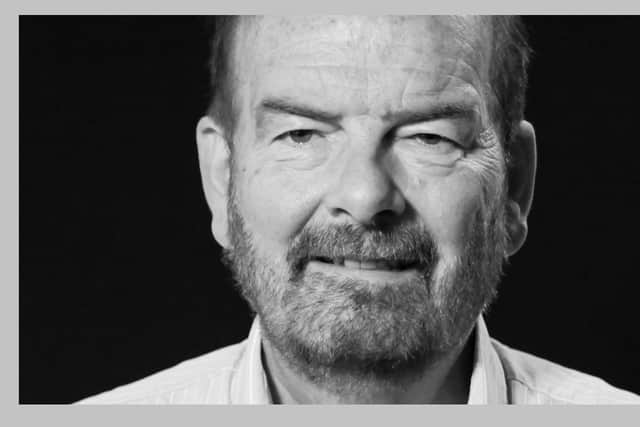
My new book on the British Army in Ireland provides disturbing and detailed evidence of the consequences of a British political class that saw victory by the forces of the crown over terrorists as a problem, impeding ‘negotiation,’ and which was prepared to undermine its soldiers and to lie about their successes.
Today the embedded view of the two campaigns that the British Army, the Royal Irish Constabulary (RIC) and the Royal Ulster Constabulary (RUC) fought in Ireland between 1919 and 1921 and in Northern Ireland between 1969 and 2007 is that the first was an outright defeat and the second, a military stalemate.
But I can now show that neither is true. By summer 1921, Michael Collins and the IRA were on their knees and crucially – you could say like Hamas now – lacking deep popular support, they terrorised and took the entire civilian population hostage. As one senior RIC officer commented, their method was simple: “They threaten all who oppose them and if that is not sufficient murder them”.
Yet at the moment when, as Britain’s highest placed asset in Collins’ inner circle reported, the IRA could have been completely crushed, the military were cut off at the knees; and she was ignored. Had crown forces been allowed to win the war it had actually won, the foundational myths of Irish nationalism would have been smothered at source, and the United Kingdom of Great Britain and Ireland might not have been broken up.
A similar narrative can be documented leading up to the ‘Belfast Agreement’ of 1997. The PIRA was at the British Army’s mercy; but Blair’s ‘dirty men’ ordered the soldiers to surrender their victory.
In the first campaign, Lloyd-George’s ‘dirty man’ was Alfred Cope, a former Customs and Excise Detective posted into Dublin Castle by Lloyd-George expressly to surrender to the IRA, which, to its astonishment, he did on 30th May 1921. In the closing moments of the second campaign, I believe that Tony Blair’s principal ‘dirty man’ was Jonathan Powell.
To understand how this happened, it is important to understand what I call ‘operating codes’. They ran through both campaigns like lettering through a stick of rock.
One is a central feature of the now-departing ‘rules-based international order’: the habit of politicians and their civil servants to see negotiation, not victory as the desired end-point and to treat terrorists as reasonable actors. That fatally undermines the police and the army. It’s a lesson the Israelis have just re-learned the hard way.
In 1922, in Ireland, there was a deliberate attempt to cover this up. On the cover sheet of the army’s after-action report called ‘A Record of the Rebellion,’ the then Secretary of State for War, Sir Laming Worthington-Evans, wrote: “It is proposed to give a strictly limited circulation to an account of the relations between the military and the civil authorities during 1920/1”. The whole report was sealed in the National Archives until 2012 – ninety years. I have been the first historian to exploit the full five volumes.
The same ‘operating code’ can be seen during Operation Banner. In 1997 the senior army officer in Northern Ireland was ordered to surrender the overwhelming advantage his forces then held, namely the ability to arrest or kill almost every PIRA Active Service Unit member of any consequence.
The other code was as treacherous. It was – and is – the unwillingness of British governments systematically to challenge the narrative of Irish republicanism and to articulate a counter-narrative. The last paragraph of the second volume of the 1922 Record of the Rebellion describes consequences of this omission with respect to the Sinn Fein Publicity Department: “This department was energetic, subtle and exceptionally skilful in mixing truth, falsehood and exaggeration and was perhaps the most powerful and least fought arm of the Sinn Fein forces”. The same sentiment was expressed in the after-action report of Operation Banner published in 2007. And this was by choice.
Lloyd George, Cope, Tony Blair and Powell all bought into the same operating codes, albeit separated by 85 years: ’New Labour, New Cope’. In a recent interview on You Tube, Powell states bluntly that Britain has ‘a lot to apologise for’.
Until my book, Alfred Cope has been much less known but is explicitly Powell’s precursor. He only spent two and a half years in Ireland but he cast a long shadow on Anglo-Irish relations.
In 1951 in a letter to Mr Dulanty, the Irish Ambassador to London, Cope showed no remorse for the narrative he put in place, and which still holds today. He stated that: “The IRA must be shown as national heroes and the British forces as brutal oppressors. Accordingly, the truce and treaty will have been brought about by the valour of small and ill-equipped groups of irregulars … What a travesty it will and must be.”
In 1955 General Sean MacEoin of the Irish Army deposited a memoir of his meeting with Cope in London in 1923. Cope prepped him for meetings with unionist MPs to say, if asked, that far from being beaten in 1921, the IRA was impregnable and “that British rule could never be restored in Ireland”, which MacEoin did and Cope “declared that this was a splendid answer”. He further told MacEoin that “on the border question a commission could be set up that would give Ireland complete unity”.
Written a long life-time ago, these sentiments still reek of treason.
They insult the memory of the soldiers and policemen who lost their lives fighting for the Union.
And they show how madly, truly, deeply Lloyd-George, the most lawless prime minister in modern history, undertook an appeasing approach to Ireland that had a continuity in Blair (via Cameron and Osborne) to Starmer; and how Alfred Cope, knighted for his dirty work before choosing obscurity, provides a template for the expressed beliefs of Starmer’s National Security Adviser today.
l Geoffrey Sloan is an Associate Professor in the Department of Politics and International Relations at the University of Reading. ‘Seeking Success and Confronting Failure: The British Army’s campaigns in Ireland and Northern Ireland, 1919 to 2007’ is published by Peter Lang