
Jackie McGregor: The no contact revolution: why even celebrities are breaking toxic family ties
The saying, “you can choose your friends, but you can’t choose your family,” has taken on renewed significance in light of recent widely-publicised conflicts within celebrity families.
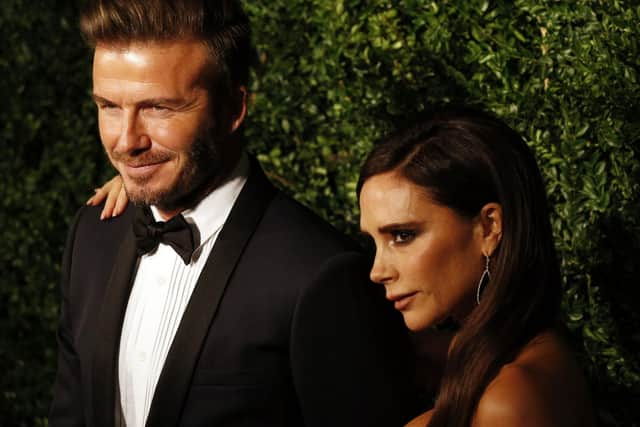
Victoria and David Beckham are reportedly not on speaking terms with their eldest son, Brooklyn, following his marriage, and we’ve all witnessed the public cold war that rages across the Atlantic between Princes William and Harry.

Harry’s in-laws (whom he’s never met) have also made headlines this week when his father-in-law, Thomas Markle, was allegedly trapped, on the nineteenth floor of his apartment building in the earthquake-hit Philippines, and was unable to descend due to his poor mobility and restrictions on elevator use, according to his daughter, Samantha.
Samantha, Meghan’s half-sister, unleashed an expletive-laden attack on Meghan via social media, cursing her and blaming her for their elderly father being in that position.
Thomas then claimed he wasn’t “trapped,” and Samantha set her X account to private so her comments couldn’t be seen by non-followers. Yikes! Harry and Meghan are due to receive the Humanitarians of the Year award next week, in New York. Meghan has had no contact (perhaps understandably) with her family of origin, bar her mother, since her marriage to Harry.
In this era of hyper-connectivity, the “no contact” craze has gained momentum. It involves making a clean break from a relationship considered harmful, (often with parents) and openly discussing personal journeys of family estrangement in social media communities. Family estrangement was once a very private pain, but public figures like the British Royal family show that no one is immune to toxic troubles amongst kin.
Stand Alone, a UK charity who supports estranged adults, revealed in a survey that at least five million people in the UK have made the decision to cut contact with a family member. Around one in five families in the UK are affected by estrangement.
There are many reasons why someone would want to separate themselves from their family of origin, the main problems involve abuse, differing values or unmet expectations.
For many, to cut yourself off from a family member, or in some cases an entire family, as I have, is rarely an act of spite, but an act of necessity, to protect one’s own mental health.
Previous generations might have upheld a sense of obligation to family members, clinging to the belief that blood is thicker than water, and taking whatever abuse came their way, regardless of what it cost them emotionally.
Today, there’s a shift from regarding turning your back on blood ties as shameful, to one of self-preservation.
It’s a move championed by those who have already taken the decision of “no contact.” Online communities describe it as a powerful act of self-care and an essential enforcement of personal boundaries.
Cutting off from your family of origin is traumatic, it can leave a gaping void in your life, particularly felt during big life events.
Our family bond defines us, losing it is like a ship losing its anchor.
The family history you made together is effectively erased. A feeling of melancholy becomes a constant companion; breaking family ties isn’t a decision that anyone takes lightly.
It’s been over a decade since I cast myself adrift from my kin, but like many others, I learned to stand alone, a tree without roots.