
John Coulter: Will Ulster independence re-emerge on loyalist agenda?
If the Northern Ireland Protocol remains on the political table well into next year, will we see the old chestnut of an independent Ulster once again find itself up for discussion in the loyalist community?
While 2023 will, hopefully, see me clock up 45 years reporting on political developments in Northern Ireland, at times of crisis for unionism, it seems loyalists prefer to beat the Ulster independence drum from time to time.
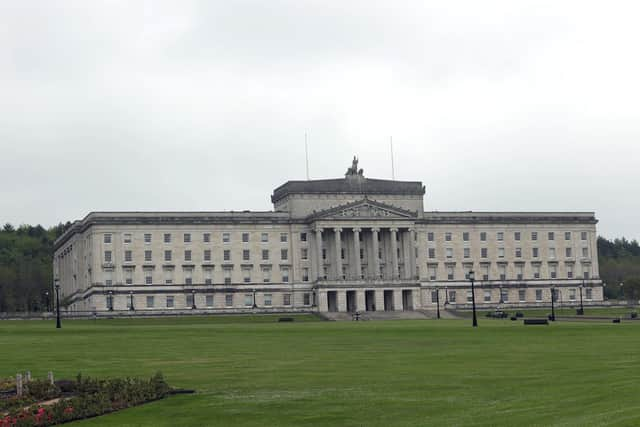

The inability of unionism to rid itself of the Northern Ireland Protocol, which is posing a clear threat to the future of the Stormont institutions, especially as the cost of living crisis begins to bite hard over the winter months, loyalists are again turning to the concept of an independent Ulster - especially as unionism is now a minority ideology at Stormont, and the recent census shows that the gap between Protestants and Catholics in Northern Ireland has all but evaporated.
It should be noted that when unionism feels the Union is safe, an independent Ulster is always off the table as a ‘non starter’. But if the body politic in unionism feels Northern Ireland has been placed on a slippery slope to a united Ireland, the independent Ulster drum is well and truly battered!
In all reality, an independent Ulster has been viewed as more of ‘doomsday solution’ than a serious workable alternative to the ending of the Union. It was always seen as a purely loyalist and Protestant solution and never took account of the number of pro-Union folk from the Catholic community.
Its first real serious entry into the unionist political arena came in the aftermath of the collapse of the Sunningdale power-sharing Executive following the Ulster Workers’ Council strike of 1974. Essentially, unionism had no workable alternative to Sunningdale, so independence for Ulster was on the agenda for loyalism by default!
At that time, it was being pushed by the Vanguard Unionist movement, then one of the most influential pressure groups within the pro-Union community.
The UDA dabbled with the concept of Ulster independence to give the terror group a distinct political agenda compared to the overt socialism of the rival UVF’s political wing, the Progressive Unionist Party.
It would not be until 1985 and the signing of the Anglo-Irish Agreement, which gave Dublin its first real say in the running of Northern Ireland since partition in the 1920s, that Ulster Independence would emerge seriously again.
The Dublin accord mobilised a section of the loyalist community which had been politically silent for a number of years. A series of militant organisations were launched, all with an agenda linked to an independent Ulster.
As part of the broad Ulster Says No campaign, a grassroots movement known as the Ulster Clubs was launched, mirroring the Unionist Clubs which were formed in the early 1900s to combat the influence of the Home Rule for Ireland movement.
The Ulster Resistance paramilitary group emerged in 1986, again with a pro-independence agenda to combat the threat to the Union. The UDA, Ulster Resistance and the Ulster Clubs were all advocating an independent Ulster in some shape. Even the Far Right National Front tried to cash in on independence as a recruitment ploy in Northern Ireland.
More overt pro-independence groups emerged, such as the Ulster Movement for Self-Determination (MSD), and the Ulster Independence Committee (UIC).
MSD wanted a nine-county independent Ulster with Southern border counties being used as security ‘buffer zones’ between the new loyalist state and the Republic of Ireland. The UIC version of independence was based on the current six-county Northern Ireland.
Now, with the prospect of a total collapse of Stormont if a future Assembly election does not result in the restoration of the devolved institutions and a potential Sinn Fein government in the Dail, loyalists are again revisiting their independence option.
But the brutal reality which the pro-independence lobby within loyalism continually cannot answer is - who will bankroll an independent Ulster?
It certainly won’t be Westminster as the concept of an independent Ulster is based on the view that the London establishment wants to cut Northern Ireland adrift from the Union.
Indeed, would the Commonwealth Parliamentary Association, which represents some 50 national and regional parliaments across the globe be prepared to fund the new statelet? This could be a non-starter given the influence of the British Government in the CPA.
It won’t be the Americans given the massive influence which the Irish American lobby wields, particularly within the Democratic Party in the United States.
That only leave three significant power blocks for an independent Ulster to look towards - rejoining the European Union, China and Russia. Given the war in Ukraine and the growing tensions in China, neither of these superpowers are in a current position to take on the bill for an independent Ulster.
In short, Ulster independence remains a theoretical debating topic. Until loyalists can find a significant financial sponsor who will fund independence, the concept will remain nothing more than a sabre-rattling agenda.
Its danger is that it could propel the hardmen of Ulster loyalism to the fore as a significant force against the Protocol.