
Jon Burrows: Despite obvious red flags in Sean's claims of sectarianism in the PSNI, our top police officers backed him
The entire Sean saga around allegations of sectarianism in the PSNI has descended into a farce that has severely damaged the police’s reputation.
It has also dented the morale of its serving and retired members. It is the most damaging episode in the PSNI’s history in terms of morale, with the sole exception of the unlawful suspension of an innocent officer after the incident on the Ormeau Road on February 5 2021.
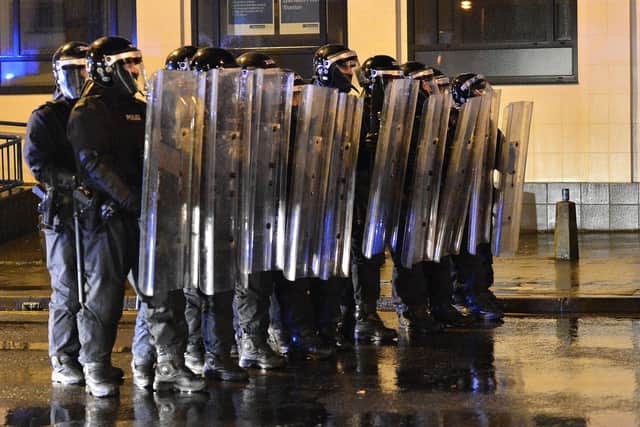

The saga dates back to March 8 2025 when the Belfast Telegraph ran a headline article in which a retired PSNI officer ‘Sean’ alleged he had witnessed and endured extreme sectarianism in his TSG (a specialist public order team). Sean also stated that he was being pursued for thousands of pounds by the Police Federation for ‘medical fees’, which was exacerbating the traumas that forced him to retire.
The allegations were horrendous, but they painted a picture of the PSNI that I didn’t recognise. I held supervisory ranks in the PSNI for 17 years and was Head of Discipline Branch in my final posting; not once did I hear of any allegation that remotely resembled Sean’s.

I found it astonishing that PSNI officers would refer to colleagues as ‘fenian bas…ds’ and other aspects of Sean’s testimony rang immediate alarm bells around their veracity. However, the PSNI’s initial response to allegations, which were contained in the original article, appeared to validate what Sean said.
The PSNI deputy chief constable described Sean’s experiences as ‘disgraceful’, and the Belfast Telegraph journalist Sam McBride who wrote the original report noted that it was positive that the PSNI was not questioning the allegations. I believe that the public and the press take signals from such statements, and the signal to many was that sectarianism was a problem in the PSNI.
KRW Law later issued a press release stating they were representing Sean in legal action against the PSNI in relation to “repeated sectarianism”. Some of Sean’s former colleagues lost sleep despite knowing they had only ever treated Sean professionally and supported him personally. Serving and retired officers feared a witch hunt and news spread in the areas they lived and socialised that it was their team that stood accused of being sectarian bullies.
Despite the red flags in Sean’s testimony that should have raised immediate concerns about the veracity of his account there no official rebuttals. The TSG in question is one of the most exemplary teams in the PSNI, renowned for being highly professional and community sensitive. They are based in an extremely challenging part of Northern Ireland to police and its members had to carry on working with a dark cloud hanging over them.
I investigated Sean’s allegations with the help of a group of over 40 retired members of Sean’s TSG for whom I am acting as a spokesperson. These retired officers are a diverse group of men and women with exemplary service records. Sean’s allegations bore no scrutiny, and I dismantled them in two detailed blogs (click here to read it).
At the April meeting of the Policing Board, the chief constable described himself as ‘neutral’ in relation to his position between Sean and his own officers. This caused consternation. By this stage, I had thoroughly debunked the allegations and the 30 serving and 40 retired TSG officers had unanimously informed the PSNI that they unequivocally rejected them and would provide sworn testimony countering them.
Perversely, equal weight was given to one person's anonymous and discredited testimony as to scores of people who wanted to give sworn evidence.
Matters got worse at May’s meeting of the Policing Board.
The chief constable provided an update on the saga that caused confusion to the public and more consternation across the police family. Mr Boucher said he had privately met Sean and his solicitor (Kevin Winters), that there was no longer any legal action and that he had satisfied himself that no one had been subject to any sectarian behaviour.
However, the chief constable repeatedly stated that Sean was a “thoroughly decent” man who gave exemplary service. This made no sense. Sean had made the most serious and explicit allegations of sectarianism against his colleagues. If they did not happen, then Sean made up horrendous allegations against the chief constable’s own officers for which no apology had been offered. How is that thoroughly decent conduct?
And what of the fact that Sean defaulted on money he owes the Police Federation, despite receiving an excellent pension? That is not decent conduct either.
The outrage I heard after the Policing Board meeting was the strongest since the Ormeau Road incident. Serving and retired officers felt badly let down. In a case all about the credibility of the accuser versus the accused, Sean’s character was publicly validated.
The signal again to the public was that there was some sort of halfway house between Sean’s allegations and the denials of his former colleagues. The chief constable even announced an audit of the PSNI to allow officers to raise issues of sectarianism anonymously, despite the problems such testimony caused in this case.
What made matters worse was that the following day Sean’s solicitor said that he “stood over every word” of his allegations. Bizarrely, Mr Winters added that it was agreed at the meeting with the chief constable that there was “no evidence of any overt sectarianism”. This makes no sense; Sean’s allegations in the Belfast Telegraph included blatant sectarianism. The dark cloud over Sean’s former colleagues seemed immovable, despite Sean’s legal action evaporating.
If these puzzling and contradictory statements were an exercise in soft landing a retraction by Sean to spare his blushes, then it has been at the expense of public clarity and the honour and integrity of Sean’s former colleagues. Many of them have told me they are more disgusted now than at any time in their career.
It’s a responsibility of those in leadership in public life to defend the integrity of their organisations and the honour of honest and hardworking staff. In policing this is more so because officers risk their physical and mental well-being for society. It’s also the responsibility of the media to offer balanced coverage of a story that has high public interest.
Only the Belfast News Letter has given prominence to the rebuttals made by Sean’s former colleagues, placing them on the front page twice and carrying reports questioning the contradictory statements made about this case.
As for Sean, he needs to either put up or shut up.
If he stands by what he alleged, he needs to make a sworn statement of evidence. If he does not, he should apologise and explain himself. Regardless, it’s vital that there is now a full investigation by the PSNI into this matter, including the motive behind these allegations and whether Sean was acting alone.
We need to establish the truth, even if that takes to uncomfortable places.
• Jon Burrows is ex head of discipline in PSNI