
Jonny McCambridge: Following a traumatic sartorial loss, I am once more contentedly capped
I'm fond of caps. I do not mean the things you put inside toy guns, upper case letters or even what you use to plug a bottle.
No - caps, for me, belong on your head. And while I've nothing against the baseball, bucket or beanie variety, my cap of choice has always been flat.
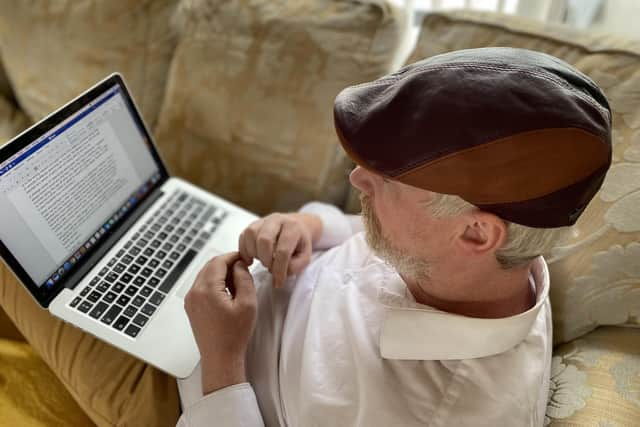

I love to wear the flat cap. I admire the look of the garment, how it comforts my head and tames my mushroom of wild, fuzzy hair. I grew up watching working men and farmers who often wore flat caps; maybe that's where the affection comes from.
Perhaps there’s also a part of me that rails against convention, revelling in the supposed lack of style associated with the old-fashioned headwear.
An oft-told anecdote in our house relates to the day years ago when my infant son grabbed a treasured cap from atop my head and hurled it down the stairs. Instinctively, I launched after it, yelling in alarm in my broadest Ulster Scots drawl 'Me caaaappp!’
My family found this so funny that 'Me caaaappp!’ is still used among us as a comic term. It was one of the first phrases my son learnt to say.
I own a selection of caps; light, linen ones for warmer days and heavier, woollen garments designed to keep a skull warm in the winter. Usually though, I end up wearing the same, favoured garment.
In the early days of my relationship with my wife, she noticed me admiring a brown, plaid flat cap in a gift shop in Portugal and bought it for me. It was just the right size and fit perfectly. For the best part of two decades we have been close to inseparable and almost everywhere I went, I was contentedly capped.
What had been a harmonious relationship was finally derailed in the winter. I was in Belfast with my family and my cap. We had been in the shops, in the cinema, at a café, at the market. It was only at the end of the day, as we were making plans to return home, that I noticed with some horror that I was now capless.
I do not want to verge into hyperbole, but alarm was expressed at the loss. We spent time retracing our steps, back to the café, the cinema, the shops, the market, but no cap could be recovered.
I was in such a state of agitation that when I admitted defeat and went sadly back to the car, I led us to the wrong carpark and spent time walking aimlessly along lines of vehicles fruitlessly searching for my own motor. My sense of loss over the cap dwarfed any panic over not being able to find my car.
A strange sense of melancholy descended afterwards. I suppose I always knew it would end this way. Part of the ritual of wearing a cap involves taking it off when you reach your location.
It is also my habit to remove it when I meet or speak to anyone on the street. Sooner or later it was inevitable that I would lose it.
What was perhaps more unexpected was my subsequent reaction. I did not seek out any of my other caps or attempt to purchase a new one. In fact, I seemed to lose interest in wearing one at all and my adventures were now undertaken bare-headed.
When a doctor advised me that I should wear a hat at all times outside to protect me from the sun, I spent a few pounds buying a plain, black baseball cap. I wore it without enthusiasm under medical advice and with no sartorial considerations whatsoever.
Then, recently, in a little village in Italy, we were spending an evening shopping (see last week’s column for my thoughts on this pastime). Bored, I wandered off on my own and found myself in a tiny hat shop in a narrow street staffed by an elderly woman.
And there I noticed it.
The flat cap was made up of strips of leather – grey, tan and maroon, stitched together by hand. It was unlike anything I had seen before. The woman behind the counter spoke virtually no English, I speak hardly any Italian. She seemed alarmed by my repeated use of the word ‘capo’. Later I remembered that is a term for a mafia boss.
The price was eventually communicated. It was more than I wanted to pay. I also had a moment of sad nostalgia for my lost cap. Like a shy schoolboy with a crush too afraid to make his move, I decided to leave it.
But the leather cap continued to haunt my thoughts and trouble my dreams. During the evenings we often strolled through the bustling streets of the little village and I saw it from afar. My wife could tell that something was not right and encouraged me to buy it. I sniffed and assured her I hadn’t given the cap a moment of thought.
On the last night before we returned home, I strolled off on my own again. I found myself drawn again to the tiny hat shop. The wee woman peered suspiciously at me as I placed the leather cap atop my head. I asked her the price once again. She told me it was as it had been.
Then proceeded a strained bout of haggling between two people who do not share a common language. My offer to pay less drew exaggerated sighs and protestations of seeming disgust.
At one point she left the shop entirely. I think the purpose of this was to seek out the store owner to consult on how low a price the cap could be sold at, although it did provide the opportunity for a less honest man to run off with every cap in the shop.
She returned with a new price. I met her in the middle and bought the cap.
I left the store with the cap on my head. It has been there ever since.