
Liam Kennedy: The global Left – which includes the SDLP – feels the political tide is now turning in their favour
Blue skies over Barcelona, red banners in the Conference Hall, and a Catalan rock band swaying to ‘Imagine’, John Lennon’s peace anthem.
Last weekend saw a gathering of 5,000 activists in the Mediterranean home of Gaudi, Granados, Miró, and Barca football club. They were here to debate socialist and social democratic politics from round the world. The vast hall was overflowing – many could not gain admittance.
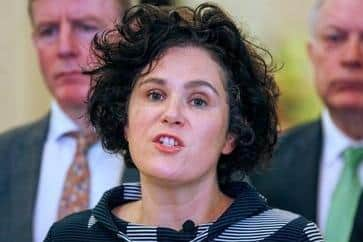

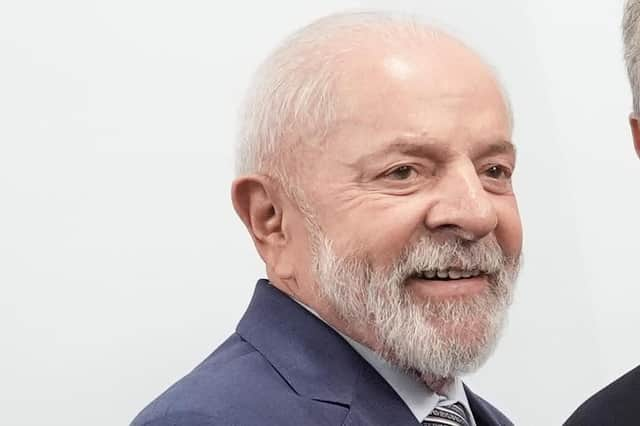
Who, I wondered, is that tall, handsome politician in the electric blue suit standing near Claire Hanna, the leader of the Social Democratic and Labour Party? Why it’s Pedro Sanchez, the charismatic prime minister of Spain. And that older man, with open shirt and hardship written on his features? It must be Lula da Silva, the president of Brazil.
I look round and I recognise the president of South Africa, Cyril Ramophosa. Others I cannot identify. But I soon learn they are the prime ministers, former prime ministers, and leading politicians from countries, large and small, round the globe.
The leader of the SDLP is part of this global network of the Left and one of the speakers at the conference. Though a small party, the SDLP has a voice on the global stage. Meanwhile, up at Stormont, the star performer has been the SDLP’s Matt O’Toole. Days of hope for the party, perhaps.
The conference moved between moments of anxiety and optimism, but the dominant mood was one of hope. The ultra-Right had had its moment with Bolsonaro in Brazil, the rise of neo-fascist parties in Europe, and of course the triumph of Trump in the USA. But the tide was turning, the assembly affirmed. Lula had defeated Bolsonaro in Brazil, the EU had fended off Trump’s Greenland grab, and Mark Carney and the Canadians had set in stone that ‘Canada is not for sale’.
The sweetest recent victory was this month’s election in Hungary which saw an end to Viktor Orban’s authoritarian rule. The forthcoming November elections in the US promised further relief, according to Tim Walz (Kamala Harris’ running mate in last year’s presidential election). That long-standing campaigner against rampant, oligopolistic capitalism, Bernie Saunders, believed ordinary Americans were turning against an increasingly totalitarian White House. (Still, having queued for half an hour for a cup of coffee, it crossed my mind that capitalism might still have something going for it.)
Cyril Ramophosa urged the reform of the United Nations and drove home the undeniable point that it was an injustice that the Security Council had no African member, despite the continent holding well over a billion people. He might have added that the continent had the world’s fastest growing population, whereas fertility has collapsed in many countries, so the injustice would only suppurate in the years ahead.
I would have thanked him more had he acknowledged the corruption that has flourished under the rule of his party, the African National Congress. The ANC makes a mockery of Nelson Mandela’s vision for a new South Africa for all its peoples. But I suppose it wasn’t that kind of weekend.
Two themes vibrated from end to end of the conference. One was the emphasis on democracy, and the vital need to defend institutions of democratic accountability, including the electoral system, the independence of the courts, a free press, and the regulation of social media platforms. A generation ago, democracy and its associated institutions would have been taken for granted at most left-wing conferences. Indeed, sometimes there was an unacknowledged double standard: repression in Cuba was understandable but to be denounced if present in dictatorships in Chile or Argentina. The rising threat of the extreme right has brought concern with democracy to the fore.
The other was opposition to war. The massed ranks of the assembly resounded to calls of ‘No a la Guerra!’, most notably when the Spanish prime minister was speaking. This makes much sense in relation to the Middle East and Iran. The norms of international law have been tossed almost casually into a dustbin somewhere in the White House. But how to maintain a ‘no war’ stance when Europe is threatened by a Putin-style dictatorship? The aspiration, undoubtedly laudable, does not dissolve the dilemma.
It is unfair to single out one speaker. So many spoke movingly of fundamental human values, of visionary futures but grounded in hard work and commitment to achieve social objectives that ranged from healthcare and education to environmental concerns and world peace. But perhaps Lula, for much of his life a poor factory worker, might be accorded the status of primus inter pares.
In an electrifying address, Lula spoke in a style and a tradition that was a fusion of Martin Luther King and Nelson Mandela. He wanted bread but also roses for the people. There was a stinging critique of neo-liberalism and Trumpian pretensions. Weighty matters indeed, but with a touch of humour, or perhaps a ray of magical realism, Lula spoke of his conversations with God in which he told The Other he wanted to live to be 120 years old. ‘I am eighty. Next year I will be eighty-one.’
The key to longevity? Waking up in the morning with a cause. The causes he now espoused were meaningful lives, no more wars, and respect for international norms and human rights. In view of Lula’s age, an old blessing in Gaelic seems fitting: go maire sé i bhfad. May he live a long time.
l Liam Kennedy is Emeritus professor of history, QUB