
Neil McCarthy: Unionists are wisely ducking nationalist efforts to make them seem anti-Irish
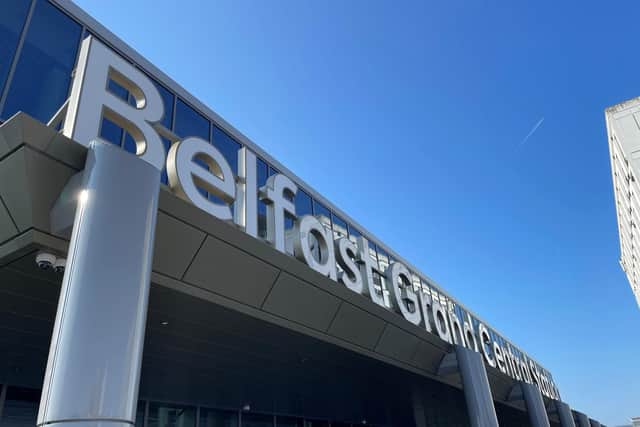
Imagine if the row over Irish language signage at Belfast’s new Grand Central Station had happened twenty years ago.
Unionists would be jumping up and down. Splenetic insults would darken the air with words like ‘foreign’ or ‘leprechaun’ thrown in.

British and Irish government officials would join in with a media consensus that unionist bigotry was alive and kicking. Could unionists not see that the Irish language belonged to everyone in Northern Ireland? Hadn’t the Presbyterians of Belfast been amongst the first to try to save the native culture and tongue?
Irish language activists would simply have had to sit back and watch the show, enjoying their popcorn, confident of at least a moral victory.
Unionists in 2025 have not fallen into this trap. Instead there has been a marked lack of bile in the commentary from mainstream unionism.
Listen to Sarah Bunting, DUP group leader at Belfast City Council: “Nobody has said anybody is afraid of the Irish language… this is about democracy…they [Sinn Féin] tried to tie dual language signs in with all elements of Irish culture…Again, [we have] no issues with Irish culture, many members of the unionist community take part in Irish dancing, traditional Irish music etc. Indeed myself and the Belfast Bands Forum attended and welcomed the announcement of the Fleadh Cheoil coming to Belfast.”
This is in the same positive vein as Emma Little-Pengelly’s declaration last year that she was British, but of Ulster-Scots and Anglo-Irish stock, when she went to attend an Ireland rugby international in the Aviva stadium in Dublin with Jeffrey Donaldson and talk about WB Yeats and Oscar Wilde.
As I wrote at the time, “unionists are now making their own claim on Irish identity” (‘The DUP embrace of Irish unionism is bad news for nationalists,’ March 2024).
It was Emma too who led the successful unionist delegation to the Washington St Patrick’s Day festivities last month, with Jonathan Buckley and Gordon Lyons sporting shamrocks on their lapels, whilst northern nationalists were nowhere to be seen.
Donald Trump went out of his way to recognise that there were two contingents from the island of Ireland (and he also pointed out that the Dublin contingent “spoke highly” of the Northern Ireland one). It may well be that Emma and co swayed Trump towards the 10 per cent tariff for the UK as a whole because it would benefit Northern Ireland and offset to some extent problems arising from the Windsor framework.
In short, positive unionism works.
It is no accident that on the signage issue nearly all the bile has come from nationalism.
For all their occasional references to Wolfe Tone’s inclusive definition of Irishness, northern nationalists prefer to try and push unionists into a solely anti-Irish box.
Cara Hunter’s barbed reference to a “coloniser mindset” has therefore received a lot of attention. But there have also been Claire Hanna’s curious swipes against the PSNI.
Positive unionism has allowed unionists to focus upon the real problem with nationalists’ campaign in relation to Irish language signage: their lack of respect for democracy and their refusal to listen to valid unionist concerns about fairness and parity of esteem (remember that?).
As Sarah Bunting also said – in relation to the 15 per cent threshold for the erection of Irish language signage in residential areas – “Thanks to Sinn Féin for clarifying that this is just the way it is now that nationalism is a majority in the council…quite happy to force undemocratic decisions on the community”.
When it comes to expressions of unionist identity in nationalist areas, nationalists will always cite majority local opinion as the decisive criterion. All other areas however – whether unionist or mixed – are ‘shared space’ into which expressions of nationalist culture must be made welcome on a minimalist approval threshold.
Nationalists have been rumbled on ‘parity of esteem’ which is why they no longer use that phrase from the Belfast/Good Friday Agreement.
In making their own claim upon the Irish language in the same way as they have upon Irishness more generally, unionists could deprive Sinn Féin of one of the few weapons they have left and give the SDLP some space to retreat from one-eyed nationalism.
The debate could then shift decisively to real parity of esteem and democratic consent.
Sinn Féin is under pressure from its grassroots who see the DUP running rings around them and their traditional working class base in the south abandoning them. So they are resorting to theatrics.
This explains their attempt to destabilise the Dáil in Dublin in recent weeks. It failed utterly. Micheál Martin crushed them.
Their attempted solo run in the Northern Ireland Executive in relation to Irish language signage at Grand Central Station is just another such attempt at mischief making.
Real love for Irish would have led them straight to the executive to discuss with their unionist colleagues the most suitable way to honour the language in the new railway station. Real love for the language and all the people of Northern Ireland would have led them directly to talking with the residents in Sandy Row.
Instead they have chosen an option which leads only to the courts and further division.
Instead of division, why not welcome passengers from Dublin to the new Grand Central Station with these words from Van Morrison’s Madame George:
And you know you gotta go
On that train from Dublin up to Sandy Row
Throwing pennies at the bridges down below
And the rain, hail, sleet and snow
And welcome all passengers to the station in the spirit of the gorgeous words of welcome which the Revered Doctor Henry Cooke – the Ian Paisley of his day – extended to Gaelic speaking evangelists coming to Belfast from the Scottish Highlands in 1836:
‘We will receive you into the heart of our humble hospitality, brotherly kindness and gratitude, and the céad míle fáilte romhat with which Ireland will meet you, will flow as warm from her heart as from the spirits of your Highland clansmen’
• Neil McCarthy is a writer and a teacher based in Dublin and London