
Opinion: The Supreme Court ruling on definition of a woman shows that linguistic truth matters
I grew up in Belfast during the Troubles, when language wasn’t just communication, it was conflict.
Painted kerbs, flags, murals, even how you pronounced the letter ‘h’ signalled identity and safety. The wrong word in the wrong place could cost more than your reputation.

That experience shapes how I now view the gender identity debate, not due to physical violence, though online aggression is real, but because of language: euphemistic, moralising, emotionally coercive. During the Troubles, we had ‘peacekeeping,’ ‘interface areas,’ and ‘legitimate targets’ – terms that concealed more than they revealed. Now, it’s ‘affirmation,’ ‘erasure,’ and ‘lived experience’ – soft-sounding words used hard to shut down dissent.
When the Good Friday Agreement was signed in 1998, I was in London. Like many, I felt its significance. It didn’t solve everything but proved that carefully chosen language can de-escalate conflict. Each paragraph in that document was negotiated because it carried huge consequences.
Mo Mowlam famously said: “We don’t need to fall in love with each other. We just need to find a way to live together.” That grown-up mindset, embracing disagreement and complexity, feels increasingly rare today.
In the current gender debate, nuance is drowned by hyperbole. Questioning puberty blockers is branded as denying someone’s existence. Saying biological sex exists is called ‘literal violence’. A recent Belfast Telegraph opinion article even likened sex-realist views to early Nazi rhetoric, historically false and dangerously reckless. The Nazis orchestrated genocide. Comparing legitimate concerns about law and policy to genocide trivialises atrocity and shuts down conversation.
Trans people face challenges and deserve dignity. But they are protected by multiple laws. Between 2008 and 2020, 11 trans people were murdered in the UK. Tragic, yes, but not evidence of a targeted campaign. By contrast, a woman in the UK is killed by a man every three days. Northern Ireland now has the highest per capita femicide rate in the UK and the third highest in Europe.
The suicide narrative is another emotionally charged talking point. Activists claim that not affirming a trans identity puts youth at risk of suicide. But data doesn’t support this. Gender-distressed youth often face overlapping issues – trauma, autism, family instability. In fact, studies show that individuals who medically transition are more than 19 times more likely to die by suicide than the general population. That’s a serious red flag, not a vindication of affirmation.
We must distinguish between LGB (lesbian, gay, bisexual) rights and gender ideology. LGB activism aimed to remove barriers. Gender ideology introduces new ethical dilemmas: irreversible treatment for children, fairness in women’s sports, single-sex space access, and defining biological reality. Collapsing these under one rainbow simplifies complex, often conflicting issues.
We see that same symbolic weight in today’s arguments over bilingual street signs. A sign reading ‘An Bóthar Mór’ beside ‘Ravenhill Road’ might seem trivial. But here, language is identity, and identity is territory. Like slogans in the gender debate, such signs can be divisive because they say who belongs and who doesn’t.
Post-conflict Northern Ireland developed a reflex: be kind, keep peace. That was understandable. But kindness without scrutiny is dangerous. When a Mermaids Centre opened in Belfast in 2024, few questioned it, despite the group being investigated for sending chest binders to children without parental consent and offering unsafe advice. Criticising it remains taboo — not because the concerns aren’t serious, but because it's seen as unkind.
But kindness without accountability isn’t compassion. It’s complicity.
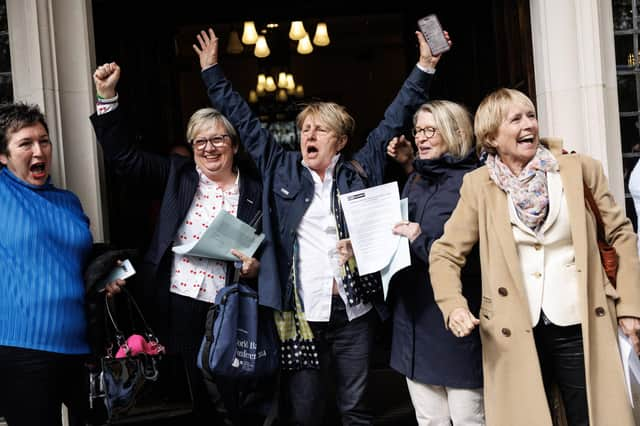
Last week, the UK Supreme Court ruled in favour of For Women Scotland, affirming that “woman” under the Equality Act refers to biological sex, not gender identity. This isn’t a technicality, it’s a moment of clarity. Just as the Good Friday Agreement showed that peace requires linguistic precision, this ruling reaffirms that truth matters, not feelings, not slogans, but facts.
It’s time to return to grown-up conversations, the kind Mo Mowlam championed. Where disagreement isn’t annihilation. Where words clarify, not distort. Where truth isn’t sacrificed for the appearance of kindness.
Because when language becomes a weapon, it doesn’t just silence, it intimidates. And silence isn’t peace. It’s fear.
• Sara Morrison is director Genspect Ireland, an organisation to promote an evidence-based approach to sex and gender