
Owen Polley: Labour accuses its critics of extremism, even of criminality
Last year, Labour swept to power, crushing the Conservatives, who seemed to be out of ideas and irredeemably unpopular.
Among many political commentators, there was a sense that the new government could do no worse than the Tories. Some more partisan pundits enthused that the so-called ‘adults were back in the room’.
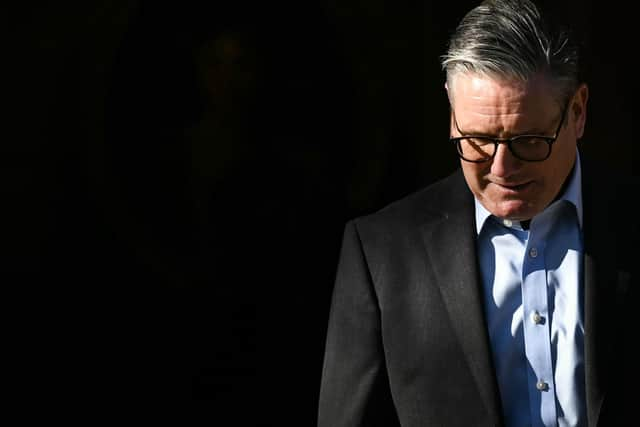

This optimistic mood could hardly have fallen apart more quickly. Sir Keir Starmer’s government was less than a month old when it was accused of targeting older people by removing winter fuel payments. By August, the prime minister was known as ‘two-tier Keir’, thanks to the state’s reaction to street disturbances. The trigger for that rioting, the murder of three young girls in Souhport, turned out to be a terrorism-inspired attack, but Labour denied that possibility at the time.
In the autumn, the chancellor, Rachel Reeves, unveiled a budget that raised taxes and increased public spending. It quickly crushed businesses’ confidence that the economy would grow and caused the cost of Britain’s debt to soar.
Just like its predecessors, Labour was also soon involved in repeated controversies. Starmer and his ministers were fond of taking freebies, and his chief of staff, Sue Gray, seemed to wield inappropriate power over politicians, until she was sacked.
In this column in recent weeks, I’ve argued that the hopes of unionists, and others who want Northern Ireland to do well, have been dashed by Labour too.
Rather than lessening its effects, the government has enforced the Irish Sea border with zeal and ignored the problems it causes. Meanwhile, its decision to repeal parts of the legacy act raised the nauseating possibility that Gerry Adams could receive compensation for his internment without trial.
In opposition, Starmer and Hilary Benn spoke about this province in terms that could almost be described as ‘unionist lite’. But that pro-UK tone disappeared before they even reached power.
When Jim Allister invited Sir Keir to express a ‘strategic and economic interest’ in Northern Ireland, at prime minister’s questions last week, he refused to give a straight answer. Instead, Starmer waffled about keeping the province ‘secure and safe’ and his commitment to the Belfast Agreement.
The government has had a poor start by any standards, but that is not the entirety of the problem.
Voters punished the Conservatives last year, because they failed to prevent all kinds of things from going badly wrong with our society. There was little popular enthusiasm for Labour, but it benefited from that disillusionment.
The irony is that the party epitomises many of the trends that angered the public in a way that the Tories did much less.
For example, look at Labour’s approach to links between immigration and terrorism.
Last summer, the home secretary commissioned an anti-extremism review, which was leaked recently by the Policy Exchange think-tank. The document was written in the aftermath of the Southport murders, committed by a killer in possession of the chemical ricin and Islamist terror manuals.
You would have expected it to focus on Islamic extremism, because the threat is already high and the UK is taking in huge numbers of immigrants from parts of the world where Islamism is rife.
On the contrary, the review recommended that the authorities pay less attention to ‘ideologies of concern’ (like Islamism) and concentrate instead on a range of ‘behaviours’, many of which involve expressing opinions on social media. These include spreading ‘misinformation or conspiracy theories’, misogyny, ‘preventing integration’ and ‘involvement in an online subculture called the manosphere’.
The review described the idea that there is ‘two tier policing’ as a ‘right-wing extremist narrative’. Meanwhile, it advocated reversing the previous government’s attempts to reduce the use of ‘non-crime hate incidents’ by the police.
This practice involves interviewing suspects for acts or speech which are not crimes, if they are perceived by “the victim or any other person to be motivated by hostility or prejudice”. They have been targeted at people who simply expressed their opinions, through things like a speech about immigration (in the case of the former Tory MP Amber Rudd) or an anti-abortion letter (written by a retired teacher).
The implication is that, if your views are not in line with opinions endorsed by this government, you could be guilty of extremism and deserve the attention of the police. Rather than take on genuine radicalism, Labour looks set to clamp down further on freedom of speech.
This reflects Starmer’s approach to the Southport killings, which was to deflect attention unto the threat of ‘far right’ protestors.
In fact, unlike much of continental Europe, the UK has nothing approaching a functioning far right party, never mind one that is thriving. Yet, this is a spectre that is used constantly to distract from Islamist terror, or to imply at least that extremists ‘from both sides’ pose a similar threat.
Labour is badly wrong on many things; the economy, its weakness in foreign policy, its deference to human rights lawyers and its commitment to discredited ideas about race and gender. Worse than that, like many campaigners and political parties that claim to be progressive, it often casts opposition to its worldview as sinister, extreme or even criminal.
In Northern Ireland, we do not have to look far to see self-satisfied politicians, often wedded to the stupidest ideas, who do similar. Whether at Westminister or Stormont, it’s a dangerous trend and, when it affects legislators, it soon starts to look like authoritarianism.