
Owen Polley: New Tory leader has chance to reset party’s policy on Northern Ireland
Last week, the Conservative Party’s choice of leader was quickly pushed off the front pages by the US election result. Ultimately though, the Tory leadership contest is likely to have a far greater effect on local people’s lives.
That was not the impression you would have got from our politicians, some of whom reacted to Donald Trump’s victory with undisguised hysteria.

The SDLP’s South Belfast MP and party leader, Claire Hanna, briefly forgot that she was not the Democratic Congresswoman for South Carolina. She tweeted that she planned to “mourn a bit, then organise,” and urged her followers to “look after (themselves) today,” as if the Proud Boys were likely at any moment to ransack the Lisburn Road.
Ms Hanna is supposedly a committed europhile, but it is unlikely that she indulged in such histrionics when France and Germany went to the polls. Unfortunately, though, this kind of overwrought reaction to what was, after all, a foreign election was by no means unique.
Indeed, it seemed to be expected from a certain type of “progressive”, who takes their cue from American identity politics. The former Green Party leader, Caroline Lucas, lives in Brighton on the south coast of England, but she declared herself terrified and “sick” after Trump’s win.
The mayor of London, Sadiq Khan, reminded Londoners that the city is “for everyone”, as if the President might urge the Met Police to sweep minorities into the back of paddy wagons. And the former Conservative MP, Rory Stewart, now a podcaster appealing to so-called “centrist dads”, thought he’d endured a “devastating body blow”. Perhaps that had more to do with his prediction on election night that Kamala Harris would win convincingly, despite mounting evidence to the contrary.
It was tempting to laugh at all this ridiculousness, but it had a serious side too.
Firstly, we should be concerned that people, across the political spectrum, feel so unhealthily invested in politics across the Atlantic. It is not a new phenomenon, but we are currently importing particularly damaging trends from the US, including a new and divisive kind of identitarianism that is obsessed with categorising people through things like race and gender.
Secondly, when the language around politics is always so heightened, our society becomes angrier and it is more difficult to recognise real crises, when they occur. If it feels like the wailing and shrieking never stops, how can we tell whether the latest scare is serious, or if the usual suspects are just having another meltdown?
That brings me back to the Conservative Party leadership contest.
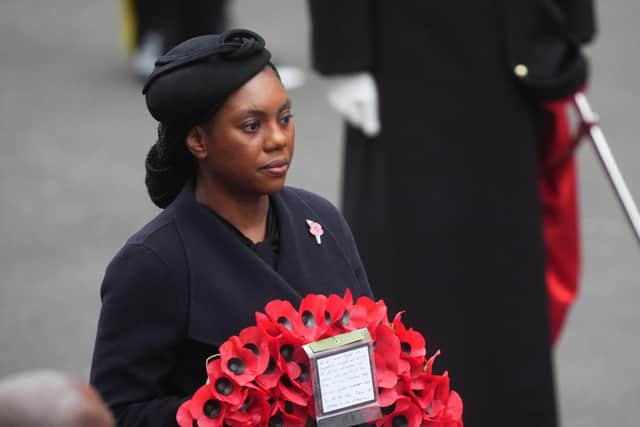
When Kemi Badenoch was announced as the new Tory leader, liberal social media rage was, for a time, directed at her.
The left-wing Labour MP Zarah Sultana, called her “one of the most nasty and divisive figures in British politics”. The Guardian columnist, Frances Ryan, used unerringly similar language, but also claimed the new leader would govern (if elected) “from the gutter”.
Another Labour MP, Dawn Butler, shared a post on Twitter that described Badenoch as, “part of white supremacy’s collaborator class” and “white supremacy in blackface”. Keir Starmer criticised this offensive remark and, fortunately, the intensity of abuse soon waned, as Donald Trump formed a new focus for liberal hysteria.
It showed, though, that overstatement and lack of restraint is not reserved for one target of so-called “progressives”.
Whether the Tory leader really can turn around her party, or articulate the concerns of the Conservative grassroots, remains to be seen. Labour’s difficult start certainly provides Mrs Badenoch with an opportunity to win back voters more quickly than commentators would have envisaged before the election.
If approval ratings are accurate, Keir Starmer is already a more unpopular premier than Rishi Sunak. And the recent budget saw a range of independent economic experts reject the government’s contention that its policies would be good for prosperity and growth.
In Northern Ireland, unionists will simply hope that Mrs Badenoch is a more reliable ally than the last few Conservative leaders. She claimed earlier this year to have a special insight into this province’s problems, because her husband once stood for election in the Foyle constituency.
Last week, as well, Badenoch appointed Priti Patel as shadow defence secretary, which is a key member of her team, charged with, among other things, setting Conservative policy toward the EU. The former home secretary previously wrote that the Windsor Framework “posed a risk to the integrity of our United Kingdom”.
The Conservatives under Mrs Badenoch could signal a change of direction on Northern Ireland by supporting Jim Allister’s private member’s bill on mutual enforcement, which is backed by every Ulster unionist MP at Westminster. The Tories could acknowledge that, even if it were fully implemented, the Safeguarding the Union deal that Rishi Sunak negotiated with the DUP would not solve the biggest problems with the Irish Sea border.
And, with a new leader in place, there is a chance to say they got it wrong on Northern Ireland in the last parliament.
After all, Mrs Badenoch campaigned on a platform of restoring conservative principles to the party; including cherishing Britain’s institutions, valuing its history and traditions, and protecting the integrity of the United Kingdom.
We will soon see whether she can put that programme into practice, while mending divisions among Conservatives and bringing her colleagues with her.
For unionists, a new Tory leader means a fresh chance to forge better relationships with that party, after a fractious few years, and find more effective ways to influence its thinking.