
Owen Polley: Once again it is unclear if Nigel Farage grasps unionist concerns
Last week, Reform UK claimed that it could deport up to 600,000 illegal migrants, if it wins the next election.
The reaction to this announcement told us a lot about the state of British politics.

The Labour cabinet office minister, Nick Thomas-Symonds, delivered a speech that was supposed to be about our relationship with the EU. Actually, he devoted much of it to attacking Nigel Farage. The Reform leader, he said, ‘wants Britain to fail - his model of politics feeds on it.’
The Conservatives, meanwhile, accused Reform of ‘copying our homework’. The Tories insisted the migrant issue is ‘not about numbers’, but their proposals lacked punch precisely because they contained no headline figures.
You could argue that Reform will deliver nothing like the number of deportations it cites and you might be right. Still, Farage’s bold assertions got the public’s attention, though he seemed partly to back away from them later.
The political nous of Reform’s migration announcement was undeniable, even if you were sceptical about the detail. That’s why both the government and the opposition increasingly see Farage’s party, rather than each other, as their most dangerous rival.
While Reform’s success may not last, that cannot be taken for granted, because out-of-control immigration will almost certainly be the leading issue at the next general election.
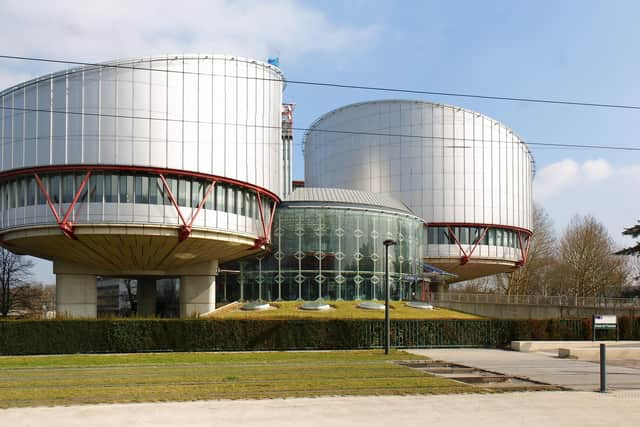
A central problem with stopping this unprecedented influx of people, many commentators agree, is the European Convention on Human Rights, as it is enacted by the Human Rights Act, interpreted by British courts and adjudicated by the human rights court at Strasbourg.
A consensus is growing, on the right at least, that the UK must leave the ECHR, if it is to stop judges and human rights lawyers abusing provisions like the right to a ‘family life’, to sabotage anti-immigration efforts. This pretext has allowed thousands of dependents to join illegal migrants in Britain and prevented the deportation of foreign criminals.
Even some of Labour’s grandees, like the former home secretaries, Lord Blunkett and Jack Straw, have suggested that the government should suspend the ECHR or ‘back away’ from some of its provisions. Mr Straw said last week that the convention was being ‘misused’ by the courts, in a way that was never envisaged when it was drafted, and the Human Rights Act, which incorporated it in domestic law, was being misinterpreted by judges.
Unfortunately, this debate creates a potential problem for Northern Ireland.
The courts in Belfast ruled last year that laws here must follow the ECHR, thanks to the Windsor Framework. Indeed, judges have struck down acts of parliament, using this argument as their rationale.
Last week, Farage claimed that Reform could overcome this difficulty by renegotiating aspects of the Belfast Agreement. This was a disconcertingly airy statement, given that judges used the Withdrawal Act (which enacted the NI protocol) to apply the ECHR here, without recourse to the agreement. The very next day, Farage went on to say that Northern Ireland would not be ‘at the forefront’ of Reform’s plans. This suggested that, at best, his attitude to our place in the UK is unreliable and his knowledge of our issues patchy.
As the News Letter reports today, an important new paper by the think-tank Policy Exchange, backed by Jack Straw, suggests that the agreement is no impediment to leaving the convention. In fact, the Westminster legislation that enacted the NI Protocol / Windsor Framework is the main challenge, before we think about vaguer provisions in the 1998 deal that the ECHR should be ‘incorporated’ into Northern Irish law.
In a similar vein to Policy Exchange, the lawyer, Martin Howe, argued last week that the Belfast Agreement obligation could be met by merely retaining the text of the ECHR in domestic law, while the UK withdrew formally from the treaty and removed the requirement to abide by judgements from Stasbourg.
The Conservatives, under Kemi Badenoch, have notably not yet committed to leaving the convention, even though their instinct is clearly that it is a problem. The Tory leader seems to believe that too bullish an attitude could estrange Northern Ireland further from the rest of the UK.
As for Labour, it invokes the Belfast Agreement as if it were sacrosanct and unambiguous, claiming that any move to remove us from the ECHR amounts to an ‘irresponsible’ breach of the document.
This interpretation will be reinforced eagerly by nationalists. They claim to be motivated by human rights, even though much of Europe is now struggling with the inadequacies of the ECHR. We know their real priority is to drive Northern Ireland further from the rest of the UK and keep it aligned legally with the Republic.
This leaves unionists with a narrow path to navigate.
They cannot ignore the biggest national issues facing Britain and nor should they want to. It would be irresponsible not to recognise that the expansion and misapplication of ‘human rights’ law has affacted nearly every aspect of life in the UK.
Equally, though, it is not enough to again dismiss foreseeable problems, in the belief that things will turn out okay in the end. That approach failed pro-Union people repeatedly during Brexit negotiations and we cannot rely on vague promises from politicians like Farage.
Britain certainly needs to stop people arriving here illegally and that means introducing deportations. Before they support any proposals, though, unionists must be sure that they apply fully to the whole UK, rather than simply hoping for the best.