
Owen Polley: The answer to the problems of the Irish Sea border is not to pretend they don't exist
Last week, the North Antrim MP, Jim Allister, secured a debate on the Windsor Framework at Westminster Hall, which also featured contributions from the DUP and Alex Easton.
That can be added to Mr Allister’s private member’s bill on the Northern Ireland Protocol, which will have its second reading in parliament on December 6 and can now be read on the Parliament UK website.
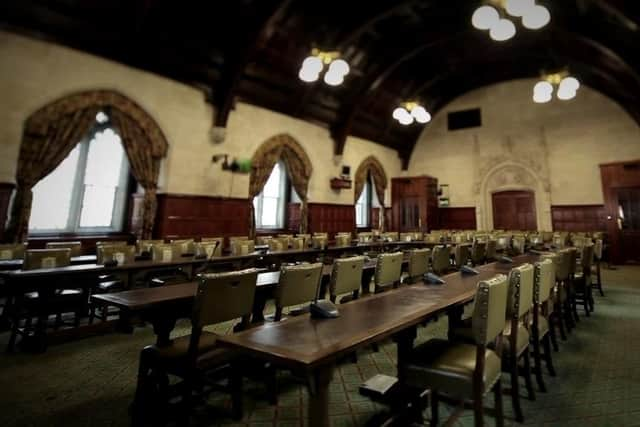

Unlike private members’ bills, Westminster Hall debates do not involve MPs’ amendments or a final vote.
However, the discussions are chaired by a minister, in this case the Northern Ireland secretary Hilary Benn, so they provide a useful platform to raise issues and draw a response from the government.
This debate was a way of highlighting ongoing problems caused by the protocol and the Windsor Framework. Some of the contributions also told a story about the current status of unionists’ attempts to remove the Irish Sea border.
It is beyond dispute that this campaign has moved into a quieter phase, even if the difficulties it highlights are just as pressing as before.
The protocol distanced Northern Ireland politically, economically and legally from the rest of the UK. The arrangements left vast swathes of life here under the authority of the EU and effectively consigned us to a second class form of British citizenship, that doesn’t carry the same rights to shape laws or participate in the nation that people enjoy on the mainland.
For that reason, when it was introduced, it caused anger among the pro-Union community, which was expressed through, among other things, mass rallies and, briefly, a united response from unionist parties. The DUP eventually boycotted Stormont for two years and there were even a handful of incidents of disorder on our streets.
The protocol’s apologists would never admit it, but while this response was fiercer than the air of resignation we see now, it was still relatively mild, given the seriousness of the arrangements imposed on Northern Ireland and the Irish Sea border’s effects on our place in the Union. In addition, comparatively quickly, there were disagreements among unionists about how much political capital they should expend on opposing the protocol.
The parties agreed that the sea border diluted our place in the United Kingdom unacceptably, but there were differences about the weight they put on that issue.
The UUP argued, for example, that the DUP’s boycott might eventually damage the Union, because it would exhaust people’s patience. Voters would blame a lack of power-sharing for poorly functioning public services and conclude that Northern Ireland did not ‘work’.
If we fast-forward to the present day, the DUP has effectively accepted that argument. It tried to justify its about-turn by claiming, first, that it removed the sea border through Safeguarding the Union, and then that that deal represented ‘progress’ toward removing it.
Some of the contradictions in its position were exposed again at Westminster Hall. The party’s leader, Gavin Robinson, railed against the “fundamental impediment” that the framework posed to our constitutional position. But he suggested that this could be addressed in part by Labour honouring the DUP’s deal with the last government.
He mentioned that timetables had slipped, which was presumably an allusion to a delay in new arrangements for parcels. Those measures, which were postponed thanks to lobbying by businesses, will, if anything, add more barriers for goods moving between Great Britain and Northern Ireland.
Mr Robinson’s party certainly faced a terrible dilemma, as its boycott of power-sharing started to look increasingly futile, roughly one year ago. The whole of unionism was also placed in a quandary by the sea border.
Northern Ireland’s future, as part of the UK, depends upon people continuing to believe that this is a good place to live and not wholly a dysfunctional basketcase.
When Stormont did not operate, there was incessant propaganda blaming our problems on its absence. The government, too, simply refused to accept its responsibility to rule directly from Westminster in the absence of devolution, leaving an undeniable governance gap.
In any case, for decades the greater part of unionism had pushed a pro-devolution message, despite the executive’s record of failure.
The Westminster Hall debate exposed, repeatedly, that the claims that Northern Ireland would benefit from ‘dual access’ to the GB and EU markets have disintegrated. The Irish Sea border resulted in nothing but economic pain and the political dilution of the Union.
While Northern Ireland’s UK status was downgraded, our Britishness remains the lynchpin of the prosperity we do enjoy, as well as our comparatively persuasive voice in the world and our political freedoms. There are aspects of the economy, like the service sector, that are performing admirably, and many positive things about living here.
There should be one pressing question, though, for anyone who wants our province to do well. How can we repair the damage that the protocol and framework inflicted on our Union, while protecting and promoting the important things that we still have? The dilemma is similar when it comes to pointing out Stormont’s very obvious flaws and demanding that we get better, more accountable regional government.
The answer to these questions is certainly not to pretend that the problems do not exist. For that reason, it is vital that things like the Westminster Hall debate and the private member’s bill continue to highlight the injustice of the framework, and the problems that it created.