
Owen Polley: The mingling of race and identity is increasingly toxic
Last week, the former prime minister, Rishi Sunak, wrote an article about what it means to be English in modern Britain. It reignited an argument about definitions of Englishness and Britishness that has become increasingly fraught in an age of mass immigration.
In Northern Ireland, of course, identity was always a charged issue. But the debate about nationality was historically assumed to be less sensitive in other parts of the UK.
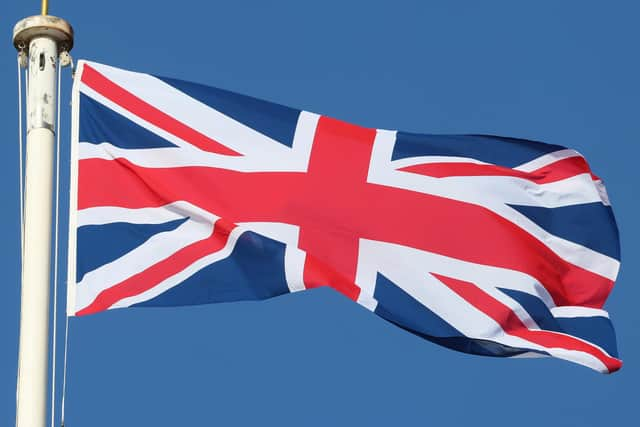

That perception has changed a lot since 1998.
Before then, there wasn’t much discussion on the mainland about what it meant to be British and whether this was different from being Scottish, Welsh or, indeed, English.
There were movements for independence in Scotland and to a lesser extent Wales, but devolution was supposed to kill them ‘stone dead’, to quote the Labour politician George Robertson.
As the shadow secretary of state for Scotland, he helped design new constitutional arrangements that would be implemented by Tony Blair’s government.
However, rather than reconcile the Scottish and British identities, devolution led to surging separatism in Scotland, the dominance of the SNP at Holyrood and a divisive independence referendum, which the party already wants to repeat.
Nationalist campaigning became steadily more vicious and its influence still poisons Scottish politics.
In Wales, this process was slower, but the principality is beginning to follow a similar pattern.
The new Plaid Cymru administration recently hosted leaders from Sinn Fein and the SNP, in a kind of summit of the separatists, which demanded the break-up of the United Kingdom.
It was easy to mock this gathering, which essentially involved nationalists claiming that the thing they always wanted and said was inevitable was now definitely going to happen.
There is a strong and delicious possibility that, across the UK, many generations to come of overwrought separatists will continue to live and die under the Crown and the Union Flag.
Still, the gathering confirmed that identity plays an outsized role in the politics of Scotland and Wales, as well as Northern Ireland.
Things were never so pronounced in England. There, the words British and English were often used interchangeably, sometimes to the annoyance of Scots, Welsh and Northern Irish people. The meaning of these terms was taken to be self-evident.
Devolution and the Scottish independence referendum did lead to some English nationalist reaction, mainly channelled into demands for recognition within the UK. David Cameron’s government even briefly implemented ‘English Votes for English Laws’ in the House of Commons.
More assertive forms of Englishness, though, remained, in the words of the historian Arthur Aughey, “a mood, not a movement”.
In The Times last week, Mr Sunak contributed to a slightly different discussion about what it means to be English at a time when the country is changing so rapidly.
In response to immigration, a growing cohort of nationalists has emerged, online, but also connected to some right-wing political parties, which insists that Englishness is an ethnicity, rather than a nationality open to everyone who lives there. They claim that people from other backgrounds and races, like Sunak, whose parents are both of Indian extraction, can be British but not English.
The former prime minister rejected this idea in his article, which was persuasively written. He cited Norman Tebbit’s ‘cricket test’, which treated support for the England cricket team, as opposed to countries like Pakistan, India and the West Indies where many immigrant families came from, as a kind of loyalty test.
Sunak wrote that “for all the criticism it received, it was a test anyone could pass… regardless of the colour of their skin”. He argued that effectively reversing this idea, so that black or brown people could never be English no matter how well they integrated, is an unacceptable way to bring race into politics.
It is hard to disagree with this overarching point. It’s no accident, though, that some of these more radical ideas about Englishness or Britishness are surfacing now.
It was ‘progressives’ who insisted, in more recent times, that people be identified according to their race, colour or background and given advantages accordingly.
The most recent waves of immigration have also changed the make-up of many areas, particularly in England, irrevocably. This has encouraged the idea that white English people should think of themselves as an ethnicity, particularly in the impoverished, mainly urban areas where they have recently become a minority, and assert their identity and claim rights based on this definition.
They are trying to get into the politics of grievance that have long been exploited by separatists and some minority representatives.
It is certainly shocking and unsettling to hear the language of race used so bluntly and blatantly in discussions about identity in Britain. Unfortunately, it is something that could become more rather than less common, unless problems like unchecked immigration and a lack of integration are addressed.
In Northern Ireland, these issues about migration have emerged more slowly, but they are certainly here now, as two summers of disorder have shown. Whether we like it or not, these factors are going to complicate our own fierce traditional struggles over identity.
They will be difficult to deal with. But the attitudes that exacerbate them; a lack of pride or even shame about British history, accepting left-wing theories on race or Empire and refusing to even acknowledge that immigration is a problem, are likely only to feed more extreme ideas about race and identity.