
Owen Polley: The nationalist grievance machine never stops and is constantly paying off
There is an abiding contradiction that continues to affect politics here in a negative way. As Irish nationalists enjoy ever greater power, influence and status in Northern Ireland, many of their political representatives only work harder to claim some form of victimhood.

This grievance machine looks like it can never be satisfied. As our society is increasingly contorted, and the Britishness of this part of the UK is eroded, to satisfy nationalist demands, new complaints are generated at an alarming rate.
The trick is to keep asking for things, then cast them as human rights that are withheld. And the formula can be applied to almost anything.
In nearly every corner of the province, for example, expensive, politically divisive Gaelic language signs are being imposed on communities where there is little proof they are wanted.
The latest row involved ‘Irish leading gateway signs’ in towns and villages controlled by Newry Mourne and Down District Council. They have been erected in places like Saintfield, Killinchy and Ballynahinch, where many people regard them as controversial. The result has been vandalism, but the council plans to force them on other towns and villages, even when they have been rejected at consultations.
In Belfast, 15 per cent of residents can already impose dual language signs on streets, sometimes when they are comfortably out-numbered by objectors.
There are, no doubt, people who genuinely love the Irish language and want to see it flourish. The erection of signs, though, is often about claiming ownership of public spaces and provoking unionists. When they react, they can be demonised and accused, in the words of SDLP MLA Cara Hunter, of possessing a ‘coloniser mindset’.
Gaelic can be portrayed, however unconvincingly, as a cherished aspect of Irish culture and a key plank of nationalist identity. There may not be a human right to impose minority languages on other people, but you can understand how campaigners’ demands could be twisted into that framework.
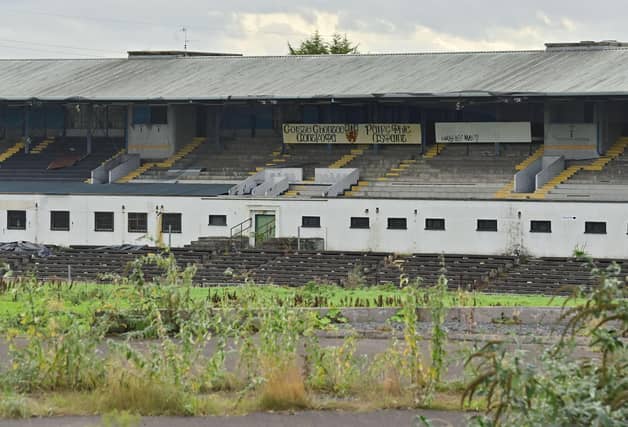
The attempts to imply that the GAA is entitled to government funding for a massive stadium in west Belfast takes this mindset to a different level. The GAA president actually claimed ministers have a ‘moral obligation’ to pay for the facility at Casement Park, as ‘recompense’ for the hurt they apparently caused to the nationalist community. It was an argument that channelled an ocean of self-pity and entitlement.
As the GAA’s demands intensified, they were accompanied by protests from ‘Gaels’ who seem to believe they have a ‘human right’ to an enormous, state-of-the-art home for their sport, costing far more than facilities for rugby or football.
This would be easy to laugh off, except that it just might work.
The GAA originally exploited an understandable desire for Northern Ireland to co-host the Euro 2028 football championships, to justify asking for such a lavish ground. UEFA, the body which organises that tournament, required potential venues to have a large capacity and meet other criteria.
Now that the Euros are not coming to Northern Ireland, any pretense that the whole community would use the stadium, or that it needs to be so large or well equipped, has long since evaporated. Yet, the GAA still wants a £260 million arena, not much less than the projected £300 million plus for Euro 2028.
The republican grievance mongers insist that Gaelic sports, which are followed almost exclusively by nationalists, have been denied funding claimed long ago by football and rugby. In reality, there is at least £120 million available, tens of millions have already been spent on the planning process and the GAA is asking for more than other sports.
The quickest way to get Casement built would be to trim back these demands and build a more modest stadium with the existing budget. Instead, the organisation took its campaign to Westminster, enabled by the Alliance MP Sorcha Eastwood, and it seems it may get at least some of what it asked for, even though public spending is under strain across the UK.
There is never any shortage of ministers, officials or even naive unionists who are prepared to make more concessions, and spend more money, in the belief that they can stop the grievance machine.
You could see another potential example developing last week, as Sinn Fein raged about the BBC, after the obscene Gerry Adams judgment in Dublin. This took the conspiratorial republican mindset, and its victim complex, even further.
Some of the national broadcaster’s political programmes in Northern Ireland cover nationalists’ campaign for a border poll almost obsessively. You will struggle to find a unionist who thinks his or her views are adequately reflected in BBC NI’s output. Yet Adams and his followers claim the organisation “upholds the ethos of the British state in Ireland.”
It would be great if BBC NI did uphold a British ethos (and it should), but the argument is risible. Still, if you create a sense of victimhood, particularly about an organisation as diffident to nationalism as the BBC, your incoming demands will most likely be listened to.
That’s how this relentless grievance machine works and it pays off constantly. The government effectively admitted recently that the Irish Sea border was created to placate nationalists and prevent republican violence.
However many demands are met, though, there will be new ones arriving. There are no longer any excuses for government ministers, or indeed unionist politicians, who think just a few more concessions can buy off nationalism.