
Phelim McAleer: American media close their eyes to the truth when it suits them
One year ago, American documentary filmmaker Morgan Spurlock died of cancer at the tragically young age of 53.
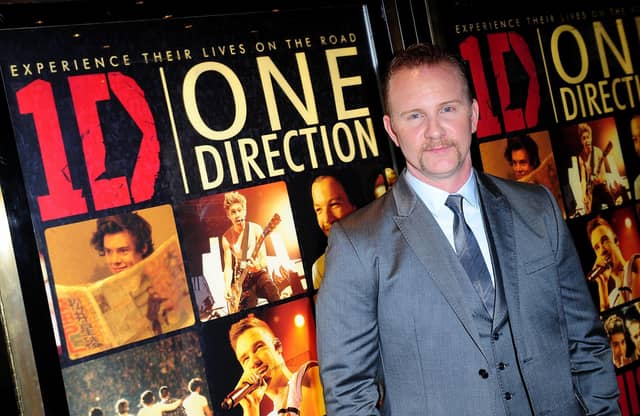

Spurlock shot to international attention with his 2004 documentary Super Size Me.
For the film, he ate nothing but McDonald’s food for 30 days straight and chronicled his chronic ill health during that time.
Spurlock won the Grand Jury Prize at the Sundance Film Festival and was nominated for an Academy Award and the film led to international stardom and a lengthy TV and film career.
It also kick-started the war on fast food that has never really ended. Food beloved by hundreds of millions has been labelled toxic – poison, even.
The anti-fast-food movement has since crossed the political divide. Leftists hate fast food because it is popular. They hate what poor people like – they see it as vulgar (that’s why they keep losing elections). They also hate that most outlets are owned by huge corporations.
On the right, despite the commander-in-chief’s love of the product, Robert F Kennedy Jr, his health secretary, is a passionate hater of fast food. And Joe Rogan, one of the most influential media figures in conservative circles, gets visibly angry if a guest on his show admits to liking a McDonald’s burger.
When Super Size Me came out, I admired the dedication and courage of Spurlock, who seemed to put his body through hell to get to the truth. As a wannabe filmmaker at the time, I wanted to do what he did and have the impact he had. He was very, very influential.
For the past year, stories have marked the death of Spurlock as if he were a data-driven Nostradamus who alerted us to a public health crisis.
But the truth is that Morgan Spurlock’s career was based on probable fraud – a damaging fraud that he always refused to answer questions about. I was the journalist who exposed this likely fraud, but the film industry and media still treat his work with a reverence it most definitely does not deserve.
Writing about his death, The New York Times called his film a “cultural touchstone” that “helped spur a sweeping backlash against the fast food industry.”
Spurlock’s claims about how McDonald’s destroyed his health were dramatic but probably fake.
Before the 30-day experiment, he said he was in a “good spot” health-wise. By the experiment’s end, he reported experiencing fatigue and shakes. Most disturbing, and most widely reported, was that Spurlock had suffered liver damage. The New York Times review of the film was headlined “You Want Liver Failure With That?”
The doctor examining him during the experiment said the fast food was “pickling his liver” and that it looked like an “alcoholic’s after a binge.”
All very damning. However, the story started to crack in December 2017, when Spurlock issued a #MeToo mea culpa titled “I Am Part of the Problem,” detailing a lifetime of sexual misdeeds.
To excuse his actions, Spurlock posed the question: “Is it because I’ve consistently been drinking since the age of 13? I haven’t been sober for more than a week in 30 years.”
Not sober for a week in 30 years! Wouldn’t that make his liver look damaged, and doesn’t it mean he was also drinking during his alleged 30-day McDonald’s-only diet?
And as an Irish journalist who might have had some passing experience with alcohol, his confession also begged the question: Were those “shakes” allegedly caused by fast food really just symptoms of alcohol withdrawal? Or a hangover?
I wrote about it at the time, but still to this day, Spurlock is seen as a guerrilla filmmaker brought down in a #MeToo reckoning, not because he probably faked his documentary.
Big business fast food outlets are convenient villains for the left in America – and, increasingly, the right as well. This, I believe, is the fault of Spurlock, but it is also the fault of the American media, who loved the story and did not ask the filmmaker difficult questions or even ask for evidence of what he ate and when, and, perhaps more importantly, what he drank and when.
As the media did with Joe Biden and his obvious health difficulties, they closed their eyes because opening them would have destroyed a story they wanted to tell. They failed the public then, and they’re failing us now.
l Phelim McAleer is a Co Tyrone-born journalist/producer working in Los Angeles. You can find him on the social media platform X: @PhelimMcAleer