
Phelim McAleer: California's drought myth proves that when it comes to water policy in The Golden State, the real shortage is common sense
When I first moved to Southern California over 15 years ago, I knew it would be an expensive place to live, with high prices and some of the highest taxes in the United States.

Yet, I reasoned, the weather would be consistently sunny year-round. They call the cost of living here the ‘sunshine tax’ – the price to pay for perfect weather.
And so, the first year I arrived in Los Angeles, I shocked the city with my pale skin, donning shorts and a T-shirt, and awaited the sun. Then it started to rain. Then there would be a little sunshine and more downpours. Fortunately, years of beautiful, temperate weather ensued – not overly hot and with a refreshing breeze.
This continued, but then a persistent narrative emerged. From the experts and the media. We were in drought. It was a crisis, likely to worsen. Los Angeles was deemed unsustainable; California's agriculture faced extinction. Then after five years of drought, heavy rains arrived – but not enough, apparently.
Soon, the drought notification returned. Another wet winter followed, yet official statistics insisted we were in drought conditions. We were mandated to reduce water consumption by 20% to avoid shortages. Residents responded earnestly, forgoing lawn watering, omitting ice from drinks (an act of betrayal in modern America), and shortening showers, ultimately achieving a 25% reduction citywide.
In recent years, rainfall has been abundant, yet drought declarations rarely abated. According to the US drought monitor (USDM), the federal authority on drought classifications, California remained in extreme drought for much of the past two decades.
This triggered severe water usage regulations, escalating bills, and agricultural devastation, as water was withheld from farmers to prioritise cities and endangered fish species.
However, a new analysis has confirmed my longstanding suspicions: the drought assessments are deeply flawed and have no bearing on reality.
The California Policy Center's (CPC) ‘Statistical Review of United States Drought Monitor', authored by Edward Ring and Marc Joffe, reveals that for 25 years, the USDM has consistently exaggerated California's drought conditions.
The USDM has designated drought 61% of the time since 2000 -double the prior century's rate. For them, this was proof that we were experiencing global warming. But Ring and Joffe say they have been unable to replicate these findings using the USDM's methodology. Instead, they say there has only been drought 31% of the time. And this is in line with historical trends.
They have shown that California’s weather has been a pattern of dry for a few years, rain, and then dry for another few years. Their independent analysis of a century's climate data shows no significant drying trend. Instead they found recent conditions align with 20th century norms, with precipitation just 1.4% below average. So no global warming.
It turns out that the USDM has no standard way of measuring drought. The organisation allows subjective ‘discretion’ in its classification process. Employees admitted to the researchers that they were often relying on personal judgment, allowing for potential bias or inconsistency.
Empirical modelling by the authors estimated the actual drought frequency had increased at a mere 0.83%, far below the USDM's 30.65% surge. Moreover, the USDM fixates on ‘dryness’ metrics like soil moisture and streamflow, deliberately excluding critical factors such as groundwater supplies, system storage capacity, and overall water availability.
This disconnect enables "severe" or "exceptional" labels even amid ample reserves. This is what I had noticed living here. It will rain for weeks, but shortly after, we will be told we are in drought and need to make adjustments.
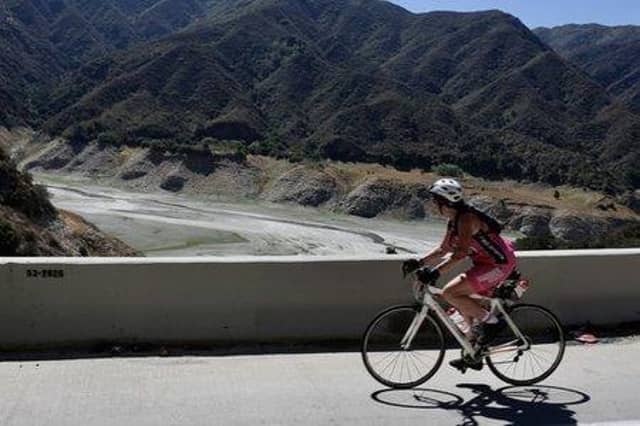
Yes, it's warm here, and yes, it rains infrequently. But when you are told that we are constantly short of water, priorities shift. We are told to stop consuming, but there is no attempt to capture the water that is falling. There is no urgency to build or even repair existing reservoirs when there are issues (that's why the reservoirs were empty during the recent devastating fires).
And the incentive to stop ‘wasting’ water? Well, we did it a few years ago. As I said, water usage fell by 25 per cent. What did the city water company do as a result of their successful campaign? They suddenly realised they were looking at a 25 per cent reduction in revenue. They refused to cut costs, so of course they jacked prices up by a matching 25 per cent.
In the end, California's drought myth proves one thing: when it comes to water policy in The Golden State, the real shortage is common sense.
l Phelim McAleer is originally from Beragh, Co Tyrone. He is a producer/journalist living in Los Angeles