
Phelim McAleer: LA – a dangerous place for cats, but if you’re a coyote, you’re top dog
America is a dangerous place, and Los Angeles – the city I live in – is particularly dangerous. Especially if you’re a cat.

There are a lot of cars in Los Angeles, and cars and cats don’t mix. I know this all too well, and so does my wallet.
My late father would disown me if he knew how much I spent on vet bills after Top Cat, my feline friend, had an unfortunate leg-breaking encounter with a car. I can report that it’s not just humans who enjoy world-class, pioneering healthcare in America – cats do too.
You’d never know his leg was broken in three places as he now leaps over fences in my street, four years after that bone-crunching, wallet-draining incident.
But at least I could take some comfort from knowing that our little piece of Los Angeles didn’t have Top Cat’s biggest enemy: the coyote.
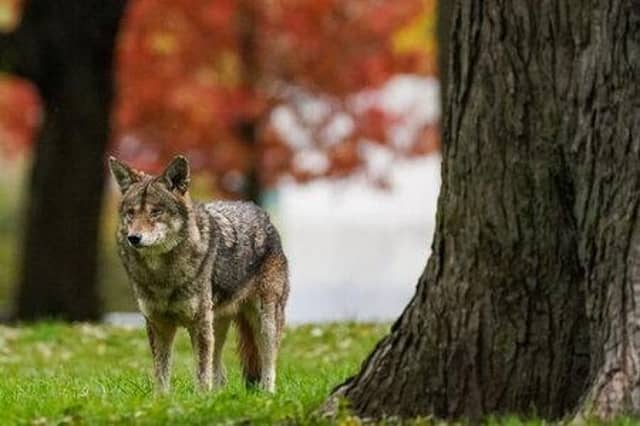
Forget the cartoons we were reared on – American coyotes are not hapless idiots who hopelessly and unsuccessfully chase roadrunners. They are ruthless, highly effective predators. And like many wild animals, they’ve adapted to city life.
The coyotes of Los Angeles are smart, streetwise, and patient killing machines who feast on the city’s cats and, if they’re really hungry, small dogs. In short, they are Top Cat’s mortal enemy.
A coyote is like a much larger, much more aggressive fox or wild dog. They can jump a six-foot fence with no problem, and there are a lot of them. But we were lucky in my little part of Los Angeles.
A very busy road and the lack of large green spaces nearby meant there were none in our area. As such, Top Cat and his brother Scaredy Cat lived the cool Californian cat life – walking the streets, calling in to see the neighbours and just hangin’ out.
It was even a selling point for houses in the area: no coyotes. And so, we had a lot of cats on our street, basking in the year-round Southern California sunshine.
Then came the fires in nearby Pacific Palisades. Hundreds of acres of houses and brush were destroyed in a day, and obviously, hundreds of domestic and wild animals were displaced. That’s how a coyote suddenly appeared on our street.
In America, there’s an app for neighbours called Nextdoor, where people exchange information about everything from break-ins to bake sales – mostly break-ins, since we live in a leftist part of Los Angeles where crime is rampant, tolerated, and rarely policed.
On Nextdoor, I innocently asked if we were allowed to shoot or poison the coyote. The answer was swift and unanimous: I was a monster for even suggesting such a solution.
How dare I propose killing such a fine animal who’d been living there before we humans arrived in California? The outrage was so loud you’d think I’d suggested killing a baby.
Although, strike that – my part of Los Angeles is so leftist that they recently pushed through legislation allowing abortion up to the ninth month of pregnancy. They probably would’ve been okay with me proposing a bit of baby-killing. But coyote-killing? That was off the table.
So, some cat-loving neighbours and I did the next best thing: we formed a WhatsApp group. One neighbour found a humane trapping company, and we pooled together $600 for the trapping and release of our coyote.
The traps were set. We waited. Then our doorbell rang. It was one of the city’s many wildlife officers – who’d refused to come out and remove the coyote when it first arrived.
Someone had snitched on our catch-and-release plan, and it turned out to be in breach of some obscure bylaw. It seems that to set a trap for a coyote, we needed written permission from every household within a mile radius.
They were now going to fine the company that set the trap for not having the correct paperwork. They knocked on our door on a bank holiday – in a city where the police won’t even come out if your house is burgled. The city was making its priorities clear and Top Cat and Scaredy Cat were low on the list.
So, we all tried to keep our cats indoors while I fantasised about poisoning the coyote or hitting it with my car. Eventually, starved of love, food, and shelter, the coyote moved on to literally greener pastures.
At least, that’s what I’m telling the city.
l Phelim McAleer is a Tyrone-born journalist/producer who lives in Los Angeles. @phelimmcaleer